Have a hand
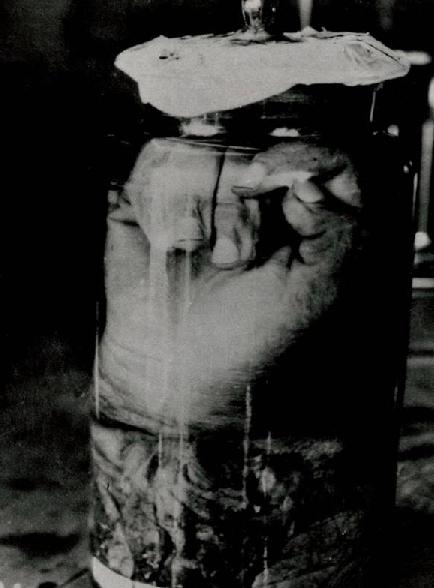
OK, you Mexican history buffs… how many of you recognize this? Raise your … er… hand.
We built this city….
As has been suggested in recent years, the Americas were a much more sophisticated and densely populated place prior to 1492 than we realized even a few years ago. What is now Mexico likely had a population of around 25,000,000 (a number it didn’t reach again until the mid 20th century). If the “high counters” (those who argue the Americas were densely populated before European diseases reached the continent) are right, the Mexican population was already in steep decline even before Cortés arrived. Estimates range from 2 to 10 million in 1521… which would have meant a massive decline in population was already underway by the time an unnamed Moor was blamed for all time for coming ashore with Panfilo de Narváez in 1520 carrying the smallpox virus. The result being that Mexico’s population declined still further, anywhere from 75 to 90 percent by 1600.
While Mexico was probably more densely populated than many parts of the Americas (and still is), what was true there was true throughout much of the hemisphere.
The upshot of this massive loss was that when the colonial newcomers “discovered” the remains of the past, they ignored the obvious conclusion that the people around them were survivors of a holocaust in “reduced circumstances” and instead, read into them not the story of their new land, but of their own history.
Matthew Gildner, an Assistant Professor of Latin American History at Washington and Lee University, writes the fascinating story of an obsession to fit the artifacts into a European story-line, and a story that, in the end, led to another holocaust.
Andean Atlantis: Race, Science and the Nazi Occult in Bolivia (The Appendix: a quarterly journal of experimental and narrative history, April 2013 – Vol. 1 No. 2)
Classicists have long maintained that Atlantis was a fable that the ancient philosopher invented to warn of the arrogance of power. Over the centuries, however, Plato’s legend acquired an air of truth. During the Renaissance, tales of Atlantis circulated in the European imagination, borne on Humanist inquiry and the discovery of the Americas. Sixteenth-century Spanish chroniclers, from Bartolomé de las Casas to Francisco López de Gómara, drew parallels between the New World and Plato’s Lost City, as did Francis Bacon and Thomas Moore of Great Britain. For French scholars who believed that humans had multiple origins, Atlantis evidenced the existence of man before Adam.

But it was during the late nineteenth century that interest in the fabled Lost City exploded. A Minnesota politician and amateur antiquarian named Ignatius Donnelly is widely credited for the Atlantis revival. In 1882, his bestseller, Atlantis: The Antediluvial World, didn’t just argue that Plato’s Atlantis existed; it claimed that Atlantis had shaped other ancient cultures, from the Maya to the Egyptians. Popular and scientific interest in Atlantis flourished. The Royal Geographic Society of London and the U.S. National Geographic Society were soon sponsoring research on the lost city’s location and funding quixotic and, at times, unnecessarily deadly expeditions.
It’s often overlooked that this “Atlantis revival” coincided with the apogee of polygenesis, one of the fundamental assumptions of scientific racism. Polygenesis was an alternative theory of evolution that rejected the common origins of humans, a belief rooted in Christian creationism and sustained by Darwinian evolution. Polygenists divided humans into separate biological species, or races, that each originated and evolved independently. Races were classified according to innate, inheritable physical attributes—that is, not just skin color, but cranial capacity.
Locating those origins, however, was more complicated. If darker skinned peoples originated in Africa, as polygenists had long assumed, the where did the lighter-skinned peoples come from?
Atlantis would provide nineteenth-century polygenists with their own private Garden of Eden—an idea that appealed especially to Bolivia’s creole, or European-descendant, elite. Since securing their independence from Spain in 1825, they governed—often precariously—the most indigenous country in the hemisphere. Polygenesis provided irrefutable scientific proof of their biological difference and social superiority over native Andean peoples. And deployed alongside the Atlantis myth, it allowed them to claim Tiwanaku as a source of creole heritage.
(With even Heinrich Himmler mixed up in this, it’s a bizarre tale, well told and fascinating to read)
Caption time!

Quintana Roo state legislature candidate Susana Hurtado wants to get her name before the voters of Cancún. She never heard of bumper stickers?
(Photo: Twitter @WaldoNews, via El Universal
Wildcat mining, the new-fashioned way
Via Frontera NorteSur (Center for Latin American and Border Studies,
New Mexico State University)
Since the Spanish conquest, mining has figured prominently in the Mexican economy. While Canadian and other international investors continue extracting the riches of Mexico’s earth for the global market, other foreigners have seized on a 21st century form of mining as a new source of profit and power-data mining and trafficking.
This week, Mexican media re-exposed a massive black market in personal and financial data of Mexican residents with apparent tentacles in England, Argentina and the United States. The Mexican city daily Reforma reported on the recent, successful purchase of a list of 30 million registered voters for a price below $400.00.
According to the newspaper, the acquisition was made possible by writing to a Yahoo e-mail address that had been advertising for months the availability of “exclusive” and “important” Mexican data bases. The buyer was then put in contact with an individual identified only as “Jose Luis,” who said he divided his time between the U.S. and Argentina.
To prove his seriousness, “Jose Luis” then sent a sample of 100 listings each from different data bases and later instructed the potential buyer to deposit dollars in a Florida bank account in the name of Daniel Laniado Lazaro of Argentina.
Soon, an e-mail containing the magic links arrived to the purchaser. The data consisted of official Federal Electoral Institute (IFE) voter rolls, generally from 2012, for 15 Mexican states including Nuevo Leon, Colima, Nayarit, Aguascalientes, Quintana Roo, Durango, Queretaro, Morelos, Coahuila, Sinaloa, Oaxaca, Tamaulipas, Michoacan, Puebla, and Guanajuato.
The shadowy Internet salesman offered a variety of other data bases for the cut-rate price of $200 each if the customer purchased four sets. Among the specials were the account numbers and personal data of 2,000,000 Banamex (Citi) clients, and the personal information and account numbers for 618,000 American Express credit card holders.
Interested buyers were informed of the availability of client data from the HSBC, Bancomer and Santander banks; … Telmex and… Infinitum Internet service … the Axtel and Nextel cell phone companies; privatized Afores retirement accounts; and the Mexican Social Security Institute in the state of Mexico.
Separately, the Apro news service reported that the Yahoo e-mail address in addition to a similar Hotmail one were known to the authorities since at least September 2011.
… [V]oter information is considered confidential under Mexican law, trafficking in personal information is likewise a violation of federal regulations.
Nonetheless, dubious or illegal data mining and trafficking has been periodically exposed in Mexico during the past decade. In 2003, the U.S. company ChoicePoint obtained the national IFE voter roll of the time, ostensibly by legal means from a private Mexican contractor for the IFE, and in 2010 El Universal newspaper reported on the ease of obtaining the national motor vehicle registration list, the coveted IFE voter registration roll and other “products” in the Tepito neighborhood of Mexico City, a place where a buyer can reputedly purchase any item.
According to Apro, multiple complaints of massive breaches of personal information have been heard by different Mexican federal agencies during the past two years.
In May 2012, the Federal Institute for Information Access and Data Protection (IFAI) filed a legal complaint with the anti-organized crime unit of the federal attorney general’s office (PGR) against any parties responsible for selling data bases from England and Argentina. In the run-up to the legal action, the IFAI held a series of meetings on the data trafficking matter with Mexico’s National Securities Commission in 2011 and 2012.
Last November, the National Commission for the Protection and Defense of Financial Services Customers filed a similar legal complaint with the PGR. In a statement this week, the IFAI said it did not know the status of the two legal cases pending with the PGR.
Although federal officials have been aware of a personal data security problem for some time, important information on Mexican citizens is still sold on the Internet. The data peddled in cyber-space could be useful not only to commercial hucksters, but also to individuals involved in a range of mischief encompassing election rigging, credit card fraud, phone cramming, and more.
“Despite the problem of kidnappings, extortions and insecurity in Mexico, the confidential data flows to the buyer without questioning,” Reforma observed.
Sources: El Diario de Juarez/Reforma, June 3, 2013. Proceso/Apro, June 3, 2013. El Universal., April 21, 2010.
Revolutionary justice: 4 June 1913
Brownsville photographer Robert Runyon, having photographed the refugees from Matamoros as Lucio Blanco’s Constitutionalist troops closed in on the Tamaulipas border city was not able to cross the border until the battle was over.
Victoriano Huerta’s flailing government had abandoned the city, leaving behind a small force of volunteers, including of 23-year old “Colonel” (for a day or two) Antonio Echazaretta. His bad luck that a couple weeks previously, Constitutionalist Chief Venustiano Carranza had given his commanders permission to shoot enemy officers. Which they did… as witnessed by Runyon, U.S. Consul in Matamoros Jesse H. Johnson, and other invited guests from north of the river.

Sombrero Tip: Mary O’Grady.
Sources: Executed Today; Robert Runyon Collection (University of Texas); Ray Acosta, Revolutionary Days.
Slim’s pickin’
Being a lefty who sorta likes Carlos Slim, or at least has defended him on occasion, I wasn’t surprised by the polling results recently reported by Covarrubias.
Slim, as a person, is thought of highly by 41% of Mexicans, and favorably by 3/4ths of those polled.
 All of the companies he controls (Sanborns, Telcell, Telmex, Grupo Inbursa) are regarded positively when it comes to service, but … no surprise… people complain about the prices.
Slim was widely berated in the U.S. media when Bill Gates and Warren Buffet turned much of their assets into “charitable foundations”… which, as Slim noted, makes them tax deductions, whereas, he has no objection to paying taxes. He does contribute quite a bit to charities but his philanthopic endeavors are largely unknown by his fellow Mexicans. That’s one reason I sorta like the guy… no big ego.
Slim bien evaluado; no razonables los precios de Telcel; desconocida su filantropía: Covarrubias
“Ya digo cualquier tontería…”
A few days before leaving office on the first of December 2006 Vicente Fox was quoted (or rather, overheard, not realizing microphones were turned on), back in November 2006 as saying “I’m outta here, so I can say any stupid thing I want”.
The former President apparently now feels he can DO any stupid thing he wants, too.
Fox’s comments on legalizing the marijuana trade weren’t, in themselves, stupid —
The cost was “too high for Mexico, Latin America, and the rest of the world — the impact on the economy, on income, on tourism, investment but also talent .. and 80,000 kids’ death in the last six years,” he said.
“All this because our neighbor to the north represents such a gigantic consumer market. We must get out of this trap, and here is the opportunity,” he added.
The assumption that “In Mexico we welcome this initiative” is what I see as bone-headed — “This initiative” being the launch of a corporation, Diego Pellicer, that hopes to be the “Starbucks of Marijuana”.
I suppose that coffee-retailer reference means Diego Pellicer seeks to be another Seattle-based corporation retailing products dependent on what Aldous Huxley called “sweatable coloured labour” … bullying producers and exploiting growers.
Vicente Fox, as everyone knows, was a Coca-Cola executive before entering politics. Before Ccca-Cola — and during (and after) his political career, his family business was (and is) Grupo Fox… an agricultural export firm, and was Director of the American-Mexican Chamber of Commerce.

Untranslatable pun: “I started out selling Coca-cola, now I sell roaches (more or less)
There is no real support for marijuana legalization in Mexico (besides, a small amount of marijuana, or heroin for that matter, for personal consumption isn’t a criminal matter, though repeat offenders can be court-ordered to a rehabilitation program) and the number of regular users is quite small… no more than one or two percent of the general population, compared to 15 percent of the U.S. population. There is no domestic market.
Supposedly, U.S. legalization would destroy the export business here (incidentally, not just throwing a lot of people — not all of them gangsters — out of work, not to mention the loss of secondary income to people who do business with those who do business with those who are in the trade). While assuming that U.S. pot growers are not hopelessly naive in assuming that USDA regulations of legalized marijuana wouldn’t be tweaked to meet corporate interests, I don’t see Mexican marijuana growers particularly profiting from corporate sales either.
Local businesses in the trade (ok, “cartels”, or TCO’s to use the favored terms of the U.S. government) go for intimidation and violence where there is competition among exporters. Where there is a monopoly, the export buyers depend on good relations with their growers — and the communities in which they operate. I can’t see a foreign corporation returning any profits to the grower communities that they don’t have to. And… the history of crop growing for export is one of monoculture. The marijuana-growing region being mostly a dry tropical forest environment, and marijuana being a plant that needs a lot of water, this would be a serious issue, not to mention the problems for biodiversity and food security.
The only interests I see met here are those of U.S. consumers, and U.S. corporations (and a few people like Vicente Fox who would stand to profit from corporate sales).
Fox, after all worked for Coca-Cola, not exactly known for non-violent resolutions of labor disputes in Latin America and is looking to sell to a company that models itself on Starbucks… not exactly the most labor friendly place either.
Quo bono? Not Mexicans. U.S. consumers? Maybe… they’ll benefit from corporate marijana the same way they benefit from Bangladeshi underwear.
As I wrote before (Opiate of the Asses):
That Mexicans would prefer not to have a marijuana business may be an unwise move, but it’s theirs to make, the same as it’s up to Mexicans to decide they don’t want protect their forests or control the environmental damage caused by gold mining. It is no different than the United States insisting Mexico buy Montsanto genetically altered corn seed, because there’s Montsanto “needs” to sell it.
The outsider may “need” marijuana or gold or tropical woods or a market for seeds, and perhaps may have a justification of why they “need” them. But they are pleading “greater necessity” to buy or sell or use resources aren’t theirs in the first place, and the pleas of “greater necessity” come down to simply this:
We want it, we’ll steal it, or kill you to get it, or hire someone to kill to get it, and ignore any of your social norms that interfere with us… because… we want it, so it’s ours.
One for you, two for me
“For every dollar, 35 cents will stay in Guatemala for taxes, royalties and voluntary contributions.”
Why, look at that…
Photos from Mexico with those of other “exotic” locales like Des Moines, Iowa.
John Kirsch, at NomadBlog finds the weird and wonderful and unintentionally aesthetic is all around us… as likely in small town Iowa as in rural Guanajuato.




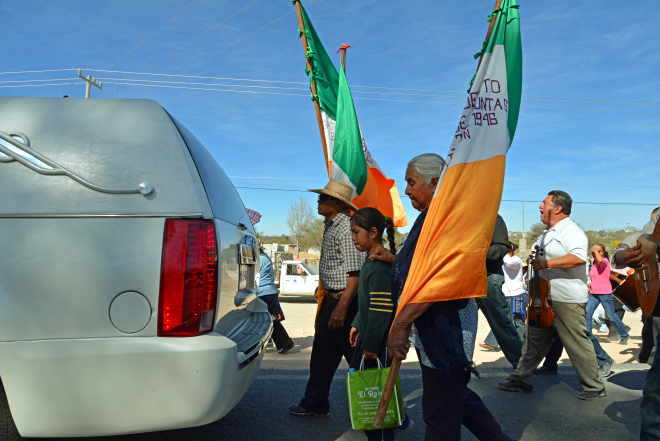

We all need another hero…
Strolling in Mexico was once a fine art form, and while going out for a Sunday or evening paseo is still a custom in many parts of the country (although today, sometimes we feel compelled to disguise a harmless cheap form of entertainment as something utilitarian like exercise), Mexico City has become, more and more, a pedestrian-unfriendly place.
Pedestrians have been fighting a losing battle against automobiles, but… the low carbon footprint of… just footprints… is making a comeback in the city, thanks in part to superheroic effort by… Mexico City’s newest super-hero, El Peatónito:

(Sombrero tip to Fausta’s Blog)
Plausible?
Klippel said in the email that Gary’s Mexican court-appointed defense attorney suggested he try bribing Mexican authorities to have the case dismissed, telling him, “You know how it works in Mexico, right?”
Through the lawyer, Gary offered to pay Mexican authorities $3,500 and then upped the offer to $5,000 after being told the initial offer wasn’t enough, Larry Maldonado said.
In the end, neither bribe was accepted, he said.
“Family of Mormon mom held in Mexico says she’s not guilty in drug case” Dan Nowicki, The Arizona Republic via Salt Lake City Tribune
We hear these stories every once in a while of “someone else” trying to smuggle marijuana (in this instance 12 pounds… five keys, maybe?) in some unsuspecting person’s baggage, or that, like in this case, the person “just happened” to be sitting in the seat on the bus where the dope was stashed.
Twelve pounds of marijuana doesn’t sound like a commercial quantity for export, and stashing it in bus seats doesn’t sound like a particularly profession shipping job, but… yeah… I’m sure our well-organized non-regulated agricultural export specialists do occasionally send out small orders, and perhaps they lay in wait for unsuspecting Mormon moms, but….
… when the spouse (who was initially charged with smuggling) takes up a lawyer’s not real smart decision to bribe a judge… and then publicizes that he paid a bribe, one is given to speculation as to exactly whether that Mormon mom wasn’t her neighborhood connection, or just looking for a little stress relief (she does have seven kids).
What a great idea!
Jonathan Kaminsky, Reuters:
Marijuana waste helps turn pot-eating pigs into tasty pork roast
 … Susannah Gross, who owns a five-acre farm north of Seattle, is part of a group experimenting with a solution that seems to make the most of marijuana’s appetite-enhancing properties – turning weed waste into pig food.
Now, if we could get the Iowa Pork Producers and the Sinaloa Cartel together, maybe we could have a NAFTA agricultural policy that actually benefited farmers.


 mexfiles.net