Turkey and football….
… er futbol… um…. butterball?
Back to Mexico sometime later today.
Isn’t it dangerous?
I live in Sinaloa, so naturally I think it wise to stay away from places known for drugs and firearms. But I have some family affairs to deal with, so with trepidation, I’m off to the United States. Hopefully back in about a week.

What a trip!
When traveling, it’s not the destination, but the journey that is the adventure … and, in Mexico, sometimes just waiting for the journey can bring its own reward.
Tijuana’s Ópera Ambulante at the central bus station in 2010:
“When I die, I can be buried as an American”
Erin Siegal (KPBS, San Diego) on deported veterans:
North of the border there was a presidential election — the tanner version of Dwight D. Eisenhower creamed a Mormon version of Warren G. Harding. I suppose over at the Secretaría de Relaciónes Exteriores on calle Federico García Lorca they’re happy they don’t have to break in a whole new crew, with a new Secretary of State, like the one now who once supposedly asked “Who painted the Virgin of Guadalupe?”.
Ike Lite depended more on the votes of people with relations here, so maybe will have to listen a little more to their concerns. On the other hand, the Harding knock-off DOES have relatives here (in Chihuahua), but then again, a lot of his supporters seem to think anyone from south of the Rio Bravo del Norte… or whose grandparents came from somewhere down this way, is unAmerican. And, maybe if he won, with the U.S. health-care system as screwy as it is, and promising to make it even screwier, the medical tourism industry might have been cheering for Mexico Mitt.
They both have to support their war industries, and maybe with Mitt selling more war in Afganistan, they’d be less likely to turn their attention to “assisting” Mexico in a “War on Drugs” that’s already killed at least 600,000 people here in the last six years. If anything, Obama, pulling out of Afghanistan, and with a Secretary of State who has on several occasions referred to Mexican gangsters as “insurgents” and “terrorists”, we should be extremely worried. As it is, neither of them seemed to be much interested in doing anything cooperating with Mexico and doing something substantial to curb U.S. gun-runners, let alone vulture capitalists, corporate pirates or money launderers.
 Speaking of money: while here it’s kind of scandalous to even talk about how much a campaign costs, just about everything I read about the election for the last couple of
 months years (don’t they have the decency to limit campaigning to a manageable 90 day period like they do here?) has included a paragraph on how much money the candidate had raised from private sources … something we call “bribes”.
This U.S. election is expected to have cost something around 6 billion dollars. A few years back, when a neo-natal unit in Chiapas became infected and babies died, then-Secretary of Health Julio Frenck ordered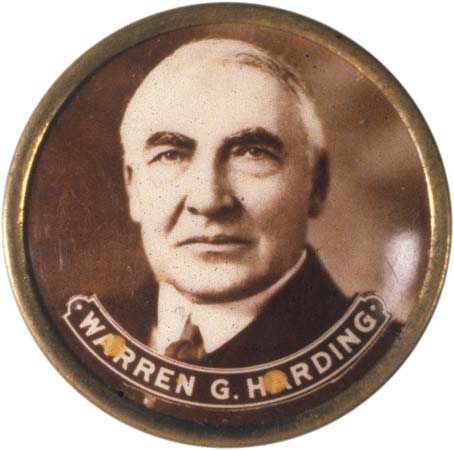 the facility torn down and replaced… which cost about a million dollars. I assume costs have gone up some since then, but six billion dollars would still be enough to build TWO neo-natal units in every one of Mexico’s 2462 municipios and the 14 delegaciones in the Federal District, with enough left over to cover cost-overruns and pay off even the greediest bribe-soliciter.
Yeah, I suppose I like Ike Lite better than Warren G. Redux, for the simple reason that I have relatives and friends up there, and there’s likely to be SOME progressive domestic policies coming out of the White House (which, will be stymied by the Republican House of Representatives, and then turned into some sausage legislation that satisfies no one), making things marginally saner. And maybe the federal government will build a few neo-natal hospitals … which will be called Socialism by the other guys.
Queer ideas about justice
Enrique Juarez Vasconcelos, who oversees the public defender’s office for prisoners in the State of Puebla. has ordered his subordinates not to provide assistance to homosexuals, for among other reasons, “they’re all bastards.” It should be pointed out that in Mexico, one can be sent to prison before one’s trial, especially if one cannot post bail… meaning Juarez Vasconcelos’ clients are the kind of people who NEED public defenders.
Juarez Vasconcelos is also well-known for his unique approach to grading students at the local university where he teaches. He flunks students for being “faggots”… based on his own criteria.
Puebla has a reputation going back centuries as one of the more reactionary places in Mexico. The city was one of the few in the central part of the country to welcome General Winfield Scott, and a good part of the miracle of Cinco de Mayo wasn’t just that the Mexican Army held off the French, but that everyone expected Puebla to rise in support of Maximilian and monarchy.
Revulsion over the antics of the previous governor, Mario Marín Torres, who was affectionately referred to as “mi góber precioso by child-molesting textile magnate Kamel Nacif in the course of discussing plans to have journalist Lydia Cacho kidnapped and raped, and the general sense that the state was misgoverned, gave PAN an opening to sweep into a governor’s chair that had always been owned by the PRI in 2011… and so far other than not being quite so crude (a previous state prison official used rather colorful — or rather off-color — language questioning the sexuality of Marcelo Ebrard, then-governor of the Federal District, in reaction to the Federal District’s decision to legalize same-gender marriage) has delivering … nada: just the same old, same old reactionary attitudes.
Fermín Alejandro García opines in Jornada de Oriente:
This latest episode of homophobia is a direct consequence of the behavior of the current members of the PAN and the PRI. Politically  controlled by the Catholic clergy or El Yunque, they have consistently refused to legislate against discrimination. The issue comes up in political discourse, but in the past six years nothing has been done since the PRI put a freeze on an anti-discrimination initiative prepared by then state legislator Malinali García. At the beginning of the present legislative session, a similar bill was introduced by Representative Jose Juan Espinosa, which is also languishing. This indicates that there are proposals, but no political will to fight against the mistreatment of people living in Puebla, and that homophobia is practiced with impunity.
Ricardo Bucio, of the National Council on Discrimination (CONAPRED for its acronym in Spanish) had an urgent meeting just last week with the Puebla State Congress on the need for anti-discrimination legislation. The need for such legislation was underscored by a gay-bashing murder in Tehuacán last weekend, which state authorities were negligent in investigating (taking 16 hours to pick up the body) and setting a new record for anti-gay hate crimes in the state, double the previous record for a single year.
No news is not good news
I’ve been reluctant to write about the Televisa-Narco scandal, first off because there’s already too much bandwidth devoted to the narcos (and most of it is crap), and because… well… you don’t want to screw with Televisa. Anyway, Daniel Hopsicker (who describes himself as a “dissident journalist”) has written very well on the situation for MadCow Morning News. From “Mexico’s Narco Televisa Scandal: The Impunity of the Elite”:
On August 20, border guards in Nicaragua detain 18 Mexicans—17 men and one woman. They are all wearing Televisa t-shirts, and they are traveling in six satellite TV vans emblazoned with the Televisa logo. They carry press credentials from the network.
Customs officials received a tip from a Nicaraguan official who spent the previous evening in Tegucigalpa Honduras in the same hotel as the Mexicans. He became suspicious after hearing loose talk.
The leader of the group, 39-year-old Raquel Alatorre Correa […] tells border officials—who find her high-handed and petulant—that she and her fellow journalists are in Nicaragua to do a story. When asked exactly where in Nicaragua they are headed, she says “I won’t tell you.”
A search of the satellite-TV vans is a foregone conclusion. What turns up is a surprise:
 $9.2 million in cash, stuffed into built-in hidden compartments, as well as traces of cocaine. Prosecutors charge the group with money laundering, drug trafficking and organized crime.
[…]
Televisa emphatically and categorically denies any link to either the Mexican suspects or the six satellite TV vans.
For good measure, and perhaps to show the earnestness of their intentions, the giant network threatens to sue the 18 incarcerated Mexicans—who are already looking at doing 30 years in a squalid Nicaraguan prison—for appropriating the company’s good name.
Next Mexico’s Attorney General Marisela Morales steps into the fray, to say the suspects have falsely used Televisa’s name as a cover for criminal pursuits.
[…]
…The six vans, it turns out, were registered to Televisa.
Televisa’s response was to insist that motor vehicle personnel had been bribed. Notorized documents make this seem unlikely. Then, too, there are letters on Televisa letterhead signed by the vice president of the news division, asking border officials to expedite the vans entrance into their country.
The 18 Mexicans may not be journalists. But that doesn’t mean Televisa isn’t involved.
Televisa IS Mexican television… or about 80 to 90 percent of it. Where I live, 3 out of the five local stations are Televisa (unlike the U.S., where a “network” has the same programming on all its outlets, Televisa owns a couple of outlets in each market, with different programming aimed at different audiences — the movie, the soap opera and the soccer game on different channels are all produced by Televisa).
Given that media in this country is expected to have political biases, it is as if FOX News controlled the airwaves. And, one has to remember that 90 percent of Mexicans get their news from Television… meaning Televisa. It’s open bias in the recent presidential election towards Enrique Peña Nieto (not to mention their paid support for the now president-elect’s campaign) was only one of a series of politically tinged actions. It has successfully fought political and economic reforms that threaten its monopoly. When Mexico City’s union-owned electric company was forceably liquidated (with army troops taking over the facilities in the middle of the night), lost in the claims that the union was “corrupt” was the interesting fact that the company owned the cable access rights in the Capital which Televisa wanted to acquire. You don’t mess with them.
While I don’t have too much of a problem with biased reportage (like I’m fair and balanced?) the absence of alternative sources of information is a serious problem, and — given the implications of the Nicaraguan scandal and what it suggests about Televisa’s income stream — something much more serious and worthy of attention than what particular gangster was caught or killed today.
I’m too sexy for this jail…

El Muñeco (The Toy-boy), aka Armando González aka Octavio Favela aka Marlon Matamoros is going to jail, directly to jail and cannot post bail.
Toy-boy was a very bad boy, having used tanning parlors and high-priced yuppie gyms as hunting grounds for a kidnapping and extortion ring. Yeah, I always knew tanning parlors were dangerous, though I imagine there are those who’d say any Mexican hanging out in a tanning parlor probably deserved to get … uh… burned.
Rush to judgement
PAN party whip in the Chamber of Deputies, Luis Alberto Villarreal, is trying to convince his fellow PAN Deputies that they MUST pass the contentious labor bill THIS WEEK without any discussion.
Saying the bill has been held up by “special interests” he said “you must not waste any more time, and must pass the bill sent back from the Senate.”
Villarreal further added that his party “is in favor of dialog and agreement”, while at the same time also saying that “We will not let you spend more time.”
(Source: El Universal)
This was the bill the Calderón Administration tried to “fast track” though Congress within hours after the July election.
I guess groups like unions are “special interests” when it comes to labor issues, but there were complaints from the intellectuals, the left, the right, the center and unaffiliated workers as well as some business leaders about the original bill… all of them no doubt special in their own interesting way.
If, as Deputy Villarreal says, this bill is 42 years overdue, a few more weeks of discussion aren’t likely to change anything.
Self-defense
It’s something you don’t hear much about, but the violence in Mexico that one reads about has less to do with narcotics smuggling per se than with a crisis in agriculture. The article below sees narcotics and other commodity exploitation as two separate issues. They’re not.
It’s a perfect storm: with corporate agricultural subsidies (indirectly now in the U.S. through various corporate taxes and export credits) having devastated the rural economy here, leaving subsistence farmers and small scale communal enterprises ripe for picking. While narcotics are a viable alternative crop, should they be legalized, I don’t know if the violence would stop, or — as with timber and mineral resources there wouldn’t be just as much violence, as the well-financed gangs (whether the Sinaloa Cartel or Montsanto doesn’t really make all that much difference) find the people whose homes and farms stand in the way of large scale exploitation standing in their way.
I suppose one needs to “thank” U.S. drug consumers for paying the wages that support the shock troops needed by foreign corporations put down resistance to their grab of Mexican resources.
From the electronic news service, Frontera NorteSur (Center for Latin American and Border Studies, New Mexico State University, Las Cruces, New Mexico).
In the final days of the Calderon presidency, anti-crime uprisings are spreading in parts of rural Mexico. Similar to the “citizen uprisings” in the Michoacan indigenous communities of Cheran and Urapicho, residents in a section of neighboring Guerrero state have now taken security matters into their own hands.
The most recent flashpoint is an indigenous zone known as La Canada, where hundreds of armed residents responded to the ringing of a church bell, women disarmed the local police and locals set up barricades at the entrances to the town of Olinala on October 27. Classes were suspended, and an evening curfew ordered. Infuriated residents also set fire to a home and vehicles belonging to suspected criminals.
Only days later, on October 30, residents of the town of Cualac reportedly took similar action, while inhabitants of Temalacatzingo were also assuming security duties.
“What you are seeing is a citizen uprising in which the people are undertaking defense of their own security and tranquility,” said Abel Barrera, the longtime director of the non-governmental Tlachinollan Human Rights Center of the Mountain.
Barrera said an explosive situation had been brewing in La Canada for some time, with officials ignoring public safety complaints and local law enforcement agencies complicit in organized criminal activities including drug dealing in middle and high schools, kidnapping, extortion and murder.
Ironically, Barrera added, the paving of a road that easily connected the once-isolated region to the state of Puebla ended up benefiting organized crime more than the local inhabitants.
La Canada is the region where Moises Villanueva de la Luz, Congressman for President-elect Enrique Pena Nieto’s Institutional Revolutionary Party (PRI), was found dead after being kidnapped in September 2011. For Olinala’s residents, the slaying of a taxi driver was the last straw, press accounts indicated.
Last year, a dress rehearsal of sorts for the current uprising was staged in the town of Huamuxitlan when citizens detained 16 alleged kidnappers. A citizen organization from Huamuxitlan and the CRAC, the leadership group of the community police forces that patrol dozens of indigenous communities in the Costa Chica and La Montana regions of Guerrero, have thrown their support behind the people of Olinala.
According to La Canada activists, their objective is to “coordinate with other brothers who are living in the same circumstances and not allow hired killers, narcos and delinquents to trample more over the people.” The goal of the movement is to establish a new security and justice system, they said.
In another region of Guerrero, where the high Sierra Madres fold into the violence-torn Tierra Caliente, collective landowners of the Fresnos de Puerto Rico ejido threatened to take up arms last month unless authorities cracked down on paramilitary groups accused of terrorizing and murdering small farmers.
In a statement, the ejido members blamed an armed group allegedly headed by Serafin Algere Cortez for committing crimes, and asserted that “mercenaries” were receiving 25,000 pesos for each militant of the leftist Revolutionary Army of the Insurgent People (ERPI) they kill. In 2009 ERPI Comandante Ramiro (Omar Guerrero Solis) was assassinated in the same area, and violence continues, according to the locals.
The ejido of Fresnos de Puerto Rico declared:
“Due to the constant murders, threats and extortions over timber sales, our only recourse is to take up arms against any enemy, because the community police post has not functioned…we want to live and work in peace. For three years, we have been in constant fear. Nobody can go to work and development projects have been halted.”
This year’s uprisings in Michoacan and Guerrero happen in a rural Mexico where erosion of governmental support for small farmers and the increased integration of the country into the global economy has created power and justice vacuums.
In many places, formal state authority has been largely supplanted by parallel governments involved in drug trafficking and other criminal enterprises. Indigenous communities are also increasingly resisting threats to their community integrity and social fabric from over-logging, new highways, mines and other large development projects imposed by outsiders.
Analysts and close observers had mixed reactions to the surge in armed citizen uprisings. Tlachinollan’s Abel Barrera said it was a positive development that the people were standing up, but that a danger existed of bloody confrontation and the “law of the jungle” prevailing if grievances were not seriously addressed by the authorities.
Columnist and legal consultant Alfonso Zarate wrote that the Michoacan and Guerrero uprisings presented the incoming PRI administration of Enrique Pena Nieto with the challenge of “strengthening municipal authorities” and crafting public policies that “reverse the profound social dislocations which the communities live in and that constitute fertile ground for the interests of criminal bands.”
In Olinala, meanwhile, Guerrero state and municipal officials met this past weekend with residents. The people demanded the presence of the Mexican armed forces; stepped up anti-drug operations in schools; purging the local police force, as well as allocating greater resources for public security; permission to keep arms in their homes; and help in obtaining political asylum abroad for 11 young people who had provided townspeople with information about criminals.
One man said the region was in the midst of a cultural crisis caused by the penetration of organized crime. The youth, he contended, “no longer dream about becoming doctors or teachers, but drug traffickers.” According to Rossana Mora Patino, Guerrero state undersecretary for political affairs, a follow-up meeting is scheduled for Tuesday, November 6.
Separately, Guerrero Governor Angel Aguirre of the Party of the Democratic Revolution said he would convey the residents’ petition to Operation Safe Guerrero, the federal-state campaign officially charged with improving security in the troubled Mexican state, but which is under mounting criticism for ineffectiveness.
Sources: El Universal, November 1, 2 and 4, 2012. Articles by Alfonso Zarate, Juan Cervantes, Adriana Covarrubias and Notimex. El Sur, October 27, 2012; November 1 and 4, 2012. Articles by Zacarias Cervantes, Rosalba Ramirez, Sergio Ferrer, Karina Contreras, and editorial staff. El Diario de Juarez/Milenio, October 31, 2012. La Jornada (Guerrero Edition), October 31, 2012. Article by Citlal Giles Sanchez. La Jornada, October 8, 2012. Article by Sergio Ocampo Arista. Proceso/Apro, September 17, 2011.
Kick against the pricks
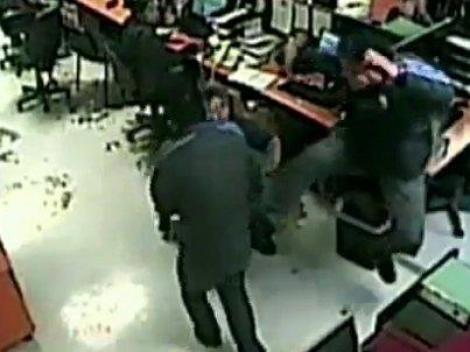
Kicking an employee is probably not the best way to boost productivity, or boost morale, but I suppose when Sam Won supervisor Kim Jaeoak got up from his desk to plant his foot in Jorge Alberto Zamora Esparza back (three times!), he had some kind of rationale. One assumes.
Burro Hall was undoubtedly right in waxing snarky over his local media’s “wall-to-wall” coverage of what appear on camera to be more just an angry boss acting like a total dickhead. The Burro may even be somewhat correct in detecting a whiff of anti-Korean prejudice in the media coverage, but considering Kim Jaeoak’s employer — Sam Won — is a subsidiary of Samsung, perhaps Mexico is fortunate that what has brought attention to the company and their labor practices was not a more serious incident.
I was bothered a few weeks back, reading what was meant to pump Mexico to business investors that one factor in Mexico’s favor was rising wages in … China. There seems to be an assumption that wages either would not correspondingly rise in Mexico, or… perhaps worse, that Mexican labor standards would become more like those in China. In other words, for all intents and purposes, non-existent. Enter the Koreans.
Hardly the most labor-friendly country on the planet, South Korean manufacturers are notorious for abusing their workers, especially immigrant ones. Having run low on cheap, easily exploitable labor in their own country, manufacturers like Samsung have increasingly turned to China… where they’ve engaged in things they might not try at home… like using child labor, along with the usual mandatory unpaid overtime, and the always popular physical and verbal abuse of their employees. The scandals at Samsung plants in China have been well-publicized, embarrassing the leaders of a country claiming to be a Proletarian state into appearing to take some action and forcing the company to at least make public relations statements to the effect that it’s changing its ways. Whether it will or not, that’s another story.
While the People’s Republic of China seems to have given up on any pretense of power to the proletariat some time ago, the assaults on worker’s rights in
Kung fool
Mexico is something fairly recent. I don’t pretend that the all-important Article 123 of the 1917 Constitution — the first such document to include a labor code — ended abuse, nor that worker’s basic rights are always protected, or even usually honored in full, that same Constitution recognizes something Mexicans just take for granted, whether it’s constitutionally protected or not… the right to “struggle for their collective rights”. It’s not like Mexico is new to manufacturing (and certainly not new to foreign owned manufacturers), and that the rules are flexible… they’ve been around since 1917, and so has the “official” permission for workers to defend themselves. As they have, in labor courts, through the Secretariat of Labor, on the streets, and in the media.
Yeah, it’s easy to say that Mr. Zamorra should have been physically capable of taking care of himself (although, for cultural reasons, hitting the employer back would be a highly unlikely outcome), but there aren’t a lot of jobs out there in Queretaro (or anywhere else in Mexico right now), and my guess is that the security tape didn’t end up in the hands of “Noticias On-line” without someone in the Sam Won plant joining in the “struggle for collective rights” of the plant’s workers.
It also may not be by accident that all this came up just as the Calderón Administration — having been thwarted in ramming a labor bill through Congress that would severely weaken workers’ rights is being reconsidered after labor and opposition parties raised serious objections to the original bill, even after concessions were made to preserve the facade of Mexico as a pro-labor state.
Less accidental might be the attention focused on this particular labor violation due to the nationality of the offending supervisor and his employer. Koreans in Mexico are — as Burro Hall touched on — viewed much differently than other immigrant groups. Although Koreans have been emigrating to Mexico since about 1900, and were generally assimilated into the mix-n-match ethnicity of Mexico in general, there has been a tendency over the last few years to see the Koreans — unfairly, of course — as “clannish”… settling in ethnic enclaves, avoiding any but the most superficial interaction with the general Mexican community, presumed to think of themselves as “better” than their Mexican neighbors, and having more money and possessions.
In other words, like the Americans and Canadians in the gringo ghettos.
But then the bulk of people in the gringo ghettos are not employers of more than perhaps domestic staff, who can — and do — have ways (legal and otherwise) to get their own when they are exploited. Those gringos that are here for commercial reasons, especially those with operations on the scale of Samsung’s Queretaro operations (12,000 employees) is going to have Mexican managers, and run their business by Mexican rules.
Kim Jaeoak may have literally kicked Jorge Alberto Zamora Esparza, but figuratively he kicked up a hornet’s nest… the State Department of Labor closed Sam Won while it investigates labor conditions at the plant, Jaeoak is up on criminal charges (and is likely to be deported), Samsung is busy issuing denials of any corporate responsibility — claiming Sam Won was only a supplier (it just happened it only supplies to Samsung… okie-dokie) and the Korean government was forced to issue apologies to all offended parties.


 mexfiles.net