Marching orders
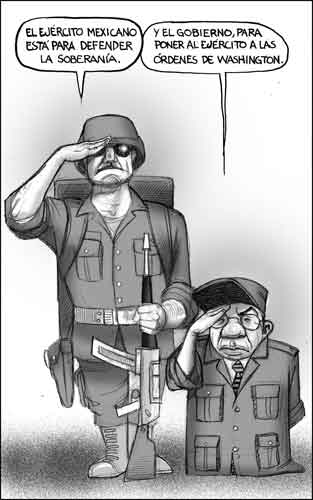
Soldier: "The Mexican Army defends our sovereignty" FeCal:"... and the Government to follow Washington's orders."
 With Proconsul Ambassador Carlos Pascual having deigned to inform the Mexican Senate of what is expected from them to fight the U.S. drug addiction problem, now its time to call in the Legionaries — not of Christ (they must have been at an orgy when the call came in) — but the honchos who will give FeCal his marching orders next week:
Secretary of State Hillary Rodham Clinton will lead the VIP group, which will include Defense Secretary Robert Gates; Homeland Security Secretary Janet Napolitano; the president’s top counterterrorism adviser, John Brennan; National Intelligence director Dennis Blair; and Adm. Mike Mullen, chairman of the Joint Chiefs of Staff.
I’m not sure when Mexico became the “Homeland” that Janet Napolitano supposedly is in charge of the Security for, and making gangsters into “terrorists” (i.e., giving them credibility) is what set off this round of violence in the borderlands and — what’s scary — the United States is sending in the Secretary of Defense (i.e., “War”) and the highest ranking military officer in the country to “consult” with the Mexican government.
Napolitano’s remarks to the effect that the Mexican military presence in Juarez and elsewhere was exacerbating the situation set off some grumbling in the Calderón Administration, which, after all, was what the United States wanted in exchange for giving that administration its support. Although, as Malcolm Beith puts it, “the lefties will rightly scream about” U.S. interference, I expect there will be. Napolitano’s remarks, like those of Pascual seem designed to mobilize still more govenment intervention in this one particular social issue — which might make THEIR homeland more secure, but does little or nothing to ameliorate the social and economic situations that make the narcotics trade a logical means of survival for so many.
And, for that matter, all this focus on what’s a threat to the United States means ignoring other pressing needs. Stinting on things like education, land reform, water rights that make people’s lives tolerable are being scaled back. Why? So the United States doesn’t have to deal with its own out of control narcotics problem and can still pretend it’s “violence spilling over” into a society based on barbaric economic and social thinking.
Malcolm asks “why not use some of that impressive US technology in the Sinaloan hills?”
Because that’s a little closer to my home than the impressive U.S. technology used in Afghan hills, for starters?

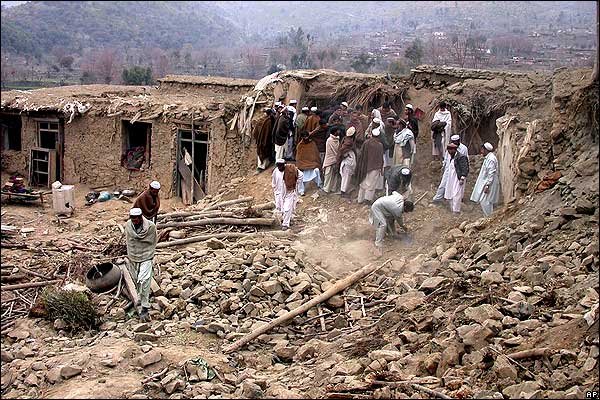
Gay tolerance in LA: bad news, good news?
Several of us in the Gringonet have commented on the chart published by Christopher Sabatini in Americas Quarterly. As Inca Kola News writes,
…tolerance of homosexuality (in the above chart measured by the willingness to have an openly gay person as a politico), has not changed much in the present generation. From what I’ve witnessed in the corners of LatAm I know, that one is sad but true.
 Not knowing how the question was framed, and not seeing similar statistics from non-Latin American countries (although Jamaica is included) it’s hard to assess how much of this is “normal” bigotry and how much is Latin specific. Haiti is the only country I can think of in the Americas to have had a quasi-open gay leader, and she was imposed by outside forces (based on her reputation as a NGO administrator), and only served as Prime Minister for a couple of weeks.
I’m pleasantly surprised that Chileans are so tolerant, given that country’s claim to fame as the most socially conservative (despite twenty years of “progressive” leadership)among the Latin American nations — being the last to legalize divorce, and having the strictest abortion laws on the books among the major Latin nations.
Colombia and Mexico show the most tolerance — with over half of all adult willing to have openly gay persons as political candidates. The good news is that at least in those two countries, age doesn’t seem to be a factor in tolerance, older people being as open (or closed) to the idea than younger people.
I’m wondering if the numbers would be all that different in the United States as a whole. The few gay politicos of national prominence being legislators from “liberal” districts who came out after they had already become powerful and well-known for other reasons. Here in Mexico, as in the United States, most openly gay and lesbian candidates have come from the left, generally representing better-heeled urban districts. I can’t think of any out Federal executive-level officers, although there may be some at the state level that I don’t know about.
One major difference in Latin American political life is that one’s personal affairs are seldom even discussed. The wife and kids (or, in our day, the spouse and/or significant other) aren’t sent out on the campaign trail, nor featured in the candidate’s propaganda.
You almost never read about a political spouse, unless — as has only recently been true — the spouse is a politician in her or his own right (like Marta Sahagún, Vicente Fox’s wife, or former PRD heavy-weight Carlos Imaz Gispert, married to AMLO’s shadow minister of environment — a post she held also in the Federal District government — Claudia Sheinbaum).
About the only political spouse, who was not a politician, who I can think of being a campaign issue (and not a very big one) was Mayra Coffingy, the Cuban-born wife of Lázaro Cárdenas Batel. While running for Governor of Michoacán on a leftist fusion ticket (sucessfully) in 2002, his conservative opponent tried to make hay of Coffingy as a native Cuban. This was somewhat misreported in the U.S. press as racial prejudice (Coffingy is specifically Afro-Cuban) but the attacks were more of the nature that if she wasn’t a Commie (she is, but then, what’s surprising about a well-educated Cuban marrying into a prominent Latin American political family having been a member of her own country’s ruling party) or not a “real Catholic” (which, again, given the Cárdenas clan, is to be expected).
For the most part, though, you just don’t hear about family life. There is something pathetic about the story of María Esther Zuno, Luís Echevarrí’s wife… a reluctant primara dama who wandered around Los Pinos at a loss of what to do with her time. It’s touching that the only time she was reportedly happy in her role was when President Richard Nixon paid a formal visit, and she… along with the equally shy and spot-light shunning Patricia Nixon spent a pleasant afternoon helping the maids.
There was almost no coverage of the terminal illness of Andres Manuel López Obradór’s wife. Although she was a shrewd political operator herself, almost no one knew who Rocío Beltrán Medina was, and other than mention of his sons (a car accident thrust one into the news) she was never heard of until her death in 2003. And, there has been almost no coverage of AMLO’s subsequent marriage and the birth of a fourth son.
When State of Mexico’s Governor Enrique Peña Nieto’s wife died under somewhat mysterious circumstances (she was only 43 years old, and probably died during an epileptic seizure) it was only important because it provided fodder for rumors about the Governor… and his fitness to govern.
One relatively recent president that I know of had a gay son (and Don Porfirio had a gay son-in-law), which was something of an open secret, but for the most part, Latin American family life and public life are separate spheres, “don’t ask, don’t tell” being the norm even for the most traditional of traditional values politicos.
It’s a sport… lose an eye — or a heart
Last Friday, Mexico City authorities announced a new construction project… for something very old: a full ulama court, in the pre-Colombian style. The game, which has survived for millenia has undergone a few minor changes. My translation from SDPNoticias:
The game , in which competing teams try to pass a rubber ball through a stone hoop on a wall, using only their hips to propel it, was an important part of Pre-Colombian cultures, including the Aztecs.
At the end of the game some of the winners were sacrificed to the gods.
The game is still played throughout Mexico and Central America, and groups and authorities in Mexico City are seeking to popularize the tradition.
The new set of fields will have an area of about 9,500 square meters with construction costs estimated at three million pesos ($ 240,000).
Human sacrifices will be strictly forbidden.
Here’s a demonstration game of the Mayan version, from Parque Xcaret. The modern version — more like soccer than ritual basketball — is played regularly by ordinary (but extremely healthy) guys around Mazatlan, but not as a tourist attraction. I don’t think there’s any rule that says you CAN’T rip the winner’s heart out, but then the rule book is about two inches thick and printed in small type, so maybe it does somewhere. It’s a complicated game.
¡Erin Go Bragh!
 The monument at the left was erected in 2004 in Clifden, Galway, Ireland. Clifden — which flies the Mexican flag over its equivalent of a palacio municipal — was the birthplace of Mexican hero, John Riley, the leader of the San Patricios who fought the U.S. invasion after realizing that giving aid to a land grab by English-speaking Protestants wasn’t exactly in the best traditions of the Irish. Fighting was.
As Roberto Salas wrote in a fine article for the November-December 2008 Irish American:
Estimates as high as 9,000 soldiers deserted from the American army during the Mexican war and many later vanished into the Mexican countryside.
The Irish deserters joined together and, under the leadership of Irish-born John Riley, formed the San Patricio Battalion.
The San Patricios created their own military banner with Saint Patrick on one side and a shamrock and the harp of Erin on the other. The reasons given for desertion were bad treatment and poor subsistence they received from non-Catholic members of the American Army. Being Catholics, they also resented the bad treatment given to Mexican civilians, priests and nuns after the war started.
The San Patricios fought in the five major battles against the Americans, which included Matamoros, May 3, 1846, Monterrey, Sept. 21, 1846, Buena Vista, Feb. 22, 1847, Cerro Gordo, April 17, 1847 and Churubusco, August 20, 1847. After the battle of Buena Vista, the San Patricios gained recognition as a Mexican fighting unit to be reckoned with. They gained the grudging respect of the American Army.
Although several San Patricios were hanged by the invaders as deserters, and others were branded, Riley himself survived but only by a few years. He was buried in Veracruz, 31 August 1850, with full military honors. In Mexico itself, where there are several memorials to the “Mártires Irlandeses“, there is a ceremony today at the San Patricio Memorial in San Jacinto Plaza, San Angel.

One year on, Mexico’s beef at getting porked
Via Mexico Trucker:
It’s… the eve of the first anniversary of the legal tariff’s that Mexico instituted in retaliation for the closure of the Cross Border Demonstration Project.
Our sources confirm that the rumors circulating that the Mexican government may update a trade retaliation list against U.S. products is true. This new list is very likely to include tariff’s on beef, pork and chicken products exported to Mexico.
For instance, in 2009, the United States exported more than 503,000 metric tons of pork to Mexico, for a value of $762 million, making it the No. 2 market for U.S. pork exports. Similar numbers show for chicken and beef.
More trucking and manufacturing jobs are sure to be lost, if this new round of tariff’s are implemented… and again, the blame will not be on Mexico, but squarely on the shoulders of …all who have opposed our compliance with NAFTA.
Sinaloa’s got better beef anyway.
Support you local police
With the push for more and more policing in this country, clever criminals set up a fake police road-block on the highway south of here, pulling over motorists and… well… doing with thieves do… appropriating other people’s stuff.
So, of course, the powers that be promise… MORE POLICE. Which is fine, but everyone seems to have forgotten the whole concept of rebuilding a police department … you, things like civil service examinations, physical and psychological testing, training and … oh, maybe A.A.
Residents in San Juan del Rio, Queretaro, hearing several gunshots, called 066 (our emergency number). Municipal officers, as they should, responded… to something that would be just a standard nuisance call most weekends in rural Texas: a couple of good ol’ boys firing off their pistols out at the dam. Maybe they were just celebrating St. Paddy’s Day a little early, but being Mexico, it couldn’t be anything that simple. Oh no.
The good ol’ boys were in marked cars belowing to the Municipio de Pedro Escobedo Police Department. Two of the bubbas were Pedro Escobedo uniformed officer (designated drunk drivers?). One was a civilian who shouldn’t have been there at all. And the big, obnoxious guy that has to mouth off to the cops and wants start a fight. Why that was Pedro Escobido’s Chief of Police, Juan Ramirez Baeza.
One would think the Police Chief would at least knew the drill, but seems to have trouble with the concept of standing up for his mugshot. And really, Chief (er, make that ex-Chief) , don’t you know you’re not supposed to mouth off to the cops?
Oops!
Several “oh never mind” stories floating around right now.
SBI, the ballyhooed “virtual fence” along the U.S.-Mexican border that seemed only slightly more boneheaded than a real fence when it comes to dealing with migration and smuggling issues, has been ignominiously canceled, effective immediately. 2.5 Billion U.S. dollars (that’s 2.5 thousand millions greenbacks) were allocated just for off the shelf hardware, and another 5.1 billion for start-up costs. U.S. Homeland Security Secretary Janet Napolitano ordered the measly 50 million smackeroos allocated for SBI to be wasted on other Homeland Security projects.
In Juarez, “Confused hit men may have gone to the wrong party, the FBI said Tuesday as it cast doubt on fears that the slaying of three people with ties to the U.S. consulate shows that Mexican drug cartels have launched an offensive against U.S. government employees.”
This isn’t the first time we’ve heard that… the same thing was said about the party of teenagers that was wiped out a couple weeks ago. On 24 May 1993, His Eminence Cardinal Juan Jesùs Posadas Ocampo and several other people were gunned down at the Guadalajara airport when hitmen hired by the Tijuana Cartel mistook the clergyman’s navy blue Buick Rivera for their intended victim’s black Buick. Mistakes happen, especially with subcontractors.
In Torreón the police are on strike… which may mean crime is going to go down. Anecdotal evidence from Oaxaca — where during the 2006 uprising the local police withdrew from the streets — crime also dropped, but that may have been because the citizens were more vigilant… or, maybe more policing causes more crime. Who knows.
Via Burro Hall, comes a nationwide outbreak of stupidity, reliance on “magic wands” to track drugs and explosives. They supposedly look for molocules, but molocules of what is best not answered. They’re supplied by a British company, but at least Mexicans can take some comfort in the fact that they didn’t pay for this voodoo tool… the gringos did.
The big headline from yesterday’s Dominican Today was more than a little alarming:

Yikes!. At the end of the story, the Update reads:
Although executives of the gold mining company haven’t informed on the possible causes of the incident, news source elnacional.com.do reported that the head of Pueblo Viejo Dominicana Corporation, Fernando Sanchez Albavera denied the poisoning of the workers. “In no way, nothing has happened with the workers of the company.” (my emphasis)
Never mind! It was, according to Canadian press reports, simply food poisoning, which I guess means there is no need to follow up on the claim by “[o]ne of the workers taken to a clinic in Cotuí [who] said a loud explosion was heard in the company and that many people near the area suddenly began to feel faint, headaches even became unconscious.”
The Associated Press and the Canadian press say that it was not toxic chemicals that felled the workers, as Dominica Today reported, but merely food poisioning. Besides, it wasn’t a thousand sick workers, although “Health Minister Bautista Rojas Gomez says 326 workers were hospitalized Monday and others are receiving outpatient treatment.”
Interestingly enough, Mr. “nothing happened” Sanchez is quoted, albeit indirectly, saying something a bit different in the Canadian press: “Fernando Sanchez, says a contractor provided the food and the illnesses have nothing to do with the work at the mine, which employs 3,500 people.”
Just for shits and grins, assuming this was food poisioning on the night shift, and say there’s a thousand workers in the mine, you’d think he would have known “something” happened when 10 percent of his workforce keeled over.
Back in February, the Canadian Ambassador need to defend Barrick Gold’s mining operation from criticism… it seems it’s not gold that’s in that thar pit, but sufides, and the Dominican Republic’s Enviroment Minister, Jaime David Fernandez Mirabal, complaining about the sulfide contamination just last week.
Not that sulfides would have made the workers sick, not without an explosion, which didn’t happen… but then, nothing happened — or maybe did — or something.
Consular affairs
The murder in Juarez of three persons, somehow connected with the United States consulate there (only one appears to have been a consular EMPLOYEE, the others being her husband and the third victim a Mexican national married to a consular employee) may or may not represent an escalation of violence directed against the United States government. Although it’s being spun that way (and U.S. news headlines are saying all the victims were consular OFFICIALS), it’s much too early to make even a semi-educated guess as to the rationale — if there is one — or draw any conclusions.
I’m not drawing conclusions, but would note that the spouse of the consular official that was killed was an employee at the El Paso County Jail and that all three had been at the same party earlier in the day. My “stab in the dark” guess (Malcolm Beith is betting it involves the D.E.A.) is that this involves gun-runers or narcotics buyers or money launderers from the United States… and that this is “spillover violence” from the United States. One way or another.
Without getting into “tin-foil hat” territory, I find it interesting… not necessarily related, but interesting nonetheless… that the attack took place one day after U.S. Ambassador to Mexico Carlos Pascual was demanding that the Mexican government legitimize the use of military troops on the streets of Juarez and elsewhere.
As Esther at Xico noticed, but almost no one else, Pascual’s background in diplomatic affairs is in Afganistan and his track record is one of imposing U.S. control over so-called “failed states.” It worries me that Pascual is a supporter — as is the U.S. State department — of both the Merida Initiative AND of the Calderón Administration. Overt U.S. pressure to follow a path which may not be in Mexico’s best interest (see previous post) but certainly is in the interests of the U.S. suppliers who profit from Merida while giving legitimacy to the Calderón Administration, smacks of pro-consular interference and treating Mexico like Colombia or a “banana republic”.
I expect the shooting will be used to ratchet up the pressure the Mexican senate in buying off on making the “state of exception” the rule — and, oh, just by coincidence, meaning a ready market for U.S. suppliers of military hardware, supplies and training.
I love the smell of Fascism in the morning
John Ackerman, of the Institute for Legal Research at the Universidad Nacional Autonoma de Mexico, agreed that the country is in a de facto state of emergency, which violates the Constitution. That explains why the Calderon administration has proposed changing the law to to broaden the grounds on which the army can be in some places, thus legalizing the present state of siege in some places.
Emir Olivares Alonso in La Jornada, 14 March 2010 (my translation)
Ackerman’s remarks come on the heels of U.S. Ambassador to Mexico’s Carlos Pascual’s “demand” to the Mexican Senate that the nation change its laws to make the on-going “state of exception” unexceptional and a permanent feature of internal security. This, in spite of calls from those Mexicans directly affected, and from presumably independent observers like Human Rights Watch, that military forces are worsening, not bettering, civil rights and security.
Militarizing public security does not, in itself, mean Mexico is descending into a totalitarian state and a rejection of all individualism and pluralism. However, as Rodrigo Vera writes in the 7 March 2010 Proceso (Hacia un franquismo a la mexicana…) [my translation]:
For the greater glory of God, Felipe Calderón’s administration is subordinating state interests to those of the Catholic Hierarchy, to the extent that the government is taking on a “Neo-Cristero” tint outside the Constitution — undermining the secular state.
Along with the military, which currently enjoys great perks and is mobilized at national level, the church serving as a second pillar of the federal government. The “double trouble” of close ties between the Army and the Church has triggered an escalation of the violations of human rights and individual freedoms.
The Proceso article is mostly concerned with what in the United States would seem to be a minor issue — the introduction of military chaplains into the armed forces — this is indeed a serious matter here.
For 150 years, the Mexican State has been seen as not just a defense against clerical control, but — more importantly — as the protector of individual and pluralistic thought. One needs to emphasize that these chaplains — and chapels — are specifically (and ostentatiously) Roman Catholic. Perhaps it is not by accident that military force was used against Santa Muerte shrines. While some congregants of Santa Muerte may indeed have ties to narcotics exporters (something all foreign reporters latched onto), it has been the most visible and irritating of the “heretical sects” bothering the Hierarchy.
At the time, I wrote:
While religious persecution on a small scale has happened, and is troubling, what’s worrisome her is that the ARMY was used for the iconoclasm. Which means the Federal Government is willing to bend the laws for the benefit (or to the detriment) of various sects (the Roman Catholic Church denies any involvement with the Nuevo Laredo actions, but requires we take that on faith, and faith alone)… and, even more troubling… that, as I have predicted in my more morose states, that the government would start using military forces to attack non-conformity, and excuse under the rubric of “drug gang” the oppression of the poor and dispossessed.
This is one of those times I really regret being prescient, but it’s not as if the signs of creeping “Francoism” (as Proceso labels it) haven’t been there. I took some ribbing for my concern with the attacks on the Emos back in early 2008, but caught the more serious undertones. There were indications that the attacks were orchestrated by right-wing groups — and defended by the right-wing politicians on the grounds that Emos were “social deviants”.
Add the backlash against abortion after Mexico City liberalized it’s laws, added to the standard neo-liberal economic response, and you have the usual lefty agenda for complaining that “creeping fascism” is underway.
But, it’s not creeping… and it’s not some lefty diatribe. From the United States Department of Justice’s “National Criminal Justice Service” I found an abstract to E.V. Walter’s 1969 academic study of African dictatorships, “Terror and Resistance.” According to the abstract (I haven’t read the book), Walter:
… holds that organized terror is not to be identified with totalitarianism, but that it emerges in other systems of power as well. The typical regime of terror, he explains, is one mode of dealing with political resistance, and of reacting to crises of social integration.
Add this to the “shock doctrine” — which Naomi Klein says is a specifically right-wing phenomenon, but which I don’t see MUST be implemented by the right — the use of state power to “punish” and destroy dissenters under the rubric of fighting a legitimate criminal threat as an attempt to legitimize a totalitarian state.
Add in the overtly “confessional” tone of the present administration (and remember that Calderón and much of his cabinet are from this wing of PAN, which also includes unrepentant Fascists) and there are reasons beyond political jockeying that well-read and intelligent Mexicans believe the state is falling into Fascism.
The eagle has landed
By tradition, 13 March 1325 is given as the date Tenochtitlan was founded making today Mexico City’s 685th birthday.
As everyone knows (or should know), Tenochtitlan was settled by the Mexica who, after their wandering through the desert (or somewhere else) fled their overlords on the mainland around Lake Texcoco for their island refuge. The story told by the Mexica — or, rather their ruling class that decided what was in their history classes — the island refuge was selected after receiving a sign from God… specifically an eagle landing on a nopal and eating a snake.
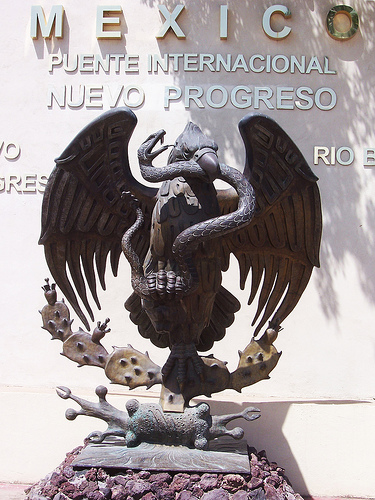
For the euro-centric among us, the Mexica/Aztecs are best compared to their contemporaries,the Ottomans, who also wandered in from elsewhere, settled down and conquered their neighbors about the same time. We don’t find it strange that pre-Ottoman cultural patterns persisted throughout the Turkish Empire, but do seem to have trouble wrapping our minds around the idea that not all Mexican culture is “Aztec”, nor that the Aztecs were simply the last of the great dominant Mesoamerican cultures before the Europeans added a radically new dominant culture… one that the indigenous cultures, as they have since people first appeared in this part of the Americans adapted to, and assimilated into their own traditions. And revised their histories once again.
Great shakes
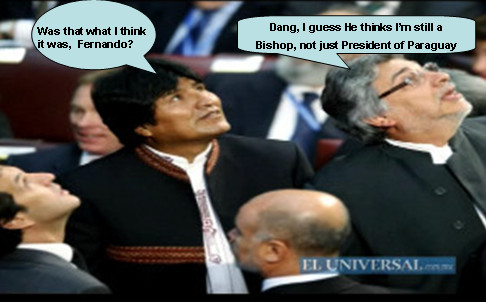
TWENTY-THREE … that’s TWENTY-THREE sizable earth tremors (including a biggie at 6.8 or so) rolled through Chile while the country was inaugurating a new president. The election of conservative Sebastían Piñera was expected to shake things up somewhat, but that was thought to be a metaphor.


 mexfiles.net