(Don’t) smoke em if you got em (just yet)
Marijuana was supposed to be legalized by the end of October, but “shamefully” (according to Víctor Gutiérrez and Tania Ramírez of the Drug Policy Program of México Unido Contra la Delincuencia) under a Supreme Court ruling, but the court has given the Senate another few months before the small minority of Mexicans (about 1 percent in a month, four percent at some point in their lives) can indulge.
Given that the rationale for legalization, despite the court’s finding that it was the right of Mexicans to whatever form of personal recreation they wanted, and to access what medications they needed, no one pretends the “real” reason was to take the profits out of the illegal export trade. Not so much for the benefit of that small number of Mexicans, but to capture what had been a business run by unsavory types, and substantial profits going unaccounted for, only returning to Mexico in dribs and drabs… and, as to revenue for the state… mostly in the form of bribes to selected officials. On top of that, attempts to eradicate the trade have proven worthless, and a drain on the economy (not to mention getting too many people killed).
The Senate bills (which would still need to go to the Chamber) were undermined by lobbying by Canadian corporatons, who have been quick to gain control of that country’s legal marijuana production. Given that a goal was to get the shady operators out of the business, and provide a better revenue stream for producers, yet another Mexican export under control of foreigners hardly seemed sporting. Under corporate control, the major fields run by “cartels” would still be run by big organizations, ones with no ties to the local community, and depending on expoited casual labor. The growers who depend on marijuana to supplement their too low farming income would either lose out altogether on sales, or be forced to grown more marijuana at the expense of other less-lucrative (but more in demand) crops like corn and beans.
Carroll, Linda, “One in seven U.S. adults used marijuana in 2017”
Reuters, 27 August 2019.
Gutiérrez, Victor and Tania Ramírez, “Cannabis: una prórroga excepcional y vergonzosa“. Animal Politico, 6 November 2019.
“Prevalence of Drug Use in the General Population of Mexico (ENA) [National Addiction Survey], By Gender” Drug War Facts.
A modest suggestion or two (LeBaron massacre)

With all the speculation (and background “dirt”… including that contributed by MexFiles) on whatever actually happened, a few facts have emerged. Or one obvious one… the shell casings recovered at the scene were from bullets manufactured by Remington Arms, and not legally sold in Mexico, nor meant for weapons available here.
Persons headed north, and cargos headed north are regularly have to go through military checkpoints, and are searched for narcotics. With Mexico about to legalize the trade, and the United States still largely in denial (blaming others is one of the first signs of addiction), legal access to a product like firearms is no excuse not to check, nor to demand proof of ownership, nor of questioning the ultimate point of sale for the product. I know what a pain in the wazoo those internal checkpoints set up by the Border Patrol are now…. but get serious. Time to start X-raying the cargo and autos headed south from the US, and start seizing weapons and weapon parts.
U.S. courts have long expected Mexicans who were never in the United States, but were the “intellectual authors” of the sale and distribution of narcotics to be tried in their courts. Extend the courtesy to our Mexican Fiscals… extradite the gun dealers, bankers, U.S ´weapons buyers to Mexico. The argument, after all, has always been that narcos had to be sent to US prisons because of weaknesses in the Mexican naroctics laws that allow criminals to go free, or with minimal sentences. That, in the US, the laws on gun running are weak, and prosecution is difficult, send the perpetrators here.
The FBI and DEA (and CIA) have been in this country for years, doing (most of us believe) more harm than good. If the FBI really is going to “help” in investigating a crime against dual national US citizens (who, let’s face it… are sympathetic and dominating the US news mostly because of their ties to the US… and because they’re white people), time to bring in Mexican prosecutors and investigators into crimes against Mexicans in the United States.
Mexicans, for the good of the drug dependent United States, is expected to put up with “collateral damage” (i.e., dead peasants, students, housewives) for the greater good of… them. OK, if a few… or a lot… of “innocent bystanders” get killed fighting the illegal firearms trade, so what? Right wing website in the US are always full of “xuggestions” that the US send military units or “wpecial forces” to wipe out narcos, never mind the cost. How about Mexican incursions into the US to wipe out gun runners. Drone attacks on gun shops and banks that launder (and if it hits the nail salon next door… oh well)?
C’mon… get serious… the US isn’t gonna do shit other than blame Mexico, and continue to spin this as a failure for a change to a less confrontational, less US obedient, government. Srcew them!
Of coups and kooks
This past week was the first time, in 20 years of writing about, and living in, Mexico, that Mexfiles has heard any serious mention (or, for that matter, any mention outside of far right US and fringe left Mexican media) of a military coup in this country. There was one… sponsored by the U.S. Ambassador… in 1913, but historically considered one of the all-time worst “blowbacks” in U.S: foreign policy (don’t take my word for it: here’s the CIA’s historical assesessment). Huerta’s coup touch off the fratracidal popular uprising of the second phase of the Revolution, and led to the establishment by 1920 of what was generally called, in the United States and Britain, “Bolshevik Mexico”.
Although in Gods, Gachupines and Gringos, I described the resulting government as a “democracy of Generals”, under Alvaro Obregon, civilian control …. backed by military muscle, true… was re-established. Obregon, who had achieved peace and consolidated the revolution through, among other things, bribery (he was famous, or infamous, for once remarking “No Mexican general can withstand a barrage of gold pesos”), simply buying out his military rivals, for the last 100 years the government had a policy of isolating the generals from political roles. One of the great heroes of the era, General Joaquin Amaro, As Secretary of War in the Calles Administration, he was unique among bureaucrats in demanding continual cuts to his own budget. Naturally, having reinvented the country through a Revolution, the Presidents, and presidential candidates, continued to be men with high military rank among their attributes, but the last general to serve, Manuel Avila Camacho, was during the Second World War.. And, the need for a more professional fighting force, was Avila Camacho’s excuse for retiring those officers with political ambitions who might be tempted to turn to the troops to “save” the country from whatever course the civilian administration might pursue.
This is not to say that the military was not an instrument of control. Pursuing dissidents, especially on the left, kept the military busy, and active duty generals and admirals continue to hold cabinet positions as Secretaries of the Army and Air Force, and the Navy. The only mention of a coup during those years came, surprisingly, from the left: when Cuauhtémoc Cardenas was denied the presidency in 1988 though obvious fraud, one faction in his coalition had been PARM (The Party of the Authentic Mexican Revolution), a small satellite of the then hegemonic PRI, which had split with the ruling party and whose leadership was largely made up of aging retired left wing officers. Nothing came of that except talk (mostly in foreign media) given that the left had been the target for military action and the governing elites were rapidly turning towards a conservative neo-liberal agenda, and aligning themselves (and their military) towards supporting U.S. interests.
Over the past thirty years, while the political system evolved into a more multi-party state, the “war” on dissidents continued sub-rosa until the Calderón Administration, when… combining the war on dissent with a shift towards supporting U.S. interests turned what had been a minor, or relatively unimportant, role supressing narcotics exporters became the military’s central task.
The mounting reports of military atrocities, together with the casualty rate among soldiers and marines, coupled with the out of control financial excesses of the Calderón and Peña Nieto aministrations turned even the middle class, and much of the elites into dissidents themselves. Donald Trump’s overt anti-Mexican racism certainly didn’t hurt in convincing even the apolitical citizens that a radical change was needed, both in economics and in security. AMLO, an an avowed Christian pacifist and leftist, was overwhelmingly elected President.
The new paradigm, the so-called “Fourth Transformation” (from Independence, the LIberal reforms of Juarez, the Revolution), called for a less militant, less violent reaction to criminality and less interdependence with the United States for both economically and in setting policy.
While the changes have been broadly popular, there is dissent, of course. There are those whose interests are threatened by the return to a more Socialist state, as well as those who reject a more “liberal” sense of personal and communal rights (for minority communities, for GLBT individuals, and relaxing the strict laws against abortion), and those ideologically committed to neo-liberalism. And, of course, those would-be “progressives” like Enrique Krauze and Denise Dresser (both favorites of the New York Times) who automatically distrust any hugely popular national leader, especially one who doesn’t follow their own prescriptions of how to govern, or what priorities need to be addressed.
The cock-up in Culiacán,, the attempted arrest of Ovidio Guzmán, appears to have been more a set-back in a learnig curve during the transformation of the military and police structure, than … as the new dissenters would have it… a wholesale condemnation of the entire administration. While more details are still forthcoming, it appears there was a break in the command and control structure, as well as inadequate intelligence before the operation against a figure wanted in the United States (but not, as of yet, facing any major criminal charges in Mexico) led to a wild, hours long shootout between gangsters and a combined police, National Guard, and Army operation that left several dead including one soldier, and more seriously wounded (one soldier lost a leg to a 50 caliber shell).
With plenty of off-the-cuff and irresponsible commentary, the speech by retired general (and former undersecretary of the Army and Air Force), Carlos Gaytán Ochoa (delivered to a breakfast meeting of high military officials, including the sitting Secretary) }. in which he complained about broad opposition to the changes in the security apparatus and how those changes are being implemented, touched off a reaction from the “influencers”, both those who support, and those who oppose, the transformation.
The military has traditionally enjoyed more respect (although you won’t find among the chattering classes anyone willing to serve) among institutions, more than that of the political classes, the Church, or business leaders. But, as a conservative institution (even if the soldiers and sailors and airmen and women tend to be from the working class and tend to vote the same as their civilian peers), the military establishment has been seen as the scourge of the left. AMLO shows the due deference to the military expected of the Commander in Chief, but aside from dignifying service men and women as “citizens in uniform”, but given both is pacifism and leftism, is …. as General Ochoa suggested, and other officers have said, faces strong opposition to the changes in progress, even among the rank and file.
The convergence of the General’s remarks, with the increasingly shrill reactions to the transformation including the expected U.S. sponsored support for far right opposition movements, and the equally expected outrage from the left, leads to heated rhetoric suggesting a coup, of the soft sort favored by the Obama administration towards any leftist Latin American government, or of the nontraditional Mexican, but common Latin American, military variety, is in the offing.
Given the tenor of reports in the “mainstream media”, both here and abroad, one suspects that the opposition will continue to glom on any misstep by the present administration to vilify the goals of a more equitable, post-liberal, pacifist state. But, given the likelihood of a coup? AMLO was forced to respond to the rumors and rhetoric, putting his trust in Mexican history and in the masses:
The conservatives and their hawks are wrong! They were able to commit the crime of overthrowing and killing Madero because this good man, this Apostle of Democracy, either did not know, or circumstances did not allow ihm to rely on a social base to protect him and back him up.
Times are different. Although the reality has change, and we should not simply make comparisons, the transformation I am leading has the support of a free and informed majority. Fair minded people, lovers of the law and peace, which will not allow another coup.
There is not the slightest opportunity for Huertas, Hitlers, or Pinochets. Today’s Mexico is not fertile land for genocide or for scoundrels who bed for it.
ONE HOPES, AND ASSUMES, HE’S RIGHT.
SOURCES:
La mala: 10 ensayos golpistas. La buena: Andrés Manuel y la 4T ya descubrieron a sus autores y los van a neutralizar, SDPNoticias (2 November 2019)
Benbow, Mark E. Intelligence in Another Era, Center for the Study of Intelligence, Central Intelligence Agency (25 June 2008)
EU quiere mayor compromiso de México contra el narco, Jornada (23 October 2019)
Hiriat, Pablo, En el Ejército, agraviados, preocupados, ofendidos por el Presidente, El Fianciero (31 October 2019)
La extrema derecha intenta dar un golpe de Estado suave
a AMLO. Jornada (15 July 2019)
Martinéz, Ciudadanía no permitiría golpe de Estado en México: AMLO, Jornada (2 November 2019)
Mayoría no permitiría golpe de Estado: AMLO, Reforma (2 November 2019) (no link)
Militares, “agraviados y ofendidos”: general Carlos Gaytán, Diario de Yucatan (3 November 2029)
National Endowment for Destabilization? CIA Funds for Latin America in 2018, Telesur (4 April 2019)
The usual talking heads on TV
High crimes and misdemeanors
For all the “can then, or can’t they” talk about impeaching the President of the United States, I don’t know if this is the right time for the Mexican administration to be making it easier to impeach their president, but they are. With the President’s full support.
It’s a bit strange to people from the US and elsewhere that elected officials in Mexico enjoyed a “fuero” … immunity from prosecution, in nearly all instances. Most western European and Latin American nations gave immunity to their officials in the mid-19th century for a good reason: it was just too tempting for the powers that be to dispose of “inconvenient” legislators and other officials for the most trivial of offenses. As the Mexican Constitution stands now. should President Lopéz Obrador, an avowed pacifist,do something so unlikely as shooting someone in broad daylight in the middle of Insurgentes, there would be absolutely nothing anyone could do about it. A few demonstrations, some blistering editorials in the opposition press and some cruel political cartoons, but that would be the end of it.
It literally took an act of congress to attempt to try Lopéz Obrador for the murky “crime” of using the power of eminent domain to build an access road to a hospital through a patch of land supposedly owned by various Vicente Fox supporters, and he was merely Mexico City’s head of government at the time. Considering that the whole point of the exercise was to prevent him from running for the Presidency — a candidate cannot be under indictment — it takes some really imoressive mental contortions to claim it was not a political act, rather than a search for justice.
Even so, Lopéz Obrador and his party (which controls both houses of Congress, and more than enough state legislatures to ensure passage) passed a bill today in the Chamber (the lower house of congress) which opens the way not just to “impeachment” but to trying former presidents for misdeeds in office. Where it took an act of treason for a president to lose his immunity, the new bill allows presidents to be tried for a number of common crimes (rape, murder, house-breaking, abuse of minors, human trafficking, pimping, auto and truck theft) and some that usually require being in a position of power… treason, misuse of public resources for personal enrichment, using social programs for electoral advantage, and just plain old abuse of power. And the always popular corruption.
Does Trump Tower offer a special rate for Mexican ex-Presidents and governors and representatives?
The future is in our hands

Photo by Mary Jo McConahay (National Catholic Reporter)
I have never understood Latin Americanist who ignore the largest transnational actor in the region… the Roman Catholic Church. We tend to regard the Church as a holdover from the colonial era, a reactionary force holding back adoption of “western” values (like same-sex marriage, or liberal abortion laws), all of which is true — to some extent — and only paying attention to it when it comes out against this or that “reform”. Or, we look to the Liberation Theologians for allies, although usually it’s just a quote from some local priest when a “social justice worker” is murdered.
But even for those of us who see the Church as the enemy of reform, there is value in “opposition research”… not to mention unless we pay attention, we too often assume a change will or will not occur when he fail to pay attention to what is coming from the Bishops and the clergy.
And, the faithful.
Mary Jo McConahay, who has been writing about, and from, Latin America for the last thirty years, reported from the back of the beyond of the Colombia Amazon about the “other” expectation for the Amazonian Synod. I say, “other” given that any press given the recent meeting of Bishops, clerics, experts, indigenous people, men and women from the Amazon and elsewhere, held in Rome the last few weeks, was — if reported at all — focused on the narrow issue of ordaining married men as priests, and considering the possibility of ordaining women deacons.
While these two changes were approved by the Synod (and go to the Pope for his approval, or amending), and they are of interest to the outside world (in reality, does one really fret over who stands in the pulpit of a Church somewhere up the Amazon River?), and although I suppose they signal a in major change in the face of the Catholic Church, they are of little impact to the rest of the world, the six billion of so non.Cathics, and probably 750 million of so not in the pews every week Catholics. For those 250 million or so (and maybe for the other three-quarters of a billion people) For them, more access to the services (in both the ritual and material sense of the word) is more than welcome (John Donaghy’s wonderful blog, Hermano Juanicito, writes of the joys, sorrows, and frustrations of a rural deacon in Honduras).
For the rest of us, though, for whom married priests, or women deacons are an esoteric concern, maybe worth a comment in a news site at most, the Amazonian Synod will have an impact on our lives. The Synod’s officially entitled “The Amazon: New Paths for the Church and for an Integral Ecology”… and as much attention as paid to the ecology of the region (and the planet) as to expanding access to the clergy and to the sacraments of the Church. In Chapter Four of the submitted 33 page final report (approved paragraph by paragraph by the 185 voting members of the Synod), we read:
Faced with the pressing situation of the planet and the Amazon, integral ecology is not a path that the Church can choose for the future in this territory, it is the only possible way, because there is no other viable path to save the region…
Specifically calling for divestment of all Church funds in the Amazonian region from the extractive industries, and fossil fuel industries, we are not talking about a few pesos or reales or soles or bolivars finding their way to “green industries” but world-wide. The Synod explicitly calls for the rest of the world to join their divestment campaign, and promote active participation with such campaigns. It’s not a question, in the war to save the planet, of how many divisions the Pope has, but how many dividends … the Pope, the Archdiocese of New York, of Hamburg, the Vatican Bank, the Catholic universities and their endowment funds… have. So far, about 150 Catholic institutions have already divested.
And… while we are all sinners… defining “ecological sin” … our actions, or inactions, in protecting our community and environment… in or out of the pews, to adopt a more sustainable lifestyle in this world, not counting on the next.
Additional sources:
Amazonia: New Paths for the Church and for an Integral Ecology
Synod for the Amazon (several articles, various authors), National Catholic Reporter
The usual misreporting by Fox News, Lifesitenews, etc.
A soldier’s story.
Many, especially those outside Mexico, have been quick to blame the Mexican military from backing down from mounting a bloodbath during Thursday’s shootout in Culiacán. Apparently, the critics need to be enlightened on exactly what civilians were are risk had they not backed down.
(translation mine, from an open post by “Cocinaro de GN”
Good afternoon.
I am a soldier from Culiacán, currently stationed in Manzanillo,. I think that many people need to understand the value of things and the fear of losing a loved one and the impotence one experiences when one is unable to do anything, we felt when we received the news about the mess that followed the capture of that character. My wife calls me to tell me what was happening in all the streets of Culiacán saying things were getting ugly.
My wife and children live in an apartment complex provided by the Sedena [Mexican Department of Defense]. I told my wife not to go out to the street, and that they will be protected, and to wait until there was word from the state authorities that everyone was under control Imagine what I felt when my wife called me back to tell me that the apartment complex was surrounded by armed people, and they not only could not leave, but that the armed men were shouting that if their boss was not released, they would begin killing the tenants.
At the same time we were asked to not lose our courage, we we filled with impotence and rage. I do not know now to explain it, but I didn’t care about anything other than knowing my family was safe. It is is a feeling only those of us who live with it can understand.
I see comments by people who call us cowards or call the government cowardly. I only have to give infinite thanks for having made the decision they did, and seeing my family again.
Nobody wants to live something like this, but, I would like them to put themselves in our shoes and not say that it was a failure for our families to have come though safe and sound.
Thank you very much for allowing my family to be by my side and for not getting carried away looking for another win [in the “drug war”].
A footnote in women’s history
Do you recognize this woman?

Enriqueta Basilio (born 1948) was a member of the Mexican Olympic team in 1968. Although she never set any track records, she did set one… , the first woman ever to light the Olympic torch.
I would not feel so all alone..
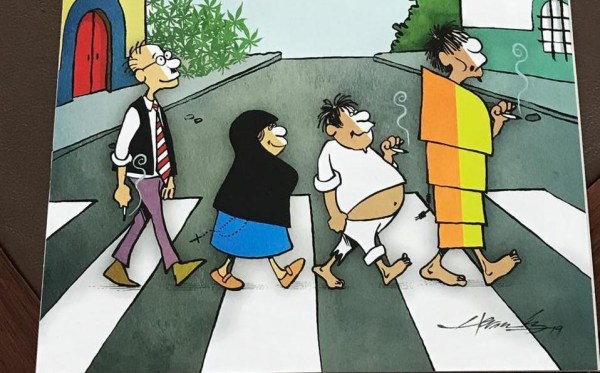
… with 10,000 copies being distributed for free of a new comic book, “Mariguana para principiantes” (Marijuan for Beginners), published with the support of the Mexican Senate, New York University, the Fondo de Cultura Económico, and Educal (the National University publisher).
Based on “Los Supermachos” the characters created by the late comic book/graphic historian “Rius”‘.the book (about a cloud that descends on a community, making everyone giggle, especially when they meet a talking green dog named “Can Nabis”. No, of course it doesn’t recommend all uses even if the back cover features Diego Rivera and Frida Kahlo smoking doobies and a quote from Frida, ““Everyone should smoke marijuana to hear the color of the world”.
No, not at all… it merely educates the public to the medical, industrial and (cough, cough) recreational uses of a plant for which the regulations regarding the legal cultivation and use should be passed by the Senate this week.
Worse than a crime, it was a blunder?
Last Thursday’s shoot-out … or, according to some, “war”… in Culiacán was a disaster, but perhaps not for the reasons the foreign media (and, initially, most of the Mexican media as well), reported. There have been botched attempts to capture “narcos”, and running street battles in urban areas before, but never, it appears, as long running (about 11 hours of mayhem in the streets), and never before ending in a “truce”. AS FAR AS WE KNOW, that is.

LA TImes
Narcotics smugglers have enjoyed an “understanding” with the government (after all, there isn’t much of a market for narcotics here, while a quarter of the world supply finds an avid market just north of Mexico) and during the so-called “war on drugs” we only heard about “successful” operations, or operations that were reported as achieving their goal (which, for all we know, was a goal defined after the fact). And mostly in rural areas. We’d read about a dozen or so “sicarios” being eliminated, and, to this day, have no idea whether they were bad guys, innocent bystanders, or inconvenient witnesses. Famously, Joaquin Guzmán, aka “Chapo” is said to have escaped near capture on several occasions. Escaped, or …?
1. Guzmán was the Lex Luthor of the narcotics industry. Or, given the breathless media stories, movies, and political posturing in the United States (isn’t blaming others one of the hallmarks of addiction?)… “PubliC Enemy #1″… and all that, it has always been troubling that … just as the Peña Neito administration was running into trouble, and needed the United States to help cover up its corruption and ineptitude… Chapo was miraculous “captured” at a resort hotel in Mazatlán. More troubling was that, during his trial, the defense was forbidden to raise possible collusion between the Sinaloan exporter and the Mexican government and the U.S. Drug Enforcement Agency.
Whether Chapo was a wealthy as claimed (his operation had a very high overhead, and … whatever money there is, is morely likely in the US and European banking system than it is a treasure buried in the Sierra Madres) … but he remains a boogie-man, and good press, We are fascinated by Chapo, but… his son? Honestly, I’d never even heard of Ovido Guzmán, the intended target of the Culicán operation, and, given that the Sinaloa cartel has been fighting among itself for control of what was once considered the largest narcotics exporting business in the world (not a hierarchal business, but an informal and loosely a cartel of several different organizations), how imporant a figure Ovido even was, or is, is questionable. Had the target a different surname, the story certainly would have been reported, not as “OMG! Gangsters (or, rather “cartels”, which is meant to sound more sinister) have taken over the state!!!”, but as what it was: a botched intelligence operation.
George W. Bush was elected President of the United States following a questionably tainted election (decided by the Supreme Court based on confusing returns in the state where his brother happened to be the Governor) in 2000, taking office in January of the next year… and, his legitimacy in question, was “saved” when Saudi Arabians flew airplanes into the World Trade Center in New York and the Pentagon in Washington, DC, allowing him to “unite the country” in a war against… not Saudi Arabia, but Iraq. Felipe Calderón was elected president of Mexico in July 2006 (after Bush had won a second term), . Even more so than Bush, Calderón’s election was marked by controversy, depending on a dubious vote count in one state (Oaxaca) where… while he didn’t have a brother holding the governorship, his party had an ally in the highly corrupt Esther Elba Gordilla, who had formed her own party, and run a candidate able to siphon off enough votes in Oaxaca to give Calderón a very slight (and statistically questionable) plurality over his nearest rival, Andres Manuel Lopez Obrador.
Although Calderón was able to take office (in a hasty, and almost surreptitious ceremony when the opposition refused him entry into the Chamber of Deputies) on 1 December of that year. As with Bush, his administration was in trouble from the start, and in need of a national emergency to salvage it. On 22 October (a month and 10 days longer than BUsh took to find his “crusade”) during a meeting of the two presidents, “Plan Merida” was announced. In return for massive financial infusions by the United States in their security and defense industries, Calderón would have the wherewithall to fight his “war”… at home.

Susana Gonzalez/Bloomberg via Getty Images)
“Plan Merida” achieved two goals. In the United States, besides the financial windfall for those industries that generally supported Bush, it revived the flagging “war on drugs” that more and more U.S. citizens were seeing at the time as a war on their own people, especially persons of color. And… it allowed the largely conservative American middle class to put their country’s drug use problem at a distance, seeing the supplier, not the consumer, as the source of the problem. For Calderón, it meant giving the military a mission, and a handy tool for cracking down, not just on narcotics smugglers, but on dissidents of all sorts. the results were about what you’d expect.
2. Annibel Hernandez was not the only one to notice that some cartels are different than others. It seemed (and there is evidence to back up her claims) that Calderón administration officials were working hand in glove with the Sinaloan cartel (as, one suspects, so was the DEA, and possibly the CIA). As the “collateral damage” piled up, generally attributed to the “cartels”, people began to distrust the government forces as much as the cartels. As they soon figured out, the “strategy” of the administration, if there was any strategy involved, was simply to throw massive amounts of firepower at cartel leaders… to the surprise of no one… rivals to Chapo Guzmán.
With rampant state violence, violence of all kinds accelerated. That indigenous communities, especially those opposing foreign corporate interests, were targeted by (literal) corporate raiders (i.e. mercenaries and hitmen) was easily written off as “drug violence”. And, with the various gangs under attack, they responded with their most powerful weapon… the money they were receiving from narcotics sales to the United States. Corruption of all kinds was rampant, and, facing increased firepower from the military, the narcos also upped their arms purchases… something easily done, given the complete lack on any meaningful controls in the United States.
Never popular, and with the “powers that be” recognizing that the “bleeds it leads” media coverage of Mexico was damaging the bottom line, their support, and that of the new Obama administration in the United States, went to the opposition. And, despite the ballyhoo about Peñs Neito “Saving Mexico”… nothing substantial changed.
3. Although Barack Obama was popular in Latin America… an eloquent speaker (and one able to at least pronounce Spanish correctly), a person of color and well-mannered, a refreshing change from the often inarticulate and sometimes boorish Bush, his foreign policy with regards to Latin America (and, in particular, Mexico) was a combination of the “dollar diplomacy” of William Howard Taft, combined with the contempt to Latin America sovereignty of Woodrow Wilson. His Secretary of State, Hillary Clinton, was obsessed with reversing the leftward trend in Latin America, culminating in her active role in the impeachment of the presidents of Brazil and Paraguay, not to mention the coup in Honduras. In no way would the United States have supported, tacitly or openly, the radical change in the direction of the “drug war” (supposed, Obama said, ended in the United States) or anything else, when it came to Mexico. That Peña Neito was obviously buying votes was conveniently overlooked on the night of the First of July 2013, when the US President called to congratulate the former State of Mexico governor on his election… before the vote count was announced (you figure it out!).
Peña Neito has been compared to General Santa Anna when it comes to corrupt regimes, but there is another comparison as well. Santa Anna’s secret to political success was a calculated appeal to the “average voter”, in his day, appealing to the patriotism of the “low information voter” (the peasants) and the interest of the “insluencers” (the rural middle class). Peña Nieto combined the two, having mounted a huge media campaign (including buying positive news coverage on Televisa) with outright bribery for the lower information voter, and calls for modernizing education and business practices to the benefit of the “influencers” managed to give him a six percent victory over Lopez Obrador, the voters massively rejecting Calderón’s intended replacement the relatively unknown Josifina Vasquez Mota, seemingly chosen for the novelty of a woman candidate on a major party ticket.
Giving Peña Nieto his due, he united the three mainstream parties in a “Pact for Mexico”, bringing about the changes being proposed by the “influencers”and … incidentally… giving them all a shot at stealing government funds and indulging in the ostentatious corruption that followed.
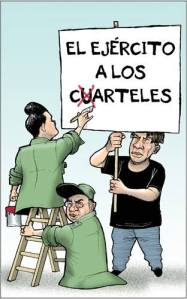
“El FIsgón”
Peña Neito was indeed “saving Mexico”… pushing the “drug war” off the top of the news while using the now extensive security apparatus to spy on journalist and investigators, harass dissenters, and saving the country from any threat to foreign corporate interests. And, now and again, mounting a succeszful or “almost successful” attack on those pesky drug lords.
Trotsky supposedly said “the comfortable seldom rebel”, but Peña Neito was making a lot of Mexicans uncomfortable as they saw their own economic and personal security threatened while the elites enjoyed the fruits of legislative “reforms” and the President failed to deliver on his promises. Lopez Obrador, having led the PRD to its position as the third major party, was extremely uncomfortable. Moving to a minor party, he began to build a coalition that, by the end of Peña Neito’s term was positioned to become the majority party. At the same time, a perverse twist of fate meant the United States was unlikely to interfere in Mexican elections (as it consistently has done since 1828). Hillary 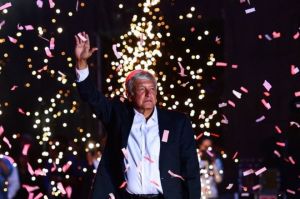 Clinton, the foe of Latin American progressive movements, was defeated in her run for the Presidency by the odious Donald Trump. Ironically, the reactionary Trump was a boon for the Mexican progressives, making any US support for a candidate the kiss of death. In addition, the rampant corruption of the Peña Nieto years, combined with disgust at the violence of both the Calderón and Peña Nieto administrations made it nearly impossible for their respective parties to find candidates who might be acceptable to the public. Immediately following Lopez Obrador’s 1 July 2018 election, and even though he wouldn’t take office until the First of December, Peña Neito, and his programs, was irrelevant.
The news during the transition mostly dealt with the promises to adhere to “republican austerity” (famously putting up the Presidental airplane for sale as soon as he took office, and cutting his own salary by 605) , “AMLO” had run on a platform of massive reforms, and reforms to the Peña Nieto reforms. Among them was an end to the drug war in favor of protecting citizens while providing alternatives for the poor who would otherwise find the narcotics trade their only viable means of support,, taking the military off the streets, incorporating the military’s internal security apparatus and the national police into a national guard, abolishing the “secret police” intelligence service, CISEN, and adhering strictly to the law.
A hugely ambitious plan to “save Mexico”.
Change takes time.
4. The military appears to have jumped the gun… coming for Ovido before the judicial order was finalized. Proceso suggests the presumed head of the Sinaloa cartel, “El Mayo” Zambrano saw a benefit in “dropping a dime” on Ovido. Corrupt practices are not likely to end overnight. While waiting on the judge may have been a “technicality”, in the end upholding the letter of the law not only proved the administration takes the law seriously, it offered an out to an otherwise disastrous operation.
That the cartel was better armed than expected suggests an intelligence failure… and, highlights a security issue that has been subject to attention by the AMLO administration, the easy access to US weapons, that so far the Mexican government has been able to receive any cooperation from the United States in curbing.
With the priority being to protect civilians first, and punish the wicked a far second, getting people off the streets and hunkering down in safety was, or should have been, the first order of business. Innocent people were killed, but the body count is nowhere near would could have happened, and what has happened in smaller communities where “kill em all, and let the Lord sort em out” seems to have affected military thinking. Was the Army and police expected to call in a helicopter gunship in a city of 800,000 people?
What happened in Culiacán was part of the “learning curve”… a blunder perhaps, but also the end result of years of criminality by previous governments.
Jesús Esquival, “En el narco operativo de Culiacán, la mano del “Mayo” Zambada“, Proceso, 19 October 2019
“El día en que El Mencho fue supuestamente arrestado y liberado después”. Reporte Indigo, 18 October 2019
“Esta noche en Culiacán siguen bloqueos, quema de vehículos y grupos armados (videos)“. Rio Doce, 17 October 2019
“Video: El Chapo son FREED to safeguard” citizens in Culiacan“, Mazatlan Post, 17 October 2019
“Culiacan on fire: the final whip of El Chapo and the most painful defeat in modern Mexican history“, Mazatlan Post, 18 October 2019
Jo Tuckman, “‘We do not want war’: Mexico president defends release of El Chapo’s son“, The Guardian, 18 October 2019
Kate Linthicum, Cecilia Sanchez, “Eight killed in Mexico as cartel gunmen force authorities to release El Chapo’s son“, Los ANgeles Times, 18 October 2019
“Culiacán: ‘Decisión de liberar a Ovidio fue la correcta’, Buscaglia“, Regeneraión, 18 October 2019
Jorge Covarrubias, “Con Calderón, Policía Federal trabajaba para el Cártel de Sinaloa: Anabel Hernández”, Polemon, 8 July 2019
ADN40 and France 24 television news programs.
Pancho Villa, fat and happy
This photo (made available by the general’s grandson, Francisco Villa Campa) was taken inn 1920 or 21, after his retirement to his ranch in Cantullo. Fat (though, always being ahead of his time, he took up jogging) and happy (raising his own large brood, and adopted children) he couldn’t stay out of politics and was assassinated in 1923,

Dear White People
Certain announcements of some of this year’s celebrations conjured visions of hipsters drinking special holiday microbrews and listening to live music by white bands and eating white food in calavera facepaint and broken trails of marigolds. Don’t bother to build an altar because your celebration is an altar of death, a ceremony of killing culture by appropriation. Do you really not know how to sit at the table? To say thank you? To be a gracious guest?
From an essay by Aya de Leon on the cultural appropriation of the Day of the Dead. I’m bothered less that outsiders (and us insider outsiders) appreciate the tradition and sometimes adopt it ourselves (I do know gringos who build ofretas) as I am by the commodification of what is a traditional family event into a tourism extravaganza.
Not to be a bomb-thrower, but it was a specifically Nahuatl custom appropriated by the Catholic Church and other Latin American cultural groups (including “white people” in las Americas. That said, the author is right to object to the commodification of what is essentially a acceptance of death as part of the natural order of things, to create a “creepy” false tradition for tourists (here in Mexico City, the local administration invented a “traditional” parade for a James Bond movie) and others. It seems “traditions” lose their meaning not so much when they are appropriated as when they become a commodity to be measured in pesos and centavos.


 mexfiles.net