Calderón’s iron-fisted governance may back-fire
Fred Rosen’s long analysis of FElipe CALderón’s “law n’ order” approach to governance is well worth reading.
Rosen very nicely ties together the three “newsmakers” — the crackdown on narcos (and dissidents), the troubles in Oaxaca and the tortilla price jump — into into one scary enchilada. His thesis is that given the Calderón administration’s tenuous victory in the July elections, and the political right-wing’s preference for “market solutions” without interference, Calderón is going to opt for these kind of responses (every forgets Calderón’s original campaign slogan was “Una mano duro para México).
What’s not widely reported in the “mainstream press” is the level of dissent and dissatisfaction. AMLO has pretty much disappeared from the foreign press, other than to note that his support has dropped off since the occupations in Mexico City after the election. It seems (and I’d have to confirm this) that his support is back to about what it was in the election… about a third of the voters, with significant numbers of people who would go along, or cooperate with him. As we’ve seen with issues like abortion in DF, and gay marriage in Coahuila, the progressives may have allies in the PRI, and the minor parties.
The FAP (PRD and congressional allies) are doing their best, and may yet convince enough members of congress to take their alternative solutions to Calderón’s “strong hand” policies to keep the “elected President” from instituting the “reforms” that may not be in Mexico’s best long-term interests — dealing with the agricultural crisis and formenting education would go a long way to eliminating the need for the “hard hand” that is only marginally successful in eliminating the narcotics trade (and which may be counterproductive).
Here’s some highlight’s from Mexico: Year Zero
Calderón’s government is determined to present itself as tough enough to crack down on disorder and to balance its fiscal budget by imposing austerity on the public sector (except on that part of the public sector that enforces the government’s toughness). He wants to restore law and order to those areas beset by criminal violence or social protest (two activities he deliberately conflates), and he wants to maintain macroeconomic stability by cutting federal spending, even while raising military and “security” expenditures.
He has begun by launching what has been billed as an all-out war against Mexico’s brutal drug traffickers, vigorously defending the social order by cracking down on the social movements in the state of Oaxaca, and responding quickly to the stunning rise in corn and tortilla prices. As these three components of the political moment play themselves out, things are beginning to look dicey for the new president. Illicit drugs are becoming cheaper and more plentiful on Mexican streets, tortillas are becoming more expensive and less plentiful on the kitchen tables of the poor, and repression and dissent are escalating in Oaxaca. …The new drug war, however, may have broader motives. The administration may simply be signaling that whether it is confronting civil unrest, labor conflicts or criminal activity, it will increasingly rely on police and military force to establish the conditions for law and order, no matter what the disorder is all about. Which brings us to Oaxaca.…Though the intolerable social conditions that reign in most of rural Mexico are just beneath the surface of the conflict, the APPO’s demands have never been very radical: better conditions for teachers and schoolchildren, the removal from office of a repressive governor, the withdrawal of federal police and, now, the release of imprisoned APPO members.All along, even after the PFP was dispatched to the city, the Fox government indicated it might recognize the validity of the social struggle, which had burst into violence under severe provocation, and begin a serious dialogue with the leadership of the union and the APPO.
Had such a dialogue taken place then, or more to the point, were it to take place now, it would touch on issues of education (the unrest began with the teachers’ strike), health, housing and creating decent work opportunities.
…
With the arrest of Sosa and his compañeros, the Calderón government has clearly opted for what has been labeled “the criminalization of the social struggle.”
The arrests in early December, before the launch of the Calderón government’s drug war, also signaled its intent to inaugurate the crusade for law and order—not against the drug gangs, but against militant social movements. The gangs and the dissidents were thus lumped together as criminal disrupters of the social order.
…
For Calderón’s neoliberal economic advisers, the tortilla crisis showed that corn markets had to be allowed to operate more freely, and that Mexico must further open itself to free trade by rapidly abolishing all remaining tariffs on imported corn. Indeed, the initial government response was to authorize the tariff-free import of an additional 450,000 tons of white corn from the United States, and another 200,000 from the rest of the world. Mexico currently imports about 8 million tons of various kinds of corn per year. This comes to over one quarter of all the corn that is consumed in the country.
For much of the opposition, by contrast, the crisis demonstrated that the corn markets must be more tightly regulated to guard against unscrupulous manipulation. “It doesn’t add up,” observed a mid-January editorial in El Universal. “If a kilo of corn costs 2.20 pesos and at the end of the productive chain a kilo of tortillas sells for 10 pesos or more, then most of what the consumer is paying goes to intermediaries, who certainly incur costs and have the right to a profit, but not to take such a disproportionate slice of the pie, much less to speculate with the product to cause an artificial shortage.”
…
In fact, the price agreement was never meant to be enforceable. High international corn prices, combined with the lack of any integrated, independent production-distribution chains within the country, and the lack of political will to intervene in the markets, have allowed transnational importers like Cargill, Wal-Mart and Pan Bimbo to raise prices in selected outlets while adhering to the agreement in others.
So this past January, people were not simply feeling sin dinero…. Many not only noticed the dramatic increases in corn prices, but significantly reduced their caloric intake. Which brings us back to the political moment.
For now, the stage belongs to Calderón: This government, he is telling everyone concerned, is prepared to impose its will. But after a month of triumphant success, things may be slipping out of control.
Rosen’s article was in the NACLA Report, which publishes excellent pan-Latin studies, as well as country specific information. Much of the material is free, but I’d love to be able to afford a subscription… or share a subscription: Blogistas of the world unite…we have nothing to lose but our phone lines!
If you aren’t subscribing for us, do it for yourself: http://www.nacla.org/subscription.php
At least he didn’t throw a rock
(with update)
I don’t know if this is a “man bites dog” type story, or just something to file under “really stupid gringos.”
Stace Medellin at Dos Centavos posted the outline of the story:
An anglo shot a Border Patrol agent!!! Some 21 year old kid was hanging out on the border for some reason. As the SA E-N tells it: “This individual was down there on the river, and set off some electronic sensors that we use to detect incursions. Our officer responded and engaged the individual to discern what he was doing,” said Carlos X.Carrillo, chief patrol agent in Laredo.
Stace left out the best part…
“Mr. Davidson pulled a gun and began firing at our officer. He absconded and apparently swam over to Mexico,” he said.
An extensive manhunt on the U.S. side involving more than 100 officers from various state and federal agencies failed to find the shooter. However, bulletins sent to Mexican police eventually bore fruit.
“He was arrested late Wednesday or early Thursday by the Nuevo Laredo municipal police based on information provided by U.S. law enforcement,” said Carrillo. “He was carrying a knife, and that was the charge they used to detain him. It’s our understanding he was not wounded,” he said.
Dos Centavos speculates the idiot from Lubbock was conected with Border Watch or some other white supremacist group. The kid’s an Aggie, which a lot of Texans think is practically the same thing. By any measure, he’s an idiot.
Hell, they should have left him in a Mexican jail. He looks like a real survivor… not!

Stupid white boy, Jordan Davidson. Photo: San Antonio Express-News
UPDATE:
This story gets weirder and weirder…
Julian Agular and Miguel Timoshenkov of the Lardeo Morning Times/El Tiempo covered Davidson’s arrest and the hand-over to the U.S. authorities. Apparently, Davidson was trying to scale the wall around Boy’s Town (the Zona Tolerercia) when he was apprehended at 5:45 in the morning. The pair writes that Davidson
was turned over to U.S. federal authorities at International Bridge I at about 10:30 a.m. and was taken to the Laredo Police Department.
He is charged with attempted capital murder of a federal law enforcement officer. He was being held without bond at Webb County jail late Thursday.
At police headquarters, Davidson had little to say to reporters, generally ignoring questions and turning away from cameras.
At the Nuevo Laredo police station, however, he was more vocal and asked reporters, in a combination of English and broken Spanish, what was going to happen to him. He was told that nothing was going to happen to him in Mexican custody and that he was being sent back to the United States to face charges. He asked about “the murder rate here” and then made several disjointed comments and odd facial expressions.
…
Chief Border Patrol Agent Carlos X. Carrillo said [Border Partrol Agent Jesus H.] Aguilar was responding to a sensor that had been set off while on the banks of the Rio Grande.
“The agent came into contact with Mr. Davidson to discern what it was he was doing there, and his citizenship,” Carrillo said. “At that point, Mr. Davidson reached into his pocket and drew a weapon and began firing at the officer.”
Martinez said Davidson then fled and Aguilar’s partner pursued the suspect on foot. The agent could not apprehend the attacker, who escaped into the brush.
Carrillo said the weapon Davidson used was a semi-automatic handgun, but provided no further details.
Carrillo said there have been 26 assaults on Border Patrol agents in the area since October 2006, eight of which involved arms of some sort.
He said it is unknown whether Davidson was working with, or for, any other parties. As of Thursday morning, the investigation had not yielded any evidence showing Davidson’s connection to any organized-crime element, he said.
A car that Laredo police said Davidson drove to the area where the shooting occurred, a gold-colored Honda sedan, was taken to a Laredo police lot. It contained a checkbook belonging to Davidson, which listed his city of residence as Bryan. The car also contained a backpack, bottles of water and a Laredo street map. There was a Texas A&M sticker on the rear window.
The admissions department at the university could not be reached to determine whether Davidson is a student at the university at College Station.
For those not familiar with Texas A & M, it was a state Ag school masquarading as a military academy for many years until the Texas legislature in its wisdom decided it was a real university. It has some good departments (and is best known for a very good vetranary medicine program), but retains its military “traditions.” The homoerotic “Corps of Cadets” runs around campus in jackboots and brown shirts, and the football “traditions” are legendary. It’s the only university I’ve heard of that requires incoming freshmen to attend a “boot camp” basically to guarantee that students will adhere to the “traditions.”
It’s a very weird place (I lived just off the campus when I first moved to Texas, in a trailer owned by an Iraqi-born geologist teaching at the engineering school there) … just for starters, the George W. Bush Library is there, and Robert Gates was the “reform” president brought in to clean up the school’s unsavory image as a breeding ground for crazies.
The school was heavily involved in Tom DeLay’s schemes in Micronesia, and at one point had a chemist on staff who actually was trying to transmute base metal into gold. It also attracted funding from some filthy rich cranks who wanted to clone a dead family dog… science and logic ain’t their strong points.
Tony Garza, the U.S. Ambasssador to Mexico, was the school’s first Hispanic graduate… and the school’s ties to both Bush administrations are very close.
A later follow-up by Julian Aguilar quotes Texas A & M officials of saying Davidson is not a student — which makes him even more pathetic… an Aggie wannabe.
Texans think of Aggies as arrogant boneheads… and if this kid is a pseudo-Aggie, the whole thing is even more bizarre than I thought.
Expect delays — democracy on the march
Foreigners (ok, gringos, at least) get discombobulated every time they run into a manifestacion in Mexico City. They think the Revolution is about to start. Nah… everybody takes demonstrations for what they are … just part of life in a democratic society, and part of living in the nation’s capital. The morning radio shows give you the accident reports, the construction updates and … the protest marches.
I was a little amused by this coverage of a fairly good sized Friday afternoon demonstration, in Jornada:
A contingent of at least a thousand students will march from the Glorieta of the Angel of Independence down Paseo de la Reforma headed for the Plaza de la Consititución.
The demonstrators, part of an organization called the “Federation of Mexican Peasant Socialist Students,” will occupy all eastbound lanes on Reforma, which is expected to cause serious traffic problems.
The Federal District Public Security Secretariat said that once the group begins marching, they hope to continue down Reforma to Avenida Juárez, to the intersection of Francisco I. Madero, and then on to the Zócalo.
The junior high and high school students are protesting the government’s neo-liberal policies and in favor of more funding for rural schools.
Police recommend drivers seek alternative routes. They recommend using Avenida Chapultepec rather than try to cross Reforma at Insurgentes.
Tuesday is May Day (Labor Day), so it’s perfect timing for a school field trip. Mexican kids go to Mexico City like U.S. kids go to Washington… and hang out of the school bus windows staring at the Palacio Nacional just like U.S. kids stare at the White House. It’s a lot of fun for the kids, especially for those that don’t get a chance to go to the big city very often.
I just wonder if the Etica (what we call Civics) teachers are gonna require a report — “How I picketed the Capital” — next week. Sounds like a good time will be had by all… except the commuters on Reforma.
Can you see YOUR local school board getting a request from a student group with a name like “Federation of Socialist Peasant Students”? Our school board had some serious issues with letting the Alpine Fightin’ Bucks Marching Band take an overnight trip to Corpus Christi to perform at a Naval retirement ceremony … what if they caused trouble? With one chaparone per six kids, the juniors and seniors are going.
We always hear about Mexican kids having mamates (“mommy-itis” — they depend too much on mommy), but forget they’re a lot more self-reliant — and expected to be self-reliant than our kids are. Good or bad, I can’t say. But they don’t seem to have much trouble finding their way around the big bad city.
Besides, I’m sure the Mexican Federation of Socialist Peasant Students has advisors, and some parents are along as chaparones, and really … how much trouble can a country kid get into in a city of 15,000,000? They’re only there for the demonstration anyway.
Whether you prefer the traditional version from Veracruz (as performed by “Son Jarocha”) …
… or the Americanized version (“Los Lobos”)…
La Bamba still has a good beat you can dance to after 324 years.
According to John Todd Jr., La Bamba topped the charts in 1683 Veracruz — it was a catchy tune you could dance to, while lampooning both Spanish authorities and the Jarocha draftees who were expected to protect the port of Veracruz from pirates.
Yo no soy marinaro… soy capitan!
No soy marinaro… soy capitan!
The old anti-draft song got a makeover in the late 1940s, when Miguel Alemán (originally from Veracruz state) adopted it for his 1946 presidential campaign: the upbeat music fit the upbeat postwar mood, and the future prosperty under the Institutional Revolution.
A few years later, slightly north of the Mexican border, on the other coast, Richie Valens added a few more stylistic changes… kept the optimism but dropped the political nonsense, and invented it once again.
Hasta la vista, reconquista
Anybody else remember the dust up back in January 2006 about Mexican “soldiers” coming into the U.S. to protect drug shipments? I just picked one right wing(nut) site from the time, to give you a feel for the kind of rhetoric that was floating around back then:
This one happens to be “ParaPundit”:
The U.S. Border Patrol has warned agents in Arizona of incursions into the United States by Mexican soldiers “trained to escape, evade and counterambush” if detected — a scenario Mexico denied yesterday.
The warning to Border Patrol agents in Tucson, Ariz., comes after increased sightings of what authorities described as heavily armed Mexican military units on the U.S. side of the border. The warning asks the agents to report the size, activity, location, time and equipment of any units observed.
It also cautions agents to keep “a low profile,” to use “cover and concealment” in approaching the Mexican units, to employ “shadows and camouflage” to conceal themselves and to “stay as quiet as possible.”
The bad President in the White House and the elite club of fools in the US Senate do not care about this sort thing.
Rafael Laveaga of the Mexican embassy in Washington DC would like us to believe that drug smugglers are just dressing up to look like Mexican soldiers. The head of the Border Patrol union thinks this claim is ridiculous.
After everyone from Lou Dobbs and Bill O’Reilly and congress-varmits like John Cutherbertson of Dallas weighed in, it turns out the “ridiculous” claim by the Mexican embassy was… correct.
MEXICO CITY — Federal police said Friday they have arrested two drug smugglers who strained Mexico’s relations with the United States by disguising themselves as Mexican soldiers and confronting Texas lawmen.
Oscar Alonso Candelaria Escajeda and Ivan Gandara Trejo, were detained Thursday in the border city of Ciudad Juarez, across from El Paso, Texas, according to a news release from the federal public security secretary.
It said that the two disguised themselves as Mexican soldiers and crossed the Rio Grande into Hudspeth County, Texas, in January 2006.
Texas lawmen spotted three vehicles, including at least one a military-style Humvee, and tried to halt them near Neely’s Crossing, about 50 miles (80 kilometers) east of El Paso, on suspicion they were loaded with marijuana.
The smugglers escaped back across the border without a shot fired, abandoning more than a half-ton of marijuana as they fled.
U.S. authorities initially believed the men were Mexican soldiers and the incident strained relations between the two nations before U.S. officials said they accepted Mexican assurances that the smugglers were only disguised as soldiers.
An official from Mexico’s Attorney General’s Office said the two are believed to be members of the Juarez drug cartel. He spoke on condition of anonymity because he was not authorized to comment publicly.
Candelaria Escajeda also faces drug smuggling and possession charges filed in West Texas in December 2006, the news release said.
Geeze, it’s not like Mexico doesn’t have military surplus stores. And, you can buy guns and trucks and stuff easily enough in Arizona and Texas.
DOH!
I want to watch the spin on this one, so will probably update and revise sometime tonight or tomorrow.
Chihuahuas, Nescafé and immigration
 At the Greater Metropolitian Alpine Press Club today, someone who knows my financial status (poorer than most, but then, we’re poor folks out here to begin with) suggested a new financial opportunity … Chihuahuas to Chihuahua:
MEXICO CITY, April 25 Pet stores in Mexico have begun selling U.S.-bred Chihuahuas to their more high-brow customers.
“I think it’s probably partly a matter of status, this desire for an American dog,” said David Sanchez, assistant manager of the Mas-Kota shop in Mexico City ‘ s Perisur Mall. Sales of the tiny dogs from the United States have even increased in the northern state of Chihuahua, from which the tiny breed originated, USA Today newspaper reported Wednesday.
“A lot of the time these are the same blood lines we sent over the border years ago,” said Mayra Rodriguez, owner of the Mascota Pet Shop.
Copyright 2007 by UPI
I have to admit, it’s one that never crossed my mind, though importing Mexican exports isn’t unhead of. Nescafé, or… as the serious coffee-drinkers call it … ¡No es café! … still dominates the consumer market for coffee in a country that produces about 50 million tons of coffee a year. According to Nestlé,
Soluble coffee again leads the way in this market, with NESCAFÉ absolutely dominating the scene. NESCAFÉ Classico is the stongest player in the market. A sample of NESCAFÉ products sold: Decaffeinated, Diplomat, Ristreto, Dolca.
As far as instant coffee goes, Ristreto isn’t undrinkable, but outside of the traditional cafés (which mostly use the Mexican brand, Café Legal) and a few “foreign” restaurants like McDonald’s, the bigger chains like Sandborns (which used to be Chase and Sandborn way back when, and still sells their own crappy – though inexpensive – coffee), the same cafes that have sprung up everywhere the hip and pretentious gather (even in Marfa, Texas …which is why I live in Alpine: our unofficial motto is “50% less attitude than Marfa”) — and a few classic coffee houses like Cafe Habana in Mexico City, or La Paroquia in Veracruz (where Benito Juarez used to go for coffee).
Most places it’s Nescafé – Classico if you’re lucky – or nothin’. Even in the coffee-regions. The worst cup of coffee I ever had in my life was at the Veracruz bus station. I’d arrived at some ungodly hour of the morning and the only place open had a pot of hot water on the stove, into which the counterwoman dumped a jar of “No es café” and started ladling out what probably was meant for washing the dishes at 8 pesos a cup. You wonder why addicts of less legal substances turn to crime?
Some of us hard-core Mexphile caffiends resort to the simple expedient of just taking a spoonful of the stuff straight and getting it over with – it’s about as horrible, but a lot quicker than dissolving it in water and stretching out the torture. I found you can wash out the taste with some decent atole
¡NO PASARAN! Or, rather… it shouldn’t be thus.
Mexicans are traditionally not big coffee drinkers. According to an article in the October 30, 2000 Food and Drink Weekly, Mexican coffee consumption was only about 2 cups per person per week.
Which is not to say Mexicans don’t drink coffee. Traditionally, they do, and have since the 18th century. I admit that surprised me, but … and it’s amazing what you find when you start looking… a California historian named Stephen Topik presented a learned paper at the Segundo congreso de historia económica sponsored by the Economics department at UNAM back in 2004, on the history of coffee drinking in Mexico. It’s fascinating reading (or at least the PDF file makes interesting reading when you’ve had too much coffee and are up late at night):
One study puts 1785 as the date of the first coffee in Mexico while another cites 1789 as the founding year of the Café de Manrique in Mexico City. The European name “café” was adopted in Spanish but it was also supposedly given an indigenous name “acoxcapolli” which means “without sleep.”
But, most coffee consumption was local (Topik quotes from 18th and 19th century sources who talked about local coffee in the local markets, and points out that most small farmers had a few coffee trees in the growing region) and even complaints from foreigners about crappy coffee are nothing new.
The French courtiers who accompanied Emperor Maximilian in 1863 were dismayed with the quality of the coffee they encountered in Mexico. Countess Paula Kollonitz complained that “coffee, which grows here of the best kind, is so badly prepared that it is almost impossible to drink it.”
It’s that “coffee… of the best kind” that may be the reason coffee of the undrinkable kind is so prevalent today. It really shouldn’t have happened:
Guatemala’s success in the last decades of the nineteenth century encouraged foreign and Mexican plantation growers to spread the caffeinated habit with indigenous peoples adopting it; and in the north, proletarian workers accepted the habit as an extension of the United States culture of mass, home-oriented, coffee drinking.
The historiography of the Porfiriato has stressed the export economy and hence has neglected the spread of new consumption items. Mexican coffee production shot up from 10 million kilos to 45 million kilos from 1901 to 1911. However exports remained stable at 20 million kilos after 1905 demonstrating that internal consumption overshadowed exports. Joseph Walsh reported in 1902 that internal transport problems had hindered Mexico’s coffee exports “so much so that the production of coffee in Mexico has been almost limited to supplying the home demand.”
In other words, Mexicans were drinking coffee, and fairly decent coffee at that, before the Revolution. After the Revolution, the emphasis was on nationalism, and coffee was never seen as a national beverage. But it was a damn good export crop, and the government was happy to help the farmers find new markets. They subsidized coffee growers since there was a huge growth in foreign demand after 1920., though, for complicated reasons, Mexicans turned to Coca Cola for their caffiene fix.
And, the Revolution created an urban middle class, who wanted consumer goods. After WWII, when the Revolution was turned into the Institutional Revolution, the state focused on creating Mexican industries that would meet internal demand: if a product was available in the United States, the same TYPE of product would be available in Mexico, even if there was only one brand, and it wasn’t as good as the foreign variety. Thus, Café Legal Soluable entered the market in 1964.
With globalization in the 90s, foreign brands began driving the Mexican brands off the market, or making them non-competitive. Nestlé, the Swiss-based multinational, gobbled up what Mexican market there was… and heavily promoted – not Mexican coffee – but imported Nescafé. While Mexican farmers still sold about a third of their coffee on the local market, export prices remained high (and shot up between 1960 and 1990)
The largest buyer, as with most Mexican exports after World War II, was the United States. In 1989, the U.S. decided to pull out of the International Coffee Agreement, which had kept prices stable (and farmers happy). It helped consumers in the short run, since coffee buyers were free to shop the world market for the cheapest beans (and instant coffee is made mostly from robusta beans, which only grow in the Eastern Hemisphere. Mexican coffee is the “higher grade” arabica variety ), just as the coffee craze was starting (I worked for a short time for a small coffee distributor. We called it “the drug of the 90s”).
It appeared as if more people were drinking coffee, though it may just be that people were willing to pay a premium to drink concoctions made with coffee (what the hell is a white coffee decaf latte anyway? It ain’t a cuppa Joe). That premium didn’t translate into higher prices for the arabica growers, who were rapidly going broke, just as they were being encouraged to increase production.
Cancelling the ICA in 1989 had a secondary effect.
To some extent, the 1989 decision to abandon the ICA system has come back to haunt the US. Lower coffee prices gave encouragement to many Latin American peasant farmers to cultivate coca, in order to make up lost income. Thus, the rapid upsurge of illegal drug imports in the US during the early 1990s was connected to the post-Cold War politics of coffee. Then, in the late 1990s, the US Government provided subsidies to farmers in Bolivia and Columbia to switch from coca to coffee production, which further added to world production, over-supply, and lower prices. In another example of how the decision to abandon the ICA has come back to impact on the US, the New York Times reported that ‘In Central America, the World Bank estimates that 600,000 coffee workers had recently lost full-time or temporary jobs, prompting a flight of Guatemalans and Hondurans to Mexico and a separate exodus of Mexican farmers into the US
In other words… too much coffee, too little money… too few jobs for coffee farmers. To add insult to injury, NAFTA meant the end of Mexican farm subsidies. Not growing robusta beans for the cheap coffee market, and locked into multi-year contracts by the buyers who could find cheaper arabica beans elsewhere, the Mexican coffee growers were shit out of luck.
There were some half-hearted attempts to stimulate an internal market for Mexican coffee but with consumers already buying Nescafé, and Mexican coffee consumption actually dropping (according to the Food and Agriculture Organization ) there isn’t much that can be done.
The small growers’ association, CNOC, has done what it can, and is selling some export coffee under the Aztec Harvest label. I sure appreciated buying REAL coffee direct from the farmers on the streets of Mexico City — but even with fair-trade agreements and the realization that coffee trees are actually environmentally useful in preserving rain forests it’s probably too late to save Mexico from years of crappy coffee, emigration and foreign imports of national products – coffee or chihuahuas.
Save the Mex Files from cheap coffee!

Self-defense, my eye!
Edmundo at ¡Para Justicia y Liberdad! had been all over this one, and has done a better job than I could, so what can I say but read Blood in the dust: Border Patrol agent guns down immigrant…
Surveillance video of a deadly shooting last month of a would-be illegal migrant by a Border Patrol agent is prompting calls by the Mexican government for an investigation, although it shows the agent apparently firing in self-defense.
Self-defense from what? This type of behavior seems to be normal, recently Agent Nicholas Corbett was charged with first-degree murder of Francisco Dominguez-Rivera, of Puebla, Mexico, who was unarmed at the border in January. Corbett was also charged with second-degree murder, manslaughter and negligent homicide. His excuse – he claimed he “feared for his life,” however, Corbett’s account didn’t match witness testimony or forensic evidence.
One thing that’s crossed my mind… back in June 2005, conservatives in this country were outraged when the Mexican government put out a historieta specifically warning border crossers NOT to toss rocks at BP agents. Under pressure from the U.S. government, distribution of the warnings were discontinued.

DF Abortion decriminalization only the beginning
Mexico City’s new abortion bill (which won’t be a law until some minor details are worked out, it’s published in the Gaceta and signed by Marcelo Ebrard… details, details) is, of course, the talk of Latin America. I noticed there were major stories in all the Latin American newspapers, the best from Argenpress, which has an excellent overview of the history and legal status of abortion in Mexico. Sorry, I haven’t had time to translate it.
Within the Republic, there are already moves within some state Congresses to change existing laws. Puebla Governor Marin is calling for a referendum within the state to keep the contentious issue out of the Congress. Marin’s party is the PRI.
Kiosko Mayor (Hermosillo) reports that the Sonora State Congress has taken up the issue. At this point, PRD in favor, PRI against “a culture of death” and PAN promoting better health care for pregnant woman.
With the PRI split on whether to go back to its revolutionary (and anti-clerical) socialist roots, or whether it should become a centerist party, I’m not suprised the Sonoran party is opposed to the same bill that was introduced by the party in the Federal District. (Blogotitlan believes PAN and PRI should be called PRIAN, since they both share the same neo-liberal economic ideology).
Abortion reform will have a tough time in Sonora, with the State Congress split 13-12 between PAN and PRI, and with PRD holding only three seats (PAN ally Nuevo Alianza has two and PRD ally, PT has one). The surprise is that the issue is even coming up.
PAN, which voted against the Federal District bill as a bloc, is in trouble with the Elections Tribunal for running an ad featuring an actor playing a supreme court judge condeming the woman for having an abortion. I’m not sure what PAN was trying to prove, but the parties get all kinds of federal funding to spend on advertising, in return for restrictions on content. Suggesting how the Supreme Court would rule is a big no-no.
At the same time, however, the Federal Government (which is controlled by PAN) is ready to prosecute Cardinal Norberto Rivera for interfering in the political process. PAN may be the “confessional party”, but the radical separation of Church and State is still the law in Mexico:
“Authorities have begun prodeedings, based on the complaint, which named Norberto Rivera Carrera and Hugo Valademar Romero as persons who made reference to a specific political party in their capacity as religious ministers and as spokesmen for a religious association,” according to an official release.
Salvador Beltrán del Río, General Director of the Office of Religious Associations, added that the Cardinal and Valdemar Romero were notified of the administrative procedure. He added that “The Secretaría de Governación reiterates its inalterable decision to pursue this case, which falls within the scope of the Secretariat’s duties, and is obliged to enforce strict compliance with the law.”
PRD and the PRI have both complained about foreign … specifically Vatican interference, and are demanding the Secretary of Foreign Affairs send at least a stiffly-worded note.
Pro Vida, the right wing Catholic group (as the Protestant Christian Coalition was to the Republican Party, Pro Vida is to PAN) had influence under Fox (Marta Fox came from the “confessional wing” of the party, and helped steer government funds to the group for sex education — what we’d call “abstinance education.” It was wasted among other things on buying tangas for the leadership’s girlfriends… one reason pro-abortion protesters were throwing panties at the Pro Vida supporters), and is using abortion to try and regain some of their influence. While they are convincing PAN leaders to do something to stop the bill, they aren’t exactly up to speed yet.
El Diario de Cuidad Victoria reports that Pro-Vida suddenly is shocked, shocked to discover there are at least five clinics offering abortions. Pro-Vida has been in Victoria for only 19 years.
Mexico is not as Catholic as outsiders like to think, and 2/3rds of voters in the Presidential election cast ballots for leftists or anti-clerical candidates. Despite some alarmist rhetoric, I really think we’re going to see a continuing liberalization in Mexico. Just as a foretaste, I noticed that the Secretary of Public Instruction, pressed on whether abortion would be included in the required sex-education curriculum (even in private religious schools) said it would be at least mentioned.
Immigration Raid in Chicago
Lorena Diaz de Leon, a U of Chicago medical researcher, who works with the Mexican imigrant community in her native Chicago, when not visiting family in San Luis Potosi and Guanajuanto. As soon as we get it set up, she’ll be contributing under her own by-line. I had trouble setting up “contributors” before, so have patience.
On 26th street and Albany Avenue in Chicago, Illinois yet another immigration raid has befallen illegal, Mexican immigrants. The reason for the raid was supposedly to seize an illegal fake-documentation organization housed in the discount mall. Randall Samborn of the US attorney’s office reported that the agents made arrests as well as searches throughout the Little Village area (a predominately Mexican immigrant community on Chicago’s south side).
I often wonder in what form these raids will persist. In these past couple of months, the raids have become more common and have literally spanned across the nation, including raids in: Georgia, North Carolina, Baltimore, Washington, D.C, Texas, and now, Chicago.
The Chicago incident disturbs me all the more because it has become personal now. It has occurred in the neighborhood I grew up in and it has afflicted the people that continue to foster that community’s richness in Mexican culture (a great contribution to the diversity of Chicago’s citizens). And yes, I consider immigrants, “citizens”, for one that contributes to societal functions in a positive way, i.e., contributes to the economy, deserves to be recognized. Instead, the US doesn’t see the immigration conflict in this way. The US position: they are illegal, they should be deported. This ideology has gone far enough.
According to witnesses, the agents in the Chicago raid managed to fill two buses and another bus was seen en route, presumably to arrest more immigrants. This raid naturally enraged the community. People immediately took to the streets and marched in protest while locked arm-in-arm.
How many more raids will continue, and how many times will “illegal” activity be blamed? Let us not forget the depths of where these immigration raids have reached. They have provided extremist groups with a new agenda. Groups such as the Ku Klux Klan and Neo-Nazis have surged in numbers compared to their slow growth in the 1990s. Their popularity has been attributed to, of course, anti-immigration sentiment!
The following is an excerpt from CNN reporter, Paula Zahn’s interview with the “imperial wizard”, Ray Larsen, leader of the Ku Klux Klan:
ZAHN: “We are bringing a frightening new trend out in the open tonight. Today the Anti-Defamation League released a brand new report that shows that the Ku Klux Klan is on the rebound and recruiting new members at an alarming rate. So what’s their new strategy? Here’s Deborah Feyerick.”
(BEGIN VIDEOTAPE)
UNIDENTIFIED MALE: “They’re going to make y’all number two if you don’t get them out of here.”
DEBORAH FEYERICK, CNN CORRESPONDENT (voice-over): “It’s the newest marketing tool for hate groups, illegal immigration, a topic so divisive the KKK has been signing new members, some say, at a rate not seen since the 1960s. Ray Larson is imperial wizard of the Ku Klux Klan in Indiana. Did a light bulb go off in your head that said, this is our new issue?”
RAY LARSEN, IMPERIAL WIZARD, Ku Klux Klan: “Absolutely. Illegal immigrants is bringing us far more members than we did when we were just totally against any ethnic group.”
FEYERICK: “There’s no way to verify how many rally attendees actually became Klan members. But the response supports what the Anti-Defamation League called surprising and troubling findings in its new report about the KKK. In it, the ADL warns of a, quote, ‘noticeable spike in activity by Klan chapters across the country, many of them exploiting illegal immigration.’ As a reformed member of the Aryan Nation, Floyd Cochran knows firsthand what fuels hate groups like the KKK. He tracks them on his website, eyeonhate.com.”
….
CESAR PARALES, PUERTO RICAN LEGAL DEF. FUND: “When you start using terms, when you start saying, this is an invasion, these are cockroaches coming into our land, you’re using obviously racist language. You’re trying to make people hate others and that is your real intent.”
FEYERICK: “That’s Larsen’s plan.”
LARSEN: “I’m going to be very emotional right from the get-go, yes.”
FEYERICK: “Entice new members who hate illegal immigrants, then brainwash them to hate others like blacks, Jews and gays once they’re hooked. By making illegal immigration your issue, is this to ensure the survival of the KKK?”
No one can exactly say how future raids will be handled. The landscape of American culture is changing. It is propelling anxiety in souls of the undocumented, a country built by immigrants. Milton Friedman fashions America’s immigrant history in the subsequent quote:
There was a time when we [the U.S.] had completely unrestricted immigration, when anybody could come to these shores and the motto on the Statue of Liberty had some real meaning. This was a country of hope and of promise for immigrants and their children, and as many as a million immigrants a year came in 1906 and ’07 and ’08. By 1914, roughly a third of the population was foreign-born or the immediate descendants of foreign-born…The fact that year after year hundreds of thousands of people left the countries of Europe to come to this country was persuasive evidence that they were coming to improve their lot, not to worsen it.
As an American citizen, I can walk freely into a store without the panic of having some federal agent whisk me away on a bus. I do share a common fear with my fellow Mexicans, both immigrants and citizens. That fear is of hate groups. Their vileness is deplorable, their reasoning, fake. This as much is true, they won’t ask for proof of citizenship; their aim is to eliminate all of color.
Show us zee papers, part II
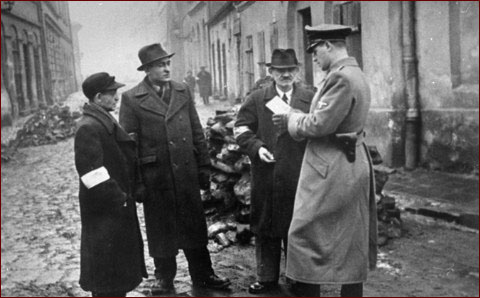
I’d said before that now that those of us on the border are stopped by armed agents of the government and forced to prove our right to be in our own country, it was only a matter of time before you’d see the same thing in other parts of the U.S.
Heavily armed officers from several federal agencies locked down a strip mall in a fraudulent-document bust Tuesday, scaring residents and triggering an angry rally at one of Little Village’s busiest intersections that lasted into the evening.
“Soldiers bombarded our neighborhood,” said Baltazar Enriquez, 30, a lifelong Little Village resident. “It looked like they were marching into Iraq.”
…
Strip mall locked down“The police closed all the doors and came through calling for people on a list,” said beauty salon owner Maricela Iniguez. “They made everyone sit on the floor and put the plastic handcuffs on some people. The rest were just quiet and scared.” She echoed others who said they saw heavily armed agents yelling at and handcuffing people, then rounding them up into vans before releasing all but a handful.
Sombrero tip to Corrente Wire
xxx
U.S. gives head to Mexicans (yes, this is safe for work)
A detached head… Immigration and Customs Enforcement, the Customes and Border Patrol, the Mexican Consulate… crime in Arizona… gringo smugglers… how could I pass this one up, even if all the bureaucrats turn out to be good guys?
Phoenix, Arizona.-The Immigation and Customs Enforcement (ICE) of the United States returned to the Mexicna Consul General in Phoenix Arizon a granite precolumbian sculpted head, which a person tried to bring into the United States this past december.
“If he could speak, I imagine the archeological artifict would say I want to go home. These types of treasures are not trophies for personal pleasure, nor art for a collection, but illegally smuggled good,” said Alonzo Peña, Phoenix supervisor for ICE.
Peñs made the comments at a press conference where he spoke with Mexican Consul General in Phoenix, Carlos Flores and Florentino Castro, representing the government of Sinaloa, where the artifict originated.
Flores received the precolumbian head as the represenative of the Mexican government during a brief ceremony at ICE offices, where both Flores and Peña signed documents to formalize the transfer.
“I would like to express my profound gratitude on behalf of Mexico and the Mexican peoples to the U.S. authorities, and to ICE in particular for recovering this piece, which is a part of the cultural patrimony of Mexico and Sinaloa,” Flores said.
The Mexican diplomat emphasized that this incident underscores the importance of collaboration between the two countries in fighting the illicit trade in archeological artifacts. Peña said that the 20 by 10 cm. Monolith, which weighs nearly eight kgs. Was confiscated last December by Customs and Border Patrol (CBP) agents from a man trying to smuggle it into the United States from Sinaola at the San Luis, Arizon border crossing.
He added that the alleged smuggler could only be charged with administrative sactions, because they were unable to authenticate the artifact at the time it was discovered at the border.
However, he added that ICE would cooperate with Mexican authorities if criminal charges are eventually brought against the smuggler, who was not identified.
The Mexican Consul indicated that possible criminal charges were being explored in his country. Flores emphasized that the country’s patrimony has been looted for years, and that cooperation with the United States and other countries is essential to fight this type of crime.
For now, the legation will have charge of the archeological piece, whose exact date of origin is unknown, until it is turned over to researchers from the Instituto Nacional de Anthropología e Historia (INAH) in Mexico
The precolombian head will be returned to Mexico together with several pieces that came from the Ferrería Durango Archeological Zone presently at the State University of Arizona.
The Mexican official said that in the three years he has served in Phoenix, this is the first time that U.S. authorities have turned over an archeological find. Peña, for his part, said that while he didn’t know the black market value for the piece that was recovered, he figured it was invaluable in terms of Mexican cultural patrimony.
Federal District Assembly approves abortion law
The only surprise in today’s passage of Mexico City’s abortion bill was a last minute change from the original proposition (from Alternativa and PRI bills). The original bills simply did away with criminal penalties for abortions up to 12 weeks gestation. The PRD late last week substituted a new version, which defines penalties for abortions AFTER 12 weeks gestation. The substitute bill lowers the penalties to seeking an abortion after 13 weeks to three months imprisonment or 180 hours community service.
That’s more than a slightly cosmetic change. The original bill decriminalized abortions by creating a legal exception if the abortion was needed to avoid “interruptions in life plans”. Which meant the legislature could later define “life plans” narrowly and restrict abortions at a later time. By limiting criminal penalties to abortions performed at more than 12 weeks gestation, the way is open to lessen the penalties (under the proposal, up to 3 months imprisonment or 180 hours of community service), or expand the exceptions into the second trimester. As it is, Mexico City is revising the penal code anyway. Some of the “reservations” would require setting up an advisory committee to discuss abortions with patients, but these are minor tweaks of what’s now a done deal, giving the Federal District a less restrictive abortion law than some parts of the United States.
Before we start reading “In a 90 percent Catholic country…” stories from the U.S. based wire services, I’ll post a quick translation from Alberto Cuenca’s report in today’s El Universal:
The Federal District Legislature (ALDF for its initials in Spanish) approved, IN GENERAL, reforms to the Penal Code which will decriminalize interrupting a pregnancy during the first 12 weeks of gestation.
46 votes, from PRD, PRI, Nueva Aliaza and the Social-Democratic Alliance (Alternativa, Workers Party and Convergencia) voted in favor the bill. The 17 PAN legislators and two Green Party members voted against, and one PRI member, Martín Olavarrieta, abstained.
HOWEVER, PAN, Green, Nueva Alianza and PRD submitted nine separate “reservations” — proposed amendments to specific items in the bill – and six additions to the Health Code.
Paula Soto (PAN) registered her objections to specific changes in Article 144 of the Penal Code, which change the penalties for interrupting a pregnancy after 12 weeks gestation.
Discussion and voting on the reform was marked by prayers, vigils, music and protests in the streets surrounding the Legislative Assembly.
During the debate, the Assembly rejected a motion by PAN to suspend discussion and return the bill to committee.
Duelling Placards
At the beginning of today’s session, PRD deputies raised small signs reading “Legal Abortion, Not Death (of women)” at their desks. PAN delegates started a “war of placards,” making their own signs, with messages like “Adoption is the option.”
Also at the start of the session, two messages from the Commission on Governance were read, asking that abortion be put to referendum. l
The supporting cast
Minutes after 11 A.M., everything was ready for the vote. As soon as 50 assembly members were present, it was announced that there was a quorum and the session would begin.
The Assembly’s Internet page transmitted live, though initially only showed the outside room and the speaker’s podium. For the next several hours, hundreds of people in the streets protested for and against decriminazation.
A few meters away, at the Juárez Hemicycle (in Alameda Park), PRD supporters set up giant screens for a live broadcast of the historic vote.
Since Monday night, religious groups had been stationed in front of the assembly, to pray and to attempt to sway the legislators. A Christian rock group entertained the younger members of the crowd, and urged people to stay throughout the night.
Metal barriers and security perimeters were placed around the Metropolitan Cathedral, the Nation Palace, the Legislative Assembly and the Juárez Hemicycle.


