5 December 1914
Michoacán: a fight to the death
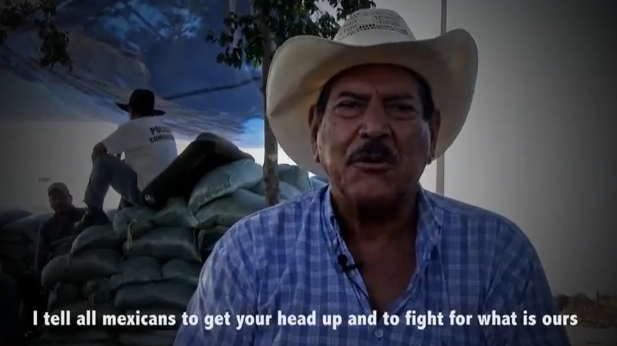
While over a month old, this 45 minute documentary on the self-defense groups in Michoacán is an essential backgrounder on the present situation.
As you can see in the first few minutes, it was not just the economic damage done by the Templars, but the destruction of community life over several years (basically since 2000… and I’m not sure what the cause, or causes were that happened that allowed this to occur) people began to fight back.
Or… perhaps this is why the Army was called in.
Since this was first aired, the Templars were driven out of Apatzingán, and were making what appeared to be a last stand in Nueva Italía… when the Army either… according to who you believe… came to the gangster’s rescue, or to the rescue of the beleaguered locals, who had traded off one organized gang for a passel of irregular militias. As Dr. Mireles predicted, the state government has been declared non-functional, but this does not bode well for the citizens themselves, as they seem to be under martial law with the government… their supposed rescuers… apparently trying to work out a truce with the Templars.
The sub-titling is not the best, but for those who have trouble following spoken Spanish, it’s still a better introduction than you’ll find in the regular foreign media accounts:
Security and “reform”… incompatable goals?
Via Fronteria Norte-Sur (Center for Latin American and Border Studies.
New Mexico State University, Las Cruces, New Mexico)… For a free electronic subscription email fnsnews@nmsu.edu
There is no need to romanticize the Michoacán self-defense forces. They are neither the vanguard of a revolution, nor a 21st century remake of the Magnificent Seven. The self-defense groups have, if anything, a conservative agenda.
I suppose, given that the “economic reforms” seem to work against the interests of small business people like those in the self-defense forces, and that neither of the federal government’s “solutions” —neither doing nothing and expecting the locals to work it out, nor imposing a status quo ante-bellum by military force is going to resolve the problems of the region, the self-defense forces ARE revolutionary. But revolutionary in that they force the state into making radical changes in rural developments and the delivery of social services if they expect to resolve the gangsterism issue.
Insecurity: The Achilles Heel of Mexican Reforms?
The security crisis in the Mexican state of Michoacan is smacking the economy, bringing higher costs, leaving shuttered businesses, encouraging capital flight, and causing employment reductions, according to different reports.
For instance, the Mexican Social Security Institute reported that the violence-ridden state, where crime syndicates, self-defense groups and government security forces are in a stand-off, lost 5,921 jobs in the formal economy from November 2012 to November 2013. The employment downturn was considered the largest of its kind since 1998.
Pedro Ivan Plancarte Molina, president of the Urupuan Chamber of Commerce in Michocan, said violent episodes like the armed confrontations and highway blockades of recent days typically result in 30 to 50 percent losses to businesses, which shut down temporarily and then take days to recover. Maria Piedad Ramos, director of Michocan’s La Piedad Chamber of Commerce, said widepsread truck and product robberies were having significant repercussions on the local economy.
“Everyone winds up paying protection fees,” she added. “Here, they told me it would cost the Chamber 10,000 pesos (about $800), and that they were going to come and we had to give it to them.”
While the militarization of Michocan is grabbing the bulk of national media attention, the economic fall-out from insecurity is far from confined to the Pacific coastal state, another Mexican business leader said this week.
Juan Pablo Castanon, president of the Employers Confederation of the Mexican Republic (Coparmex), estimated the direct cost of delinquency to the formal business sector at more than $6 billion annually, due to kidnappings, extortion and robberies.
“This is an important amount that leaves the formal economy and affects the creation of jobs, reinvestment and the desire for development,” Castanon said. According to Coparmex’s president, the payment of protection fees alone impacts as many as 260,000 businesses nationally, or about 37 percent of the formal economic units of the country.
From a business standpoint, the Mexican government’s recent reforms will come up short if the security situation is not improved, Castanon added.
“Security is the principal issue for 2014, because of reforms that will give a platform for development,” he contended. “But prosperity without peace will be weak.”
Castanon’s words echo comments made this week by other organizations representing the business class, including the Business Coordinating Council (CCE).
“All that has been achieved in terms of opening up the great process for Mexico’s potential could be impacted by the effects of public insecurity, as well as shortcomings or gaps in governance and corruption,” the CCE said.
Sources: Agencia Reforma, January 15 and 16, 2014. Articles by Adriana Leyva and editorial staff. Proceso/Apro, January 14 and 15, 2014. Articles by Juan Carlos Cruz Vargas.
Sunshine is the best… investment?
I have some right-wing friends who seem convinced that clean energy is a “socialist plot” of some sort. With “energy reforms” meaning an end to most subsidies here, though, capitalism — in the form of “green energy” — means a better deal for consumers, and a growth market for investors.
Via Green Tech Media:

Isla Contoy, Quintana Roo
Mexico possesses the framework for a growing solar market, both distributed and utility scale. As reported by GTM Research, net metering was enacted in Mexico in 2007 and is administered the Comisión Federal de Electricidad (CFE), Mexico’s state-owned electric utility. CFE has owned and operated most power plants in the country, but IPPs have been gaining a foothold in Mexico, especially with renewables. CFE signed a PPA with a 46.8-megawatt project being developed by Sonora Energy Group.
[…] there is “a line to cross” with retail electricity pricing in Mexico; typically, up to 150 kilowatt-hours will cost 6 cents to 9 cents per kilowatt-hour. In most regions, once you consume over 150 kilowatt-hours, the DAC rate (“De Alto Consumo,” or high consumption rate) is triggered and bumps up the price to as much as 22 cents per kilowatt-hour.
[…] residential solar installers have focused on high-income clients first, in areas with high insolation and consumers who are likely to be paying the DAC rate. Household customers have net metering, and despite a small “wheeling” charge, the residential market has done well quarter-to-quarter since 2009.
[…] You don’t need incentives for solar,” said James, suggesting that any market can grow as long as there is a transparent regulatory process — along with high tariffs and high DNI.
[…]
The Mexican solar market’s demand will quadruple from 60 megawatts in 2013 to 240 megawatts in 2014, driven by projects approved under the Small Power Producers Program, strong residential demand, and self-supply projects for commercial, industrial, and agricultural customers, according to GTM Research.
http://www.greentechmedia.com/articles/read/Mexico-as-Bellwether-for-an-Unsubsidized-Solar-Future
Smog: a tale of two cities
It seems that besides not making a big deal out of same-sex marriage, there are other things Utah could learn from Mexico City.
Salt Lake City Tribune, 4 January 2014:
Salt Lake City exists in a high altitude bowl surrounded by mountains, making us more vulnerable to pollution build up than other major cities. We all get that.
[…]
Mexico City has geography similar to Salt Lake City, surrounded by 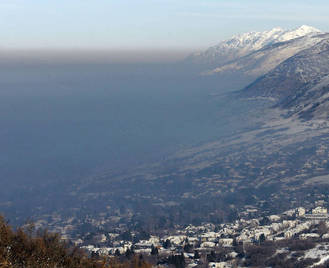 stunning, snow-capped mountains reaching even higher than ours — 17,000 ft. By 1990 Mexico City was named the most polluted city in the world by the United Nations.
Stories of birds dropping dead in flight were legendary. Mexico City was worthy of the name, the “Desolation of ‘Smog,’” long before the Hobbit movie came out. It was considered the most dangerous city for children to grow up in.
Then a funny thing happened on the way to pollution ignominy. Residents and politicians decided geography was no longer an excuse for breathing toxic air.
They added a suburban train, a low-emissions bus system, dedicated a highway lane to the “Metrobus,” and launched bike sharing. They initiated programs to get old, high polluting cars off the road.
[….]
Twenty years later, despite continued growth — including doubling the number of cars to 4.2 million and an increase in the population to 20 million — Mexico City has cut most of its pollution components at least in half.
[…]
Mexico City has proven, “It can be done.”
News wars?
On his Monday evening Televisa news broadcast — by far the most viewed newscast in a country where close to 90 percent of the population gets its news from television, anchorman José López Dóriga presented a video of Michoacán self-defense group leader Dr. José Manuel Mireles calling for the groups to disarm and to not oppose the Army units sent into the state that afternoon (just as the self-defense groups were preparing to drive out the last pockets of “Knights Templar” gangsters).
Dr. Morales denied having said what López Dóriga reported, but his denials were seen only on youtube videos and similar alternative media… although — in what appears to be something of a first for Televisa, Denise Maerker,  on Tuesday night’s late night (11.15 PM) news program Punto de Partida, aired evidence that the López Dóriga video was manipulated … as Dr. Mireles claimed. What the country doctor turned guerrilla leader had said was that the self-defense groups would lay down their arms WHEN the government arrested the leaders of the Knights Templars. Something quite difference from allowing themselves to be put under military occupation in their own country, by their own army… with no guarantees that the gangsters they’d been fighting will be punished.
Though, one expects — as has happened before — Sra. Maerker will be looking for a new job soon.
Michoacán
And, so… we’re told… it’s over. Or has just begun.

Within hours of the the arrival of federal soldiers in Hercules helicopters sent in to “disarm” the self-defense groups in Michoacán, at least three adults and an eleven year old child were killed, while at least in one community, the local population disarmed the first convoy of soldiers and later hostilities (unspecified) occurred (Revolución Tres Punto Cero). Dr. José Manuel Mireles Valverde, the obstetrician who has become the public face of the movement, was reportedly arrested, after — according to Televisa — ordering the self-defense groups to lay down their arms.
The “self-defense groups” throughout the State of Michoacán have been painted in the foreign press as “vigilantes” — a word meaning nothing more sinister than “watchmen” in Spanish, but having overtones of out-of-control lynch mobs in English.
Outside of Mireles (who, in the pro-government press, is called “Doctor” Mirales… the quote marks around his title meant to suggest he isn’t a real doctor, although he has a medical degree and has been running a clinic for years), the leaders, and soldiers, in the self-defense groups have been far more typically farmers, shop-keepers and even housewives.
“Remember that we are civilians, we’re working people,” Dr. Mirales said last night in an interview, denying reports that he ordered his group to lay down their arms. “We had been asking for help for the last twelve years without any response.”
These civilians have shown remarkable discipline, taking over municipal governments, and disarming (and replacing) local police departments, less a mob than a people’s militia… which is precisely what has made them a danger to the state.
The spin has been that the self-defense groups are too well armed and too well organized to be simply angry farmers and shop-keepers. State and federal officials have suggested the self-defense groups are just driving out the Knights Templars … the oddball name chosen by the local organized gangsters… but are working for other “cartels”. That story makes little sense, given that violence against local communities (involving more than marijuana farming, but illegal timber harvesting, and even mining operations) for at least the twelve years Dr. Mirales mentions, and… until very recently… the weapons were more in the nature of old shotguns and hunting rifles than AK-47s and military rifles.
Certainly, it is possible that the local groups (which are often indigenous communities) have ties to the underworld … which means very little, other than if they wanted arms, they had to buy them from the people who sold them. More likely is the story told by the defense groups themselves that they disarmed police departments, received some surreptitiously from the Army (which often as not considered the defense groups as unofficial allies in fighting gangsters) and acquired others as “war spoils.”
According to this map (from Resistencia Mexico TV) posted yesterday, the defense groups were “winning” against the gangsters, the Templars controlling only Nueva Italia:


Self-defense group disarming police in Nueva Italia.
At which time, with a self-defense group seizing the local police in the last stronghold of the Templars, the Federal Government declared the state government unable to control the situation (which is true, though the citizens seemed to be doing a good job of at least getting rid of the gangsters, and the corrupt local police) and sent in the troops.
When will they ever learn?

Photo: Norm Betts/Bloomberg
Excellon’s Bermejillo (Durango) La Platosa silver mines were last in the news in July 2012, when Excellon finally agreed to pay compensation to Ejido La Sierrita — which owns the land where the mine is located and was teetering on the verge of bankruptcy — and the union, which had joined together in blockading the mine over health and safety issues, among other complaints. In October of that year, following forced union elections in which a more company-friendly slate of leaders was “elected” the blockade. Scab replacements entered the mine under military escort, and the blockade was forcibly removed, resulting i 300 injuries and numerous arrests. In April 2013, shortly after the Mexican courts had ordered Excellon to return 1100 hectares the company had rented from La Sierrita under questionable circumstances, the Ejido sent representatives to Excellon’s shareholders meeting in Toronto:
In advance of the shareholder meeting, the Ejido presented three shareholder resolutions asking for a change in governance. Excellon, however, refused to present the proposals to its shareholders. The proposals called for full disclosure of payments related to its Mexican operations, separation of board and management, and the election of a director specialized in human rights.
One might also mention that as a result of all this, Excellon was threatened with lawsuits by investors in Canada, who complained that the untimely reporting of problems at the site could adversely affect their portfolio.
Via EFE:
Mexico City, Jan 11 (EFE).- Two miners died and three others were injured by an electric shock in a silver mine in the northern Mexican town of Bermejillo, the National Union of Mine and Metal Workers said Saturday.
In a communique, the union said the accident occurred in a mine operated by the Canadian firm Excellon Resources around 7:15 p.m. Thursday, though the company failed to report the accident until the following day.
In its report, Excellon said that after the accident, the workers were immediately taken out of the mine and rushed to a hospital, where two of them died.
“Both employees were experienced and well trained, so that words cannot express the depth of our sorrow for their loss,” the company said.
But according to the union, the short-circuit was “caused by a lack of supervision, non-existent safety measures and the scant interest in such matters on the part of the company” and the municipal, state and federal governments.
The union called on federal authorities to “stop the constant violations” by Excellon Resources, a company that for years has committed “systematic violations” against “workers’ rights in terms of hygiene, safety and freedom of association.”
If you want to rob a bank, own a bank
Veracruz lawyer José Luis Arauz Lara, represents a client who deposited 100,000 pesos (about 8000 US Dollars) in a branch office of HSBC outside Veracruz, only to have the bank “lose” the money. The bank would give no explanation of how they misplaced the money, nor would they do anything to rectify the client’s account. So, rather than sue, Arauz, on  behalf of his client filed criminal charges for theft against the bank. Which convinced the Judge of the First Instance of the Sixth Judicial District of Veracruz to take the unusual step of seizing what might be evidence, might be stolen goods, or might be just enough to cover the clients losses from the Boca del Rio branch office.
HSBC will get their teller windows back, when they “find” the client’s money. Who says Mexican justice isn’t always just?
Source: Veracruzano gana juicio contra HSBC por robo; embargan tres cajas a sucursal, Pluma Libres (Veracruz), 11 January 2014
Auto insurance
Foreigners are always warned that to drive in Mexico they MUST carry auto insurance. While that is mandatory for those bringing a foreign registered auto into the country, those of us who live here (and own Mexican registered autos) would be insane not to… the person held to be at fault in an accident must pay the damages, and if unable to do so, can be jailed. And, of course, as foreigners with no ties to the local community, they be considered a flight risk, and bail would not be an option.
I’ve been in two accidents (both minor, and neither as the driver) in my time here, and in both cases, the other party had insurance… and the matter was settled on the spot. The adjusters — not the police — came to the scene and worked it out amongst themselves. In one accident, the adjuster had a checkwriter in his mobile office, and cut a check for repairs on the spot.
Apparently, among those who’ve been in auto accidents in Mexico, I’m in a distinct minority. According to federal estimates, only slightly more than a quarter of Mexican motorists carry insurance. The rest either assume they’ll have the money to cover any accidents or… well… perhaps that’s why there are so many religious medals hanging from rear-view mirrors.
That should start to change this year when new regulations go into effect requiring insurance on federal highways or face a fine of 40 times the salario minimo (about 200 U.S. Dollars). While probably impossible to enforce the regulation, Enrique Mendoza, an analyst with with Grupo Financiero Interacciones SAB, expects that about half of Mexican motorists will become insured. More, if — as expected — states also requiring mandatory coverage. Baja California does so now, with Sinaloa and Jalisco expected to follow shortly.
Source: Jonathan Levin, “Qualitas Aided by Pena Nieto Car Insurance Law: Corporate Mexico”. Bloomberg News, 7 January 2014
And the point was? Fallon Poisson speaks.
I can’t vouch for the validity of this, but a “manifesto” supposedly written by Fallon Poisson (identified as “The Canadian anarchist accused of terrorism for throwing a molotov cocktail at a government office in D.F.”) was posted on Webguerrillo … a Mexican-based “Revolutionary, anti-capitalist, anti-imperialist, anti-zionist, anti-fascist, internationalist, ecologic, socialist and feminist” site.
The letter was in Spanish, although for whatever reason, Poisson’s manifesto was printed using the letter “x” instead of “o” in plural terminations (“juntxs” for juntos; nosotrxs for “nosotros”, ellxs for “ellos”, etc. This may be an affectation, a broken typewriter, or some attempt to write gender-neutral Spanish… although she spelled the word “tenemos” … we have… normally). As with many native Spanish writers, she used commas where English writers would put a period (and I did, in my translation).
While simplistic, the letter belie initial media reports that Poisson did not understand Spanish. It also suggests that this was not a random incident, and that she was, indeed, an anarchist. A rather confused anarchist, and the kind who gives anarchism a bad name… being, as she is, responsible for a rather pointless action that accomplished nothing.
(my translation):
Hello friends !
We are here together , we on our side, you perhaps on the other. In the language of the state there are years or miles that separate us, but the the thing we share is much bigger than all the miles and years. The state plans to create a distance between us, but instead we will be more together than ever!
Today is the eighth of the roughly 60 hours spent traveling in the cars of the fucking police to federal and provincial centers. Although they’ve decided to hold us here another 48 hours, they have nothing because silence is stronger than repression.
The most important thing for me right now is to construct a force stronger than jail . We put this in the context of international relations. For me solidarity is friendship. I’m not a victim or a political detainee. I use the fact that we live right now to build bigger and stronger friendship . I’m ready to fight authority here and outside. I ‘ll never stop. Prison is a normal reality and I will use this experience and I hope you also develop a stronger individual strength each day.
We are here and we will always be here to meet all of reality in prison and outside.
A big hug to all. Down with authority here and abroad !
As expected… those Canadian firebombers
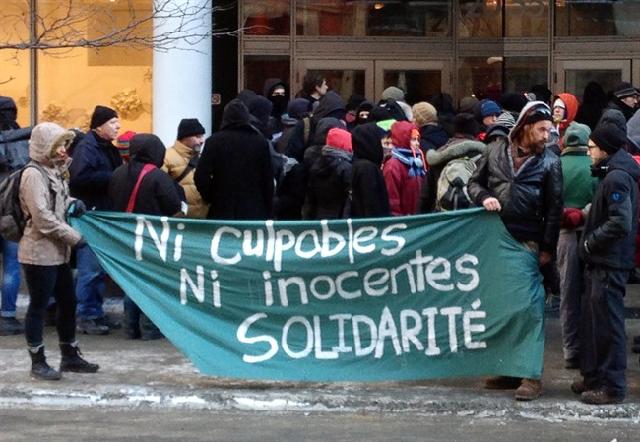
THE CANADIAN PRESS/Andy Blatchford
Yesterday, I bet Canadian Dollars to Tim Horton doughnuts that something like this was going to happen. I want double-glazed maple doughnuts…
It seems there is a feeling among at least some Canadians that no matter what their citizens do in Mexico, the Mexicans are to blame for whatever consequences follow their actions. With two Montreal women detained in connection with the firebombing of a Nissan dealership (and a sub-office of the Secretariat of Communications and Transportation) , I suppose a protest by a couple of dozen people — bearing a banner in… Frañol? … Espançais? — were out in front of the Mexican consulate in Montréal.
The protesters wouldn’t speak to the media… in Spanish, French or English. Someone described as “well-known activist Jaggi Singh” (apologies, I have no idea who he is) read out a document from something called the “Committee of Support for Imprisoned Comrades” that, as boiler plate, was in serious need of update.
Canadians are STILL apparently going with the tried and true “we poor Canadians can’t get a fair trial because — as Singh’s statement read — “the Mexican justice system…considers those detained to be guilty until proven innocent”. Damn, too bad the Constitution was changed back in 2008 to confirm the presumption of innocence in criminal cases (, and that is just not true (much to the chagrin of some).
While one Canadian legal site does warn that “…according to the second article of the reform decree, those changes will be enforced within 8 years after of June 18, 2008 until the secondary legislation is changed”, it’s rather irrelevant to this whole mess… they were arrested in the Federal District, where the presumption of innocence has already been introduced (the popular film, Presumable culpable played a minor part in the change, but it was already in the works when that film was released). And, anyway, the pair was caught pretty much red-handed, the charges against them are possibly serious enough that if they had happened in Canada (or the U.S. or Great Britain) the “alleged” perpetrators would have found themselves held without bail, and probably incommunicado, whereas the Mexican authorities did notify the Canadian consulate and the two are receiving consular assistance.
None of which really matters. If you’re going to throw firebombs in foreign countries, you’re going to go to jail. Even if you are Canadian.


 mexfiles.net