I felt the earth move under my feet…
WHOA!
The Angel of Independence did take a header during the 27 July 1957 earthquake, and broke her nose. Carlos Fuentes used that very real fall our archetypal symbol of Mexican independence in his Los Años Con Laura Diaz.
¨
Analyze this!… and this, and this, and this
Given the strict regulations here on political advertising, especially on television (the candidates get the same amount of time, equally distributed — the networks can’t just run them at 2 AM; or can’t run the ads for candidates they prefer during prime time, and the rest during off-peak hours) and on the content in the ads (no attacks on other candidates or parties, and the only voice in the ad can be the candidate’s), Mexican political ads aren’t nearly as “sexy” as those north of the border. Which by no means inhibits spin.
While it’s kind of refreshing that among other restrictions the ads aren’t going to infest the airwaves until 30 March (the end of the “veil” — vela — the time between the various parties select their candidates and the time the campaigning is allowed to begin), there’s a loophole. The TV ads can be posted on the internet… and they were.
The Lopez Obrador ad is bland, probably for a good reason. In 2006, there weren’t any restrictions on outside advertisers, who could run negative ads. One notorious ad compared AMLO to Hitler, Stalin, Mussolini, Francisco Franco and Hugo Chavez … with the catch-phrase “A danger for Mexico”. Everyone knows AMLO’s history of street activism, and I think this ad… featuring the candidate just sitting behind a very executive looking dest, and looking very executive is meant to convey the image that he is no danger, just a new boss… hopefully seen as not the same as the old boss:
Peña Neito for some reason is focusing on Veracruz. Given his identification with his own state, Mexico, maybe the intention is to suggest to voters that the candidate has national experience. And, it gets to show him doing interesting things… being youthful and dynamic (and a snappy dancer)…
Vásquez Mota pushes the fear factor. Or is it the “never fear” factor. Her ad is scary… and maybe it’s meant to be: vote for me, or something bad will happen:
I have never figured out why Gabriel Quadri was chosen as the sacrifical lamb for PANAL, but here he is trying to sell a nice hippie version of environmentalism… or maybe old volkswagens:
AMLO issued a press statement today to say he would attend a Mass presided over by Pope Benedict XIV later this week. However, he won’t kneel to the Pope, recognizing him only as a foreign head of state.
The last papal visit (subject of the very first Mex Files post) was from the ailing John-Paul II in May 2002. Vicente Fox was President then, and had just married his long-time live-in girlfriend Marta Sahagun — herself a power in the pro-clerical wing of PAN.
2002 was not an election year, John-Paul II was extremely popular and other than the left, no one really got too bent out of shape when Fox was photographed kissing the Pope’s hand. Fox himself was an observant Catholic (more or less) and Mexico has (more or less) come to tolerate public displays of religiosity by public figures.
2012 IS an election year. Benedict XVI is not well-regarded, and while the PAN candidate is from the pro-clerical wing of her party, and the PRI front-runner has also gotten right with the church by marrying HIS live-in girlfriend, but public religiosity has again become a contentious social issue.
Especially with Mexico City’s approval of various reforms that the Church strongly opposes (same-gender marriage, legal abortion, etc.), and clerics clamoring to enter the public debate, the symbolism surrounding deference to the Pope could be an important factor in the upcoming election. That the right (and a good part of the PRI) is looking to change the constitutional restrictions on clerical involvement in political discourse (and, incidentally, to allow religious instruction in public schools) puts the candidates in a tricky position.
In 2006, López Obrador — then Jefe de Goberniero of the Federal District, the second most powerful elective office in the country — did not enter the Basilica when John-Paul II said a Mass attended by the President and much of the political elite. He wasn’t yet a candidate for the Presidency, and could afford the … um… Jesuitical (definition #2) gesture of sitting outside the Basilica doors, thus preserving his hard-line Juarisista credentials and avoiding even the appearance of favoritism to one or another religious sect, while observing the niceties of protocol surrounding a visit by an important and popular foreign leader.
This year, it’s much harder for López Obrador, who is trying to convince not just the Mexican public, but the nervous U.S. foreign policy wonks, that a leftist is not a radical. And, while it probably played a minor role in the 2006 election, one claim made against AMLO was that he was a “secret” Presbyterian. Not that there is a religious test for the presidency, but like Mitt Romney — whose Mormonism is an important factor in his party’s primaries — or Barack Obama — who has faced continuous sniping from people claiming he is secretly a Muslim — non-standard belief can be an issue with voters.
Protestantism is a minority belief, and López Obrador, while ostensively Catholic, did work as a young social worker with Presbyterian social groups, and did attend Presbyterian services, while working in an indigenous community which had adopted that particular sect as their own. That López Obrador also has said he is a regular Bible reader (something usually not associated with Roman Catholic practices) has contributed to the under-the-radar speculation about his private beliefs.
Going to Mass is probably good politics, if nothing else. Not kneeling to the Pope, while preserving, and probably strengthening, the candidate’s anti-clerical and secular voter credentials, may be used by the pro-clerical voters as an opening for another round of sniping at AMLO, based on supposed religious beliefs, including some who might otherwise vote for the left, out of weariness of the two major parties and the need for change in the direction of public policy. Not that they will vote for one of the other candidates, but that they will simply not vote.
Well my hands are shaky and my knees are weak…
We didn’t feel a thing here in Mazatlán, but something caused a seismic jump on my hit-meter just after 11 a.m. Mexfiles time.
The most serious damage from the 7.8 +/- Richter Scale earthquake was arount the epicenter on the Guerrero/Oaxaca border, where several hundred homes are reportedly damaged. This is Triqui country, and these are presumably small homes, probably adobe or otherwise less earthquake proof than concrete houses. Mexican civil defense (mostly handled by the Army) is usually very good about responding to these kinds of disasters, and I wouldn’t be surprised if rebuilding (with concrete blocks) would start this week.

Photo: Fernando Ramírez, El Universal
“pOgue”, visiting Mexico City, wrote on the Lonely Planet’s Thorn Tree Message Board:
So, to summarize the breaking Mexico City situation… Part of a wall of a pedestrian bridge came loose and flattened an empty pesero, while office workers spent the afternoon chatting in the lovely spring weather. Also, some people’s cell phones briefly stopped working. (although not mine, otherwise I wouldn’t be posting to this thread.)
That empty pesaro has been the front page photo in all the newspapers, being the only dramatic damage photo around. People were shaken up… emotionally and physically), and it will be a while before all the structural damage is known, but for an extremely powerful earthquake, the story is the non-story. Mexico City’s new earthquake warning system functioned (giving people at least a few seconds warning to start leaving their buildings) and the seriousness with which Mexico has taken earthquake preparedness and strict building codes since the 1985 disaster have more than proved themselves.
A few hospitals evacuated patients as a precautionary measure, people left their offices and houses, some windows were broken (quite a few windows, but that always happens) and crockery smashed, a wall fell on some cars parked outside a school in Ecatepec, schools let out early in most places, phone and elerical service was interrupted for a couple of hours (we couldn’t complete one transaction at our local bank today, because of computer problems in Mexico City) and water mains were broken in various communities…. but… as a correspondent who happened to be in the Zona Rosa at the time tells me… the sex clubs and dark rooms didn’t close: maybe some of the denizens of those dens of iniquity really did feel the earth move for them.
Uhh… huhhh, uhh…. huhhhhh. Hey-ayyyyyy:
And so it goes in the mining biz
Another mining death, not likely to be reported to investors:
Bernardo Vasquez Sanchez was a clear spoken Zapotec activist, a brother, son, and cousin, who dared to stand up against a mining project in the territory of his people. He was well aware that a paramilitary group was operating in San José Progreso, Oaxaca, and that it was organized to snuff out opposition to a gold mine, owned by Vancouver based Fortuna Silver.
Bernardo was killed March 15th at 9pm, when gunmen opened fire on his car. His cousin, Rosalinda Dionicio Sánchez, and his brother Andres Vésquez Sánchez, are in hospital with bullet wounds. Though there’s few details, one thing is clear: this was a political hit. Bernardo was murdered because he dared to speak out, ignoring the climate of fear imposed upon his people.
(via Upside Down World and Proyecto Ambulante)
Yeah, I can see the resemblance
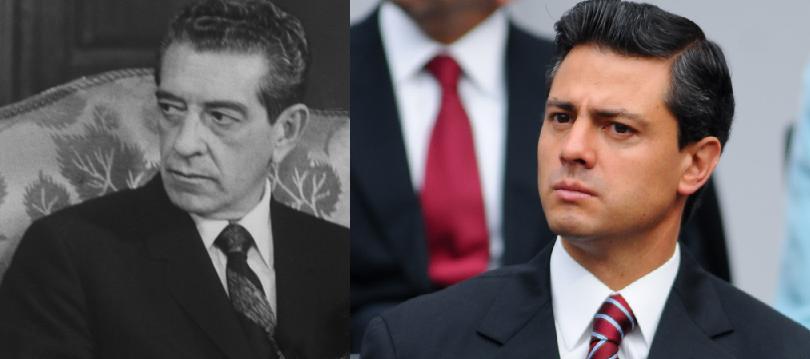
By way of Patrick Corcoran (Ganchoblog), we learn that Enrique Peña Nieto would like to compare himself to Adolfo López Mateos. They were both born in the State of Mexico, they both were (or are) PRI members, and, o.k., maybe one other thing, but …
(from Gods, Gachupines and Gringos: A People’s History of Mexico, © 2008
Young, handsome and with a playboy reputation… López Mateos [was] often shown surrounded by intellectuals… The president’s mother was a rare woman for her time… an educational pioneer, a writer and administrator of a Mexico City orphanage. It was an unusual orphanage, also service as a literay and cultural “salon”. Adolfo’s sister was a well-known editor and translator. Among her clients was the reclusive German refugee author who called himself “B. Traven”…
The president’s literary abilities were such that when the recluse claimed he was only the German translator of Adolfo López Mateos, writing under the name “B. Traven”, it sounded almost plausible. .. More important was Lòpez Matos’ appointment of future Nobel Prize for Literature winner, Octavio Paz, as Ambassador to India and making room in the civil service for artists and intellectuals.
Dr. Hogan’s history lesson for today
Based on flimsy intelligence, which was then cynically manipulated to prove just cause for a preemptive war, the United States attacked in force. Its superior armaments overwhelmed the enemy. The American press jubilantly supported the invasion and subsequent occupation, praising the Americans as liberators. Though the U.S. suffered losses, they were minimal compared to those sustained by the enemy and by the civilian population. However, as the months passed, the occupation began to seem interminable, and the indigenous government, set up with support of the occupying forces, appeared unreliable and ineffective. It was suggested by some generals and congressional observers that the country appeared “unfit for democracy.” Sound familiar? No, it is not Iraq in 2006; it was Cuba in 1898.
And the hits keep on coming… Michael Hogan in Alterinfos with an overview of U.S. history in Latin America since 1898.
Read it!
Fifteen years of college down the drain…
Josefina Vásquez Mota appears to be giving Enrique Peña Nieto a run for his money… at least in the foot in mouth division.
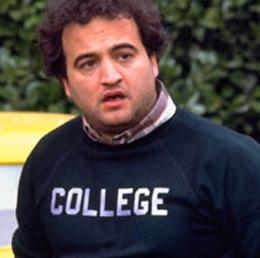
Might as well join the fucking Peace Corps... or run for President of Mexico
The PAN Presidential candidate, speaking to students at ITAM, the private (i.e., expensive) but highly regarded graduate school of business, apologized for her lack of education by saying she was a graduate of Universidad Iberoamericana, the very pricey Jesuit University, not exactly endearing herself to the alumni of the university that generally turns out PANistas. And, in the process, sent enterprising sorts to find her thesis… dissing UNAM, considered the best university in Latin America, and not likely to endear her to their alumi. And, discovering she only needed fifteen years to get her degree.
(via Aguachile)
In 1753 Skiagunsta, a Cherokee chief, observed, “The Cloaths we wear, we cannot make ourselves, they are made [for] us. We use their Amunition with which we kill deer. We cannot make our Guns. Every necessary thing in Life we must have from the White People.
Alan Taylor, American Colonies (2001)
Skiagunsta was hardly the first person in the Americas to discover that “Free Trade” agreements, especially one sided technology transfers and manufactured goods, usually aren’t quite as free… or as much a trade … as they might initially appear to be.
I don’t think I’m the only person who has noticed that the increasing militarization in this country has not only meant we’ve become used to the sight of soldiers and militarized police on the streets. The military budget has doubled during this administration, reversing a trend in which the military budget has dropped (as a percentage of the national budget) every year between 1943 and 2007.
Way back in February 2007, I wrote about pay raises for the troops (something I thought was necessary, and long overdue), and one can make a case for upgrading aging naval vessels and aircraft — the Fox Administration’s purchase of Russian-made Sukhoi SU-27s in 2006 (cheaper and easier to maintain than the Swedish fighter planes the Navy also considered) were a major expense in the first budget increases.
These, and perhaps the “necessity” of using the military to push Calderón’s “mano duro” against “instability” might have made an increase in military expenditures inevitable and even justifiable. The military has been relatively popular, and — as long as the people continue to support the use of soldiers and sailors in the “war on crime” — there will be political support for increased military spending.
But something I’ve noticed. While “Plan Merida” funding, as we all know, supposedly supports the Mexican military by providing U.S. purchased goods 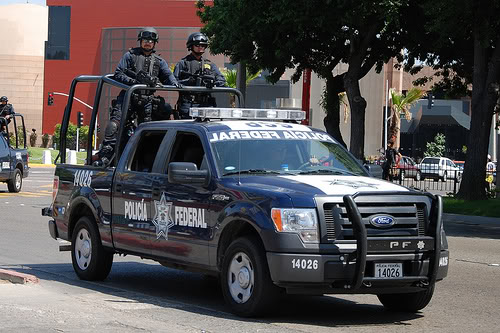 and services. While things like computer systems and logistics (and spying) serviced and maintained by the United States government (or it’s “contractors”… i.e. mercenaries) is indeed troubling, there is a less noticeable, but noteworthy, effect.
I am sure I am not the only one who has noticed that the soldiers, marines and militarized police are driving Ford F-150 trucks… which, just coincidentally (or not) were losing popularity with Mexican consumers until the U.S. taxpayers provided them… meaning Mexico is now dependent on the Ford Motor Company for keeping its police and military units mobile.
Where before, military hardware, if not locally produced, was bought from a basket of countries (Polish and Czech tanks, Russian and French aircraft, for example) — in part because of a policy going back to Porfirio Diáz to avoid Mexico’s dependence on any one supplier for essential foreign goods), the Mexican military is becoming dependent on the only country that might plausibly launch a military incursion (although the thinking ten years ago when I read about this kind of thing was that a civil war in Guatemala could — as it did in the 1970s — force small military units to take refuge in Mexico, which be more something the military’s disaster assistance and preparedness programs would deal with than anything else).
I think one is better to be paranoid — if one wants to be paranoid about anything in particular — about the spies and “embedded agents” and possible approval of overflights by U.S. drones into Mexico than about where the trucks and guns are coming from.
I picked up Taylor’s somewhat forgotten history of the colonization in what later became the United States about two weeks ago. The English, Spanish, French, Dutch and Russian (and the tiny Swedish) colonies all were forced into “free trade agreements” with the indigenous peoples, for the most part involving the fur and animal hide trade. They also forced agreements on the people outside their own areas of control through control of the military capacity of chosen nations… the English, the French and the Spanish vying at various times to win what today would be military contracts with the Cherokee. The English won, but the results would have been the same, regardless.
The Cherokee… supplying not only deer-skins from their own hunting territory, but controlling access to deer-skins from further west… certainly welcomed the better consumer goods and military hardware they acquired and it did radically change (perhaps for the better) their own culture.
While it’s too easy to make the analogy suggested by the largely illegal deer-skin trade in colonial Carolina with that in certain Mexican agricultural products, far-sighted colonials, as well as Cherokees like Skiagunsta, caught on that creating dependency would eventually undermine the culture and render it incapable of defending itself from complete dominance by the supplier.
What does this have to do with Chinese shoes, you ask? I haven’t gone to the extreme of checking Mexican soldier’s boots, and I haven’t gone through the military budget line by line, so I’ll assume that the boots and uniforms are still Mexican-made, simply because the U.S. doesn’t have much of a clothing industry any more. Since the 1700s, Mexico has had a robust shoe-trade, and has been a major exporter at least since the Second World War. A small item in the Latin-American Tribune (Caracas) on a huge blow to that industry:
Mexico’s imports of Chinese-made shoes climbed 151 percent in January, a month after compensatory quotas on those consumer goods expired, Guanajuato Shoewear Association president Armando Martin Dueñas said.
… Mexico signed an agreement with China in 2008 that gave its industrial sectors until December 2011 to prepare for the elimination of the compensatory quotas, which Mexico had imposed since 1993 on 204 designations of sensitive goods imported from China and had initially been scheduled to expire in 2007.
… the [shoe] industry could shed some 35,000 formal jobs within seven or eight months and 200 companies may driven out of business, Martin Dueñas said during a presentation Wednesday at the Leather and Shoe Fair.
Mexico imported roughly 490,000 pairs of Chinese-made shoes in January 2011, while in the first month of this year that figure rose to nearly 1.5 million pairs, Martin Dueñas said…
Who exports Chinese shoes to Mexico? Not Mexicans. Look a bit north for that.
Mexico is, we are assured by Bill Booth in the Washington Post, a middle-class country (Bill missing that this has been true since the 1960s), but he is only looking at consumer spending. What seemed to be missing from his article was any sense of defining “middle-class values”, one of which the “necessary things” are a sense of security, economic and otherwise. Like the Cherokee Nation, Mexico is changing through free trade — and the exchange of resources for consumer goods and military equipment. To the country’s benefit or to its long-range destruction?
Éirinn (agus Mheicsiceo) go Brách!
Despite the valiant efforts of those who would turn everyone Irish, Alvaro Obregón was not an O’Bryan… It’s a story that pops up now and again, though
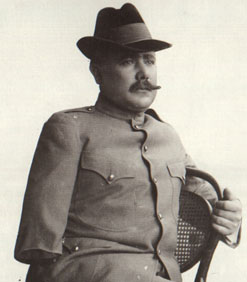
Not Irish... sorry.
I’m not sure of the source (and presume it has a lot to do with the Irish propensity to make everyone Irish… at least on Saint Patrick’s Day… and the racial assumptions in the U.S. during the mid 1910s that wanted to deny the possibility that a mere Mexican was probably a better military officer without formal training than anyone in their own army at the time… and an inventor and political genius as well). There’s no harm in the stories, but I’ve had to correct it at least once in Wikipedia, and usually just sent a note to others who picked up the tale, pointing out that there are a number of prominent Obregón’s in the Spanish-speaking world (Alejandro, the Spanish-Colombian artist; Ana, the Spanish TV star; Diego, the Colombian pop singer; and Nancy, the Peruvian politician). Not to mention that Obregón is a town in Cantabria. The only oddity about Obregón as a name is that it’s Basque and easy to spell.
Kiss me, I'm Irish... honest!
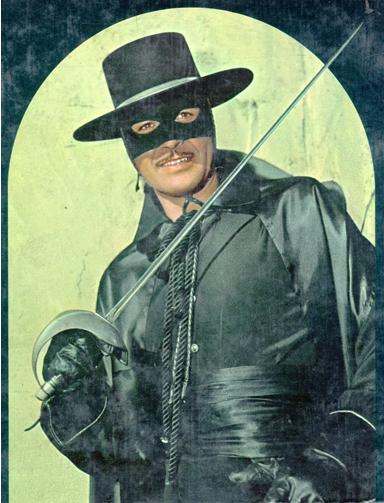
Still, there are any number of good Irishmen and women, from the San Patricios to … Sor Juana (Juana Inés María del Carmen Martinéz de Zaragoza Gaxiola de Asbaje y Ramirez de Santilla Odonoju), to the O’Gormans (Juan, the painter and architect; and Edmundo, the historian and philospher) to the pre-mature independence leader William Lamport, a 17th century adventurer plotting the overthrow of Spanish colonial rule in Mexican 150 years too early and morphed in early 20th century pop culture into Zorro (really!!) … who have made their mark on Mexican culture….
Today we celebrate those, and the children of those who, having left their agrarian Catholic homeland famed for tenors, lightweight boxers and holding resentments against the English-speaking Protestants who occupied a third of the country, contributed to this agrarian Catholic land, famed for tenors, lightweight boxers and holding resentments against English-speaking Protestants who occupied a third of the country.
We make beautiful music together…
Encore!
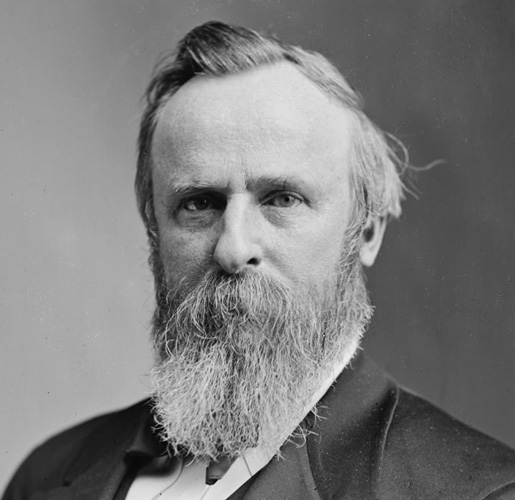
What a weird U.S. electoral campaign… apparently the quotations (or non-quotations) of Rutherford B. Hayes has become a hot topic. No mention though of his eminent place in the pantheon of Latin American heroes.
Burnt PAN?
OOPS!
Our conservatives just can’t catch a break this year. The Federal District Assembly building had to be evacuated yesterday after smoke began billowing out of the PAN caucus room… somebody over-nuked the popcorn.


 mexfiles.net