Muxa xkut jbatik: Friday Night Video
In writing about María Sabina the other day, I said that
I don’t have a romantic notion of indigenous communal life, and don’t see outsiders as necessarily the snake in paradise, there’s no denying the foreign attention had a disastrous effect on the community [in which María Sabina] lived.
One doesn’t expect Mexico City or Mazatlán not to change over time, and absorb international influence and trends, and we shouldn’t expect indigenous communities to be exempt. But, these communities can — and do — absorb those outside influences in their own way, and coopt them to their own values.
Here is Vaijil, from San Juan Chamulas, Chiapas, with their #1 hit, “muxa xkut jbatik” (“No More Wars”):
PAN: junk food junkies
In some ways, it shows how far Mexico has advanced that malnutrition isn’t the most alarming public health problem the country faces… it’s obesity. Alarmed by the high rates (and medical costs) of hypertension, diabetes, and obesity related diseases, and growing evidence that junk food is largely responsible for the exponential increase in the number of obese minors, the Chamber of Delegates passed — with 372 votes in favor and one abstention (probably a guy too fat to raise his arm) — a bill requiring the Secretary of Public Instruction to prevent the sale of junk food in public schools and require 30 minutes of physical activity for students.
The PAN faction in the Senate has come out against health and in favor of junk food, arguing that — unlike, say, using the army to stamp out narcotics exports to the United States or create a whole new Federal Police force — it might not work, it’s expensive and it’s a hassle to try controlling what school kids do.
Either that, or they’re counting on a “free market solution” — which might work: food prices keep going up, and so are the indices of abject poverty. Not being able to buy food might trim the waistline.
Since you asked…
WordPress generates a list of search engine terms that have led to this site, and sometimes I’m a bit stumped by how the search led here (as far as I can tell, I’ve never mentioned “Miss Nicaragua nude” ). Sometimes I don’t want to know. And sometimes, the searcher is looking for something I can and should post on at some point, but just never got around to.
So, for whoever it was that was directed to the Mexfiles after typing “gay mariachis” in their search engine, here’s Mariachi Orguello de Nuevo Mexico, which bills itself “As far as we know we are the first mixed all gay and lesbian mariachi in the world” performing El Herreduro in 2007 at the National Hispanic Cultural Center in Albuquerque, New Mexico:
Naked or at lunch, just a gringo
William S. Burroughs, in a letter to Alan Ginsburg written soon after Burroughs moved in Mexico City in 1949 (and later used in the 1985 introduction to Queer), said what attracted him about Mexico was that:
If a man wanted to wear a monocle or carry a cane, he did not hesitate to do it, and no one gave him a second glance. Boys and young men walked down the street arm in arm and no one paid them any mind. It wasn’t that people didn’t care what others thought; it simply would not occur to a Mexican to expect criticism from a stranger, nor to criticize the behavior of others.
Burroughs’ observation fits two projects I’m working on. Besides my own book on foreign (i.e. English-language) writers and how they defined our north-of-the-border perceptions of Mexico, I have been trying to work in additional material for a paper written by a gringo professor for his foreign grad students to assist them in making the psychological adjustments needed to work within this culture.
Being reclusive by nature, and, like Burroughs, eccentric enough to take up writing as a career, I do, in a very real sense, appreciate the Mexican “live and let live” attitude. I realize Burroughs’ expatriation in the 1940s was for other reasons (like staying out of prison), but his motives and psychological adjustments to Mexico weren’t really all that different from those of the rentistas and jubilados who are thick upon the landscape now.
He made some statements about wanting to settle in the country (and take citizenship), but it was, for the most part, a purely economic decision, not a cultural transition. He could maintain a certain lifestyle (out of jail) obtain cheap meds (in his case, heroin) and — most importantly for him — not give a shit what the locals thought. I can understand the attraction… and have no problem with those who want to claim “Fulanotitlan Is Paradise” based on these these simple criteria.
Of course, I find screamingly funny (and, to their credit, so do many rentistas) those clueless gringos shocked to discover they live in a resource-poor country that doesn’t afford them the luxury of cheap electricity and water; or complain that the laws aren’t what they are in British Columbia or Texas, or that some U.S. brand of coffee isn’t available in the supermarket; or who demand the right to call somebody to complain about the neighbor who fires up his truck at 5 in the morning.
I suppose, if I were really Mexican, I’d just figure they were bunch of self-centered whiners, and let it go at that. Mexicans despise whiners. I know it’s skirting the lines of bad manners to do so, but not being Mexican, I can indulge in some public snark about such things.
While many foreign residents (myself included) are fond of quoting Benito Juaréz’ saying “Among neighbors as among nations, peace is respect for the rights of others,” all too often we overlook that Juaréz said “among” not “towards.” Too many of us seem to expect special consideration (and are given it, out of simple good manners) without any expectation of reciprocity. I whipped out a short (and not particularly good) book several years ago on some of the forms of showing respect which seem to be relevant to a psychological adjustment to working and living here, so I won’t go into them here.
The neighbor who is turning over his cranky truck engine at five in the morning expects you to respect his right to get to work. One’s Mexican neighbors will tolerate the odd foreigner, which is a different thing than being a part of Mexican culture. The rules, such as they are, say nothing against wearing a monocle, or boys holding hands (actually, they do… but it doesn’t have anything to do with homosexuality), or personal eccentricity, but do apply to preserving mutual dignidad through a politeness code rooted in indigenous, Moorish and Iberian tradition.
On one of the tourist websites, where the question of not looking like a tourist seems to obsess tourists (as if they’ll ever look like anything but), someone wrote:
After many yrs. travelling here and 6 yrs. living here this time I do whatever I feel like, its one of the great things about being a foreigner in this land– I could stand on my head in the street naked and Mexicans would say, “oh, she´s just a gringa”.
In a way, I find that kind of sad. Six years, and still “just a gringa”.
It isn’t a matter of genetics or “passing” — I iron my clothes a bit more and keep my shoes polished and get my hair cut by a local barber, don’t yell (Mexicans turn their radios full blast, but not their voices) and slow down my street walk, but in no way will I ever been mistaken for a native and I’ll never “pass” for a Mexican. Jesús Chairez, who has several generations of Mexican tucked in his genes, and writes wonderfully about my old stomping grounds of Santa Maria de la Ribera, discovered that he, too, is a gringo:
… I was surprised when my chicken soup arrived because sitting in the middle of the soup was a chicken foot, or maybe ET had lost a body part! …
… When I told a Mexican friend of mine about the chicken foot he says, “You gringos crack me up sometimes,” because he never thought it “weird” to have a chicken foot in chicken soup, because HELLO, it is chicken soup.
Funny in that all the time that I lived in Dallas, I was Latino, Mexican-American or Hispanic and now that I have moved back to the land that was my grandparents, Mexico, I am GRINGO! LOL.
I haven’t stood on my head naked, or been freaked out that chicken soup includes the whole chicken (having for several years eaten every day in the cocinas economicas of Santa Maria de la Ribera I assume real chicken soup to come with the whole chicken: though, like Jesús, I pass on the feet… saving them for the dog — who is not a gringo) but manage to find myself in absurd situations too. I managed to lock myself out on back patio wearing nothing but my skivvies last week.. the wall was too high to climb over (and topped with broken glass) and would have meant walking around the block, so I boosted myself on the roof then realized that if I tried to jump down to the front of the house (the front door was unlocked), at the very least I’d break an ankle, or more likely my neck. The house two doors down has stairwell leading to a second floor apartment, which I could access from the neighbor’s roof, so walked across two roofs and “dropped in” on my neighbor … not really not dressed properly for the occasion.
I live in a beach town, and under-dressed foreigners aren’t all that shocking (though ladies of a certain age getting on a bus wearing bikinis are aesthetically unpleasant and one really should wear a shirt in restaurants, even if the seating is al fresco) so it’s not like she was grossed out. Or frightened — I used to rent that apartment and she knows who I am. But I had intruded on her rights — interrupting her enjoyment of her own home at the very least. The situation only called for some polite (and, er, brief) discussions designed to confirm her rights to be free of intrusions and my rights to get back in my house.
The cultural transition to Mexican life is not so much a matter of adjusting to being left alone and free to be as weird as one wants, or of adhering to genetic or sartorial standards, but of understanding that this culture is rooted in preserving dignidad — your own and your neighbors whether the neighbor is one’s fellow diners in a restaurant, the other people on the bus or the lady two doors down . It less a matter of how one acts in private, or what one eats or where one’s grandparents were born, and even less a matter of how one is dressed: what counts is how one addresses — and treats — others.
Man, the ice cometh…
Global warming in action… an inland tsunami triggered by melting ice… in the tropics:
(sombrero tip to Erwin at The Latin Americanist)
Calderón’s numbers
Since the start of the Calderón Administration through March 2010…
- 22,700 people have been killed in the “drug war”
- 121,199 people have been detained on allegations that they are members of various criminal gangs.
13 percent of those detained were said to belong to the Tijuana or Arellano Félix gang; 14 percent associated with the Beltrán Leyva Brothers, 17 percent with what is called the Juarez Carel (which also includes the remains of the Carrillo Fuentes organization), 24 percent to the Sinaloa Cartel and various Pacific coast organizations (which apparently also includes break-away and dissident groups within the Sinaloa organization) and 27 percent identified as either having ties to the Gulf Cartel or the Zetas.
The numbers are reportedly coming from a confidential administration report to the Chamber of Deputies. But not seeing “La Familia Michoacana” on this list makes me wonder if by leaking the report, the administration is not trying to tamp down rumors that the Sinaloa Cartel is either “winning” or favored by the Administration.
Malcolm Beith is a bit unsure of where “La Familia” fits into all this:
Both the Sinaloans and the Gulf have made deals with La Familia (an inevitability; a Michoacan-based group can produce all the drugs it wants but it can’t get them to the US without allying with someone bigger). Oddly, I have also heard that Los Zetas and La Familia may have formed a loose alliance. The two groups who blamed each other for the Morelia attacks joining forces? I’m hesitant to believe it.is allying itself now with the Gulf Cartel,
Excelsior, via the Woodrow Wilson Institute’s “Mexico Portal” claims the “Pacific Cartel” is part of the Beltrán Leyva group… which makes the Sinaloa/Pacific grouping even harder to break out. SDPNoticias headlined their article on the report “More Zetas Arrested Than Chapo’s People” which seems to be the spin being put on the report by the opposition.
Not having any figures on the relative percentage of membership of these various groups, there’s no way to correlate the percentage gang affiliations to detentions. In other words, if “Chapo’s people” are only a quarter of all the narco-gangsters, then — under the Calderón Administration — there has been roughly equal justice (or injustice) in this “war”. If on the other hand, as media and government reports suggest, the Sinaloans are by far the largest of the various criminal gangs, then the opposition has good reason for their suspicions that the administration is treating some gangs differently than others.
I had started to write about the Mazateca curandera and pop culture icon María Sabina — María Sabina Magdalena García (1894? – 1985) — about a year ago, but put it aside, mostly out of annoyance with the “new agey” and/or pretentious academic tone of most of the source material I found. I don’t really want to read websites with titles like “Religion and Psychoactive Sacraments: An Entheogen Chrestomathy” — not unless I’m on drugs, which I’m not.
But María Sabina’s story is worth telling, not just because it is another example of the common enough tragedy in Mexico and elsewhere, in which outsiders plunder the indigenous community for their own benefit, but, because the results of that plunder are still felt today and taking on a new significance.
 Like most of her neighbors, the Mazateca-speaking woman was a subsistence farmer who had never been further from Huautla de Jiménez, Oaxaca than she would walk. Within her small community, she was a woman of respect, having been also engaged in the family business of diagnosing and curing both physical and spiritual ills. Having become acquainted with the properties of various mushrooms when she was about six or seven years old, by 1955 the respected old lady had a lifetime of experience as a physician and religious leader behind her.
In that year, R. Gordon Wasson, a vice-president of J.P. Morgan and amateur fungi researcher, came to Mexico. Not giving nearly enough credit to his Russian-born wife, Valentina Pavlovna Guercken — who was familiar with Russian folk medicine (which also uses hallucinogenic mushrooms and fungi for treating various ailments) — Wasson claimed he had been in search of what early Spanish chroniclers of Aztec medicine and religion referred to as the “flesh-eating gods” . He prevailed upon the local syndic (the elected head of the autonomous commune of Huatla) to introduce him to Sabina.
Left unsaid, of course, was that J.P. Morgan is an investment bank, and in the early 1950s, investments in the new pharmacopeia that was emerged from experimental chemistry in the 1930s and during World War II — especially those related to treatment of mental illness — offered massive financial returns.
Wasson, who managed to witness various curing ceremonies, not only wrote about them for the popular U.S. weekly Life in the kind of language reserved for explorations of the weird and exotic corners of the globe, also took to the Swiss laboratories of Albert Hoffman, spores from the fungi used by María Sabina. Hoffman, who had accidentally synthesized LSD in 1938 was able to eventually identify the active hallucinogenic chemical in the mushrooms María Sabina used to facilitate religious experiences — psilocybin.
Psilocybin showed promise for treatment of anxiety and a few psychiatric disorders, but other laboratory-created compounds, like Ritalin and Thorazine, were more profitable and psilocybin was never pursued by the pharmaceutical companies.
Its theraputic uses were limited to what María Sabina and other Mazateca curaneros used it for… curing the soul, which is, perhaps, a kind of psychotherapy, especially when done the Mazateca way, combining the drug treatment with communal support and rituals… “group therapy” and “facilitated care” to put in in terms insurance and pharmaceutical companies can understand.
All of which Wasson sort of glossed over in his Life article, Seeking the Magic Mushroom. The result, as Wasson claimed years later was that “I, Gordon Wasson, am held responsible for the end of a religious practice in Mesoamerica that goes back far, for a millennia.” (Yes, the man really did write like that!)
The late 1950s was the beginning of the western (or, as it was called at the time, “first world”) counter-culture movement… which romanticized the indigenous community as more “authentic” and “enlightened” and led the aficionados of a romanticized alternative lifestyle to head for Huautla de Jiménez. They had no interest in authentic or enlightening activities like bringing in María Sabina’s corn or hoeing her beans, but they did expect her to gratify their search for whatever it was that ailed them… and to short-circuit the process to fit their own schedules.
These young people, blonde and dark-skinned, didn’t respect our customs. Never, as far as I remember, were the saint children eaten with such a lack of respect. For me it is not fun to do vigils. Whoever does it simply to feel the effects can go crazy and stay that way temporarily. Our ancestors always took the saint children at a vigil presided over by a Wise One.
“Saint children” was María Sabina’s personification of the visionary experiences produced during her cures, under the guidance of “a Wise One” — the experienced curandera, or, in our language, therapist.
The improper use that the young people made of the little things was scandalous. They obliged the authorities in Oaxaca City to intervene in Huautla. … though not all the foreigners are bad, it’s true.
But from the moment the foreigners arrived to search for God, the saint children lost their purity. They lost their force; the foreigners spoiled them. From now on they won’t be any good. There’s no remedy for it…
In the words of the older sabio , Apolonio Terran… ‘What is terrible is that the sacred mushroom no longer belong to us. The language has been spoiled and is indecipherable to us … “What is this new language like?” “Now the mushrooms speak English! Yes it is the tongue the foreigners speak”
Although I don’t have a romantic notion of indigenous communal life, and don’t see outsiders as necessarily the snake in paradise, there’s no denying the foreign attention had a disastrous effect on the community, and on María Sabina. More than profaning a sacred ritual,these visitors were an economic and physical drain on María Sabina (whose heirs would later remark that the Rolling Stones or Bob Dylan or one of their other wealthy visitors might have at least brought the old lady a washing machine, if they expected her to do their laundry… which she often did by hand), who never considered NOT fulfilling her duties in performing rituals and giving solace to those who asked.
Worse, the influx of unwanted visitors (who didn’t understand that catering to their needs and wants took the subsistence farmers away from communal duties and a predictable way of life) created social tensions that boiled over. Sabina’s house was burned down and her son murdered. That some in the community also sought to profit from the visitors — as guides, mushroom hunters and service providers created still more problems.
Heriberto Yépez wrote an article in what apparently was a 2002 publication called “Ethnopoetics” an essay on the larger social issues raised by the magic mushroom craze with the imposing title of Clockwoman in the Land of Mixed Feelings: The Place of Maria Sabena in Mexican Culture:
Sabina suffered the stigma of being involved in sell-out-tourism, becoming in the popular mind one of those persona of popular culture that, thanks to their friendship with the dollar, are almost non-Mexican: border prostitutes; jumping frijoles; Tijuana; and María Sabina, an Indian healer turned chic guide for crazy gabachos, a betrayer of the nation. From this point of view Sabina’s betrayal is still more profound: as both propagator and product of Americanization she was seen as converting young Mexicans into native hippies (jipitecas), turning them, in effect, into gringos. She was one of the mothers of the “first generation of Americans born in Mexico” to use [Carlos] Monsiváis’ phrase, which became the slogan for resistance to the influence American counterculture … was exercising on an entire generation of what have come to be known as post-Mexicans.
…In fact, Sabina felt that she had done something forbidden, as the Life [article]makes clear. And Huautla’s most conservative people, including other shamans, repudiated her, and her house was burned down. All over the country, intellectuals, politicians and the media concurred with the judgement in Huautla: like Malinche before her, Sabina was seen as the great accomplice to the destruction of Primordial Mexican-Indian Culture by outsiders.
Harassed and questioned by authorities who — pressured by the United States to clamp down on drug users — blamed her for the influx of what were considered undesirable aliens (or at least cheap tourists), María Sabina spent the last years of her life alone, mourning the loss of her family, her “saint children” and the Indigeno-Christian faith that had been the focus of her life’s work. After her death, Huatla de Jiménez continued to live in sort of a ghostly afterlife, its 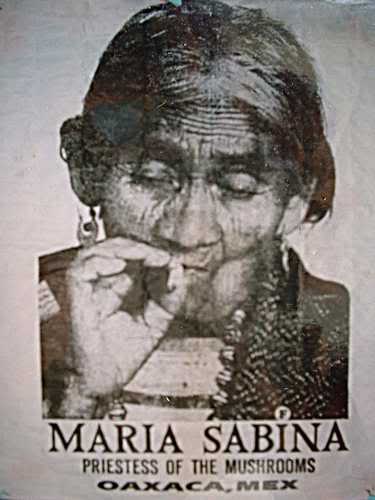 economy tied to aging counter-cultural tourists. María Sabina’s image is on the side of local taxis and tee-shirts showing her smoking a cigar — something not at all uncommon among women of her generation (think of Sara García’s “abuela” character in 1950s Mexican films) — is assumed to be a big joint — making her an icon among the drug-user culture.
This is what makes her relevant still. The tragedy was that her community, and its way of life, and perhaps the saint children, were probably doomed to extinction. But, absent the invasion, it would have been a gradual extinction, with time to mutate into a new and different form — much as the culture had incorporated Christian beliefs into their own indigenous customs. But, thefForeigners, seeking instant gratification for the ills of post-industrial life and too many goods, saw nothing wrong with instant occupation and conquest. They overlooked the destruction they brought to rural Mexican communities in the name of their needs, met now. And then, blamed the Mexicans for their perceived ills satisfying those needs caused, and forced the Mexican state to persecute those who those who fulfilled the desires of those outsiders.
And, in an odd twist of fate, just as the small tragedy in the small community of Huatla de Jiménez is being forgotten in the national tragedy of many communities, like Juaréz and Tijuana and Durango and Culiacán and throughout the Republic, the medical doctors in the north are taking a new look at psilocybin as a therapy… too late to teach the saint children to again sing in Mazateca.
Do as I say, not as I do?
Durango Archbishop Héctor González Martínez, in an Easter Sunday sermon said, “I wish to remind you and our brother priests that the Church is not in favor of any candidate or political party.”
Then, Monday, he opened the campaign headquarters of Rodolfo Dorador, a candidate for Presidente Municipal on the fusion PAN-PRD-Convergencia ticket. Surely His Grace is not supporting the anti-clerical PRD.
On a slightly larger stage, the Vatican over the weekend published guidelines for dealing with sexual abuse by the clergy, saying “Civil law concerning reporting of crimes to the appropriate authorities should always be followed.” Except, of course, when Cardinal Norberto Rivera doesn’t.
Nineteenth-century writer Frances Calderón de la Barca found in the Mexico of 1840 much on which she could expend her gift for snark. But, she found some people impressive, none more so than a nun at the convent of Santa Teresa, who accepted and found joy in her austere, contemplative life. Calderón de la Barca, comparing her unnamed friend to other Mexican clerics she knew, wrote (June 3, 1840):
 It is strange how, all the world over, mankind seems to expect from those who assume religion as a profession a degree of superhuman perfection. Their failings are insisted upon. Every eye is upon them to mark whatsoever may be amiss in their conduct. Their virtues, their learning, the holy lives — nothing will avail them, if one blot can be discovered in their character. There must be no moral blemish in the priesthood. In the Catholic religion, where more is professed, still more is demanded, and the errors of one padre or one ecclesiastic seem to throw a shade over the whole community to which them belong.
A memorial to the (almost) unknown Norwegian
Mexico and Norway have a lot in common. They’re both oil producers with more than a passing interest in actually doing something about climate change and … uh… er… um — remembering Carl Lumholtz.
Born in Fåberg in 1851, and trained as a theologian, Lumholtz became famous in the late 19th century as a explorer, archeologist and early ethnographer. In 1880 he moved to Australia, where, for two years he lived among the indigenous residents of North Queensland, publishing his account of their lives and culture in 1889 with the enticing title, Among Cannibals.
Among Cannibals is not an adventure book, although Lumholtz certainly could have written of adventure. Theology, when you come down to it, tries to not so much explain the ways of God to man, but to explain the ways man thinks about God and himself. How did the people of North Queensland think about God and themselves?
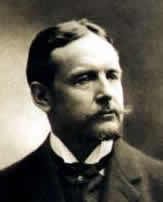 Lumholtz couldn’t, as he could with tracking down the beliefs and history of his own people, simply bury himself in a library and quote endlessly from books. And, as any theologian knows what people say about their beliefs and how they act may not be the same thing. And Lumholtz knew his fellow Norwegians had not always been the staid, steady Lutherans, but had been the kick-ass hell-raising Vikings at one time. They changed over the centuries, so why wouldn’t the Queenslanders? But, he was studying a people without books… so, in a plodding, methodical and cautious way, Lumholtz gathered other kinds of evidence, noted everything and wrote it down.
Perhaps it was his training in the esoterica of 19th century Scandinavian Lutheranism, with their tradition of exhaustive learned disputations, or living up to the stereotype of the plodding, methodical and cautious Norwegian, but what made Among Cannibals unique and different was that it was plodding, methodical and cautious. It was modern science applied to communities of human beings.
From Bernado Sahagún (who studied the Aztec culture the better to sell his own religion) onwards, Europeans have methodically studied the “others” they encountered… always with an agenda — selling something (usually religion) or acquiring something (usually the object of the study’s decimation). Although the title of Lumholtz’ book was shameless marketing (the Queenslanders are not — and were not — cannibals), Lumholtz didn’t want anything particular, except to satisfy his boundless curiosity.
Lumholtz might be faulted for misleading the public with his book title, but a book by an unknown Norwegian (written in English) needed a hook if it ws going to attract attention at a time when the romantic image of the explorer off in the wilds of the unknown parts of the globe was slowly fading as more and more of the world map was filled in with mundane details of mountains and rivers and mineral deposits. The human map… that was a different story. Lumholtz was lionized by the scientific community and could basically pick his own projects.
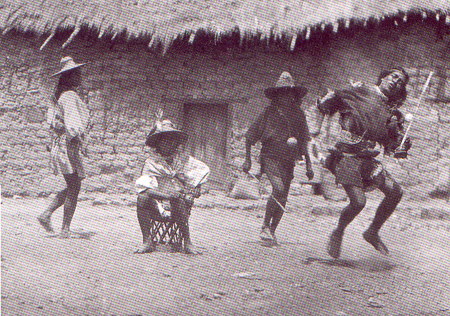
Fiesta de jículi, Santa Catarina, Jalisco, December 1895
What he chose to spend the next twenty years of his life on was not exactly tierra incognita. Northern Mexico was known, and had been mapped and mined and grazed by Europeans for centuries. But little attention had been paid to the Tarahumara and Huichole people living there. The Aztecs simply dismissed them as Chichimeca (“Sons of Bitches” — literally). Other than being in the way when the Spanish (and the later Mexicans) wanted to run cattle or needed warm bodies to dig out gold and silver and copper out of the Sierra Madres, they were largely ignored. Lumholtz, amply funded by the American Museum of Natural History in New York, spent twenty years (from 1890 to 1910) methodically and cautiously working his way southwards studying peoples and their history from the Zuni and Navaho to the Tarahumara, to the Huicholes to the Coras to the Purépechas (in his day, known as the “Tarascos”)… from New Mexico and Arizona, though Sonora, Durango, Sinaloa, Jalisco and Michoacán.
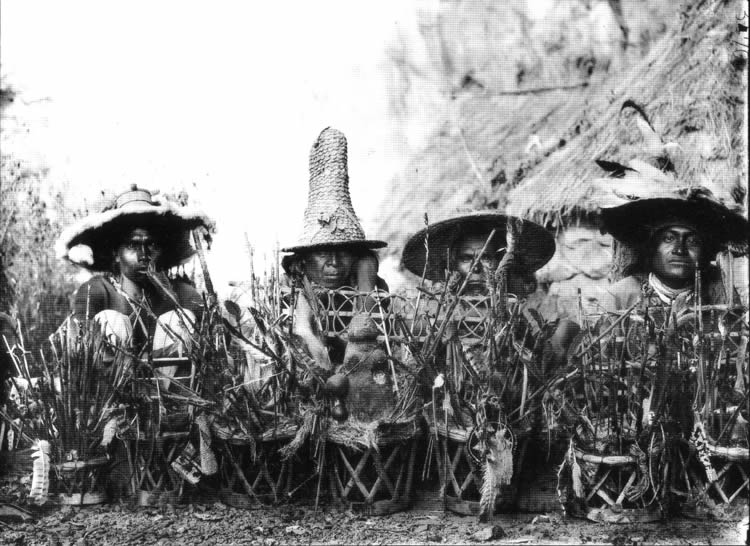
Huichole shamans, photo ca. 1895-96
His achievements — describing the people among whom he wandered for the first time in a scientific, disinterested manner and the then radical idea of applying archeological methods to study a rural people’s past in an age when archeology meant digging up cities and monumental tombs — were many. Photography had been used to record people’s rites and practices for several years, but Lumholtz was one of the first to also use sound recordings. Think of it. In the 1890s, sound recording were done on wax cylinders, and there weren’t electrical outlets in the Sierra Tarahumara, even if there were some electrical recording instruments. And no refrigerators. Bringing back the music — was a feat in itself… one that took a methodical, plodding and cautious genius to accomplish.
Of course, he had the typical faults of Victorian scientists. He tosses around the words “savage” and “primitive” regularly. He carted off entire cemeteries, and when the digging was tough, resorted to dynamite. But, his 1902 two-volume Unknown Mexico; a record of five years’ exploration among the tribes of the western Sierra Madre; in the tierra caliente of Tepic and Jalisco; and among the Tarascos of Michoacan. (Volume 1 can be downloaded here. Volume 2 is here) is still the basic text for any ethnographer of the region.
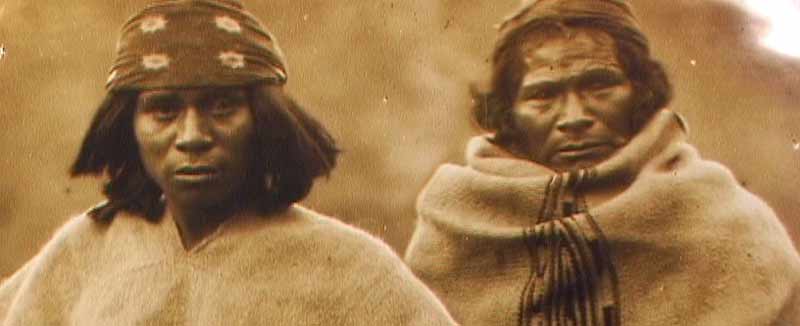
Tarahumara
And Unknown Mexico is still worth reading for the adventure and romance of it all. People today whine about possible dangers at police roadblocks might find comfort in realizing that narcos might be scary, but there was a time the traveler had to contend with maurading Apaches, highwaymen, and exploding burros.
After 1910, with the Revolution making it impossible to get government permission for a scientific expedition, Lumholtz turned his attentions to Borneo (where there really were cannibals), working there until 1917, when he was diagnosed with tuberculosis and retired to the sanatarium at Saranac Lake, New York, where he died in 1922.
The Norwegian Prime Minister, Jens Stoltenberg, is on a state visit to Mexico. Stoltenberg turned over to the Instituto de Antropología e Historia a collection of recording Lumholtz made in the 1890s of Tarahumara and Huichole singers. Something to celebrate.
Victory is ours! Not Chapo, human rights
Everyone seems fixated on the A.P. “exclusive” claiming some unnamed U.S. source believes Chapo and the Sinaloa Cartel has “won” the “war” in Juarez. According to “a U.S. federal agent who sometimes works undercover” — one unnamed person — U.S. intelligence agents believe what everybody in Juarez has been saying all along… that the gangsters were fighting amongst themselves for control of export routes, and the Army’s role has been counterproductive. And one of the gangster organizations apparently is now the “winner”. Big whoop.
Foreign bloggers and even the Mexican press are picking up the story, but as Judith Torrea, in her essential reading for narco-war-porn fanatics, “Ciudad Juárez, en sombra del narcotráfico” reports, no one in Juarez believes this, nor, for that matter, does it really matter. Whether Chapo “wins” or not, Juarez is still in an economic and social freefall and narcotics exports are going to continue to be a local business.
What was important, and not even noticed except in passing by the Mexican press was a huge change, partially a result of reaction against the “narco war” that affects the rights of Mexicans (and foreign residents in Mexico) much, much more than this war. By a vote of 96 to nothing, the Senate has approved sweeping changes to the Constitution, that strengthen civil rights, for the first time give the Human Rights Commission legal authority to pursue violations and specifies that human rights concerns take priority over economic and political considerations in international affairs.
There has been pressure from the United States to regularize the position of the military in internal policing just as Mexicans of all political persuasions have been noting the constitutional irregularities which arise from using military authority when there is no declared “state of exception”. Under the new provisions, the basic constitutional rights of citizens (and residents) under Articlo 1 cannot be abrogated even during a times of civil unrest.
Also, by giving the Human Rights Commission the authority to sue on its own behalf — and to sanction — those authorities who reject its findings
While this is only a Senate vote, and the changes must be ratified by the Chamber of Deputies and the States, with all parties on board, this will correct a massive oversight in the original composition of the Human Rights Commission. It is, technically, a court (as commissions are in Mexico), but as one without the power of bringing sanctions, rather toothless.
Finally, this reforms will also specify that Mexican courts can enforce international treaty obligations, something the courts were reluctant to do in the past.
No matter what “a” U.S. agent says, the only real winners in Mexico last week were the Mexicans.
Oh look, a kitty!

The Chapultec Park Zoo recently acquired this little guy… a black jaguar… and, until 12 May is looking for suggestions on what to call him. Recent suggestions have ranged across the Mexican lingusitic map, from Mayan (Boox Bola’ay — “panther”), to Nahuatl (Tzilmiztl–“black puma”, Yohualli — “night”, Tezcatlipoca), to Zapoteca ( Betzao — “Jaguar”). Given his Mexico City connection, both Jachil or Chitar have been proposed — both being combinations of the words Jaguar and Chilango. Saúl, in honor of Los Jaguares lead singer Saúl Hernández has also been proposed. Others, looking at the little guy’s coloration have suggested Zapote (a black fruit), and — one assumes as a joke Elmer (in honor of a late Labrador Retriever), Memin Pinguin and — of course — Obama. At least one hopes the last two suggestions were jokes.
The unnamed jaguar was born in captivity, the Chapultepec Park Zoo having a good record at breeding endangered species. The big cats are endangered everywhere in the Americas, although here in Sinaloa, the Autonomous University of Sinaloa recently concluded a study using camera traps to get a rough census of the remaining jaguar population, discovering to their delight (and surprise) that not only jaguars, but the other Mexican big cats — puma, linx, ocelot and tigrillo — are holding their own and actually increasing in numbers.
Spinning in his grave
The 91st anniversary of Emiliano Zapata’s assassination (post below this one) on the 10th was the occasion for dueling interpretations of the meaning of it all. For Felipe Calderón,reflections on the life and death of Zapata call to mind the need for pension reforms and major changes in the energy laws. I don’t get it either.
For Marcelio Ebrard, it means there’s still a long way to go to bring justice to the indigenous and campesinos in the country.


 mexfiles.net