If I type in “sports” in a google search” I get 756,000,000 hits. “Politics” gets me 237,000,000.
The huge majority of the political sites deal with their own country or local issues… not many of us are willing to take on another nation — from their own perspective, let alone the world’s many perspectives.
One reason I keep this site going is that there is a need for these “foreign” sites, even when the “foreign” country is the next-door neighbor (or, maybe because the foreign country is next-door). Unfortunately, without donations, the Mex Files won’t be able to continue unless immediate expenses are caught up.

The longer term financing is a chronic worry, and every donation now, above the immediate needs, goes to ensuring long-range survival
It’s understandable — most of us only look at the world from our own perspective, and miss not only how the rest of the world sees the same event, and ignore the “real life” that affects political decisions.
The only site I know of takes on sports AS international politics is “The Global Game“. They have their work cut out for them, but manage with elegance, style and amazing scholarship to explain the world situation through the one sport most countries share. Neo-liberal economics, and the effects on the U.S. economy a little too dry? Not if you consider what David Beckham is getting paid to play in the U.S.
Alas, in the U.S. we match our unilateral diplomatic and military policies with a unilateral sports fanship. Soccer fans in the U.S. are as eccentric as political writers on … oh… Mexico. No wonder our foreign policy is so out of synch with the rest of the world. Maybe the State Department should make Global Game required reading.
I’ve written before about the Mayans, about commercial sex workers, class issues, and human rights. ¡¡¡GOOOOOOOOL!!! — the Global Game’s combines all three in their learned essay on the “Railroad All Stars” of Guatemala:
Of football documentaries that favor the human element there is no shortage of late. One of the most recent is Estrellas de la Línea, screened at English-language film festivals as The Railroad All-Stars, about Guatemala City sex workers who in 2004 organized themselves as a football team.
…
Filmmakers and Las Estrellas themselves do not hide that their grab for attention began as just that. Frustrated at efforts to gain respect for their plight through the political process, the women seized on a suggestion to organize a team in a Saturday amateur women’s league, the domestic Campeonato Femenino (see 30 Nov 04). Las Estrellas’ first match in Sept ’04 came against the girls’ team from Colegio Americano, the elite American School of Guatemala, and almost immediately publicity flowed.
This background of male control and delineation of female space makes Las Estrellas’ choice of fútbol as their agent of self-expression all the more logical—and potentially volatile. Susy Sica—43, illiterate, Mayan, single mother of seven—identifies the game’s potential for self-actualization when she says, “When I’m on the field practicing, even though I’m only a few blocks away from the tracks, I forget I work there. I feel like I’m someone else” (Catherine Elton, “Prostitutes Win Respect with Soccer,” Miami Herald, 31 Oct 04).
Sica’s Mayan background also points directly to the heritage of ur-football among the Maya in the highlands to the west of Guatemala City and throughout Mesoamerica. Sica, whether consciously or not, taps these cosmic sources of identity preserved in the ancient ball courts, artifacts and literary relics of Mayan culture. More than 1,500 ball courts have been unearthed in Mexico, Guatemala, Belize and Honduras as well as other evidence of ball playing among the Olmec, Maya and Aztec civilizations.
The Mayan ball games, writes Yale art historian Mary Miller, enacted foundational tales of life and death from the Popol Vuh, the Mayan creation narrative and anthology of etiological tales incorporating the first four human beings and their contests and other interactions with gods of the underworld. The four beings, hero twins Hunahpu and Xbalanque along with forefathers Hun Hunahpu and Vucub Hunahpu, play ball games with the gods. Through guile and artifice, the twins ultimately prevail and exhume their father’s and uncle’s bodies from the ball court of Xibalba; the corpses are placed in the sky to become sun and moon.

The fanciful tales were enacted on the ball courts of life, with the story of the life cycle of maize and the resurrection of the Maize God, who is identical to Hun Hunahpu, at the center of the ritual. The game as played by the Mayans employed hands only to put the ball in play. Otherwise, players propelled the rubber ball off surrounding walls using upper arms, hips and thighs, attempting to send the ball through elevated stone rings. Hips and knees were padded. Surviving artifacts show players wearing headdresses and long hipcloths. “[T]he balls themselves,” Miller writes, “were dangerous: heavy and sometimes moving at great speed, such a ball could break a bone, if not a neck, or damage internal organs” (81). At one point in the final encounter between the twins and the Xibalban lords, Xbalanque receives the ball, “the ball was stopped by his [waist] yoke, then he hit it hard and it took off, the ball passed straight out of the court, bouncing just once, just twice, and stopping among the ball bags.”
The ball court, now replaced by the fútbol field, was central to the Mesoamerican belief system and perhaps remains so. Presbyterian missionary Ellen Harris Dozier writes in correspondence of 2004 that women with whom she works in San Felipe, Guatemala, when asked to draw maps of their villages, customarily depict the soccer pitch at or near the center. Yet the ball game that “provided the physical and symbolic fulcrum of an entire continental culture” (10), in the words of David Goldblatt, has in its modern form been largely closed to women. Hence we imagine Las Estrellas boldly reclaiming this preserve in order to cast their own tales of death and renewal.
Here’s the film’s trailer:
Out for a spin
Silvia Chavez, Javier Salinas and Israel Davila of Jornada checked up on the new traffic code enforcement. This is a classic Jornada piece – absolutely true, absolutely accurate and absolutely designed to make PRI and PAN politicans look like dicks. It’s subtle, but the last two paragraphs are brilliant. Without spelling it out, what Jornada is telling us is that the State Police are going after poor and indigenous drivers (who just happen to live in PRD-controlled municipios) and letting the suburbanites slide by…
Think maybe suburbanites can afford better bribes?
(My translation)
Application of new traffic laws in the 59 municipios throughout the Valle de México has been arbitrary. In several places dozens drivers were cited for infractions, while in other places, officers only gave verbal warnings after they ran out of tickets.
In PRD-administered Ecatepec, the new regulations were enforced with fines. Local police director Gildardo Pérez Gabino said that the city installed 10 portable terminals on main streets where traffic fines could be paid immediately.
Dozens of drivers were cited: several for talking on cell phones, and others for not having plates or not wearing seatbelts. The usual excuse from the drivers was that they didn’t know the new rules.
In the western suburbs, drivers were verbally admonished because the officers didn’t have tickets. Several local governments decided to postpone issuing fines for another month.
Tommorow, State Security Agency ( Agencia de Seguridad Estatal, ASE) director Héctor Jiménez Baca will be going to the municipios, including Naucalpan, to explain correct application of the regulations. Jiménez said that 750 local traffic police has issued 5000 tickets so far, and his officers are also citing motorists.
Tultitláan transit director Martín Roque said he couldn’t write tickets until he had the official forms. He said the new regulations won’t take effect until 18 September. In Naucalpan, officials are saying sometime in August. In Huxquilucan, 20 August.
In at least six northeast municipios, ASE officers did not issue tickets, but they did issue warnings, and tell drivers to read the new laws and respect the regulations.
State police said that 25 transit officers were dispatched to downtown Texcoco, and to San Salvador San Salvador Atenco, Chiautla, Tezoyuca, Chiconcuac, Tepetlaoxtoc and Papalotla.
State Governor, Enrique Peña Nieto, said a system will be worked out to verify that transit police don’t abuse the new regulations.
Fetuses… doing the job illegal immigrants can’t
Sleazy exterminator turned congressman turned future prison inmate Tom DeLay was born in Laredo, so he should know better.
Despite his own ties to using exploited immigrant labor (and forced abortions on the workers) DeLay seems to think that had middle-class Americans not had legal abortion, they’d have turned out a generation of sweat-shop workers and lettuce pickers.
Former Republican Majority Leader Tom DeLay told a gathering of College Republicans that a link exists between legal abortion and illegal immigration in America. The remarks were included in a video produced by writer Max Blumenthal and posted at The Huffington Post.
“I contend [abortion] affects you in immigration,” DeLay told the Washington-area gathering. “If we had those 40 million children that were killed over the last 30 years, we wouldn’t need the illegal immigrants to fill the jobs that they are doing today. Think about it.”
On the other hand, those future babies may have found another calling:

Que Ningún Niño Se Quede Atrás
And, leave no website behind either. The Mex Files has to depend on contributions. I’m fortunate that I have no kids to put though school, but even with my extremely moderate “lifestyle” — not much of a life, and not a hell of a lot of style at present — I have to at least meet basics like rent and utilities and food to keep writing.
Seriously, without a few hundred dollars to meet the utility and phone bills, I’m going to have to go off line within a few weeks at most.
If you want to send a check or make other arrangements, please write me at “richmx2 -AT- excite -DOT- com” (please include “Mex Files” in the subject line).
The Ninth “Consejo Nacional de Autoridades Educativas” is meeting in Puebla this week. Unlike the U.S., “no child left behind” seems to mean something:
(my translation. Full article by Lucía Irabien in Nuevo Excelsior:
PUEBLA, Pue. – Educational authorities have admitted that they are unable at the present time to incorporate all three-year olds in pre-school, AS REQUIRED BY THE CONSTITUTION, although they are making progress on proposals to require English in all primary schools and to develop a single graduation standard.
Wow, none of this nonsense about claiming early foreign language education harms children (which really means “I don’t want my kid learnin’ no Spanish… or much of anything, for that matter).
Someone using the nom de internet “callexte” posted this on a site for foreign language teachers recently:
– children who study more than one language may develop a better capacity for abstract thinking. This is because they learn something like tree, arbre, boom for the same wooden thing with leaves on top and will thus separate the thing from the name. Somebody who only speaks English will forever link the plant with the word ‘tree’.
– if you’re at an international meeting, the discussion will be in English. If something needs clarifying the Swedish or Japanese participants for example may turn to their group for a chat in their own language and then report the results in about three words back to the international group, leaving monolingual English speakers totally bewildered and not having a clue what’s going on. This is incredibly rude but it works every time.
– if you’re some kind of decision maker, you’ll study and compare many different proposals of all sorts. If you’re a non-native English speaker, you may be thoroughly fed up with years of drawing blank looks from native English speakers. And with exclamations like “Oh – you mean this-and-that!”
You might then favour the clumsily worded project proposal from the Russian group over the smug, overeducated-sounding blurb with the jokes which are only funny if you happen to live between Newcastle and Brighton-on-Sea. Because you’ve really really had enough of that.
Alpine
Thanks to those who’ve responded so far, I have SOME financial breathing room, I’m not out of the swamp yet. Keeping my phone service connected is still a worry, as are the long-term financing.
In a perfect world, there’d be enough coming in to finance the Mex Files for a year, and I could be low key about asking for funds. Time I spend on free-lancing for local papers (well spent, but not well paid) and… it looks like driving for the railroad (a van, not a train!) … is time away from the Mex Files.
The immediate needs are down to a little over $400. The yearly need is about $12,000. Among 400 regulars, that’s only $30 each… even if you only use the Mex Files once a week, that’s less than 0.60 a week.
Again, donations can be made via paypal, or, you can write me at “richmx2-AT/Arroba-excite-dot/punte-com” for a mailing address or other information.
Oaxaca
Excellent “on the ground” comments on the July 16 Oaxaca “riot” (or maybe police attack is more accurate) come from Eunice Goetz, who comments in my 18 July post, “Must the Show Go On in Oaxaca?” . Her information, and that of other local witnesses and commentators, makes “The Laughing Nomad” an essential information source for anyone concerned about Oaxaca.
The border
The “Hands Across el Rio” project, sponsored by Border Ambassadors, has a schedule out for those of us in South Texas/northern Mexico who object to the federal imposition of a wall which will negatively impact our economic, social, environmental, agricultural and recreational infrastructure. In other words, the “stakeholders” (a word the bureaucrats love these days) are everyone.
Turn out if you can, or bring your canoe, rowboat, kayak, inner tube…
26 August (Sunday) El Paso/Juarez 1 P.M.
28 August (Tuesday) Presidio/Ojinaga 6 P.M.
31 August (Friday) Del Rio/Cd. Acuña 6 P.M.
1 September (Saturday) Eagle Pass/Piedras Negras 1 P.M.
2 September (Sunday) Laredo/Nuevo Laredo 1 P.M.
3 September (Monday) Roma/Miguel Alemán 6 P.M.
5 September (Wednesday) Rio Grande City/Camargo 6 P.M.
6 September (Thursday) Los Ebanos/Diaz Ordaz 6 P.M.
7 September (Friday) McAllen/Hidalgo/Reynosa 6 P.M.
8 September (Saturday) Brownsville/Matamoros 1 P.M.
9 September (Sunday) Boca Chica/Bagdad 3 P.M.
The UnBattle of Bagdad
For those of you wondering, yup, Bagdad is at the mouth of the Rio. It had its 15 seconds of fame when the OTHER Bagdad was invaded. But the OTHER Bagdad wasn’t the first one gringos invaded, though that invasion was more or less a friendly operation.
At the end of the U.S. Civil War, when Mexico was fighting off the French occupation, the vehemently pro-Juarez Ulysses S. Grant used the excuse of “terrorists” operating in South Texas to funnel federal troops into the region, basically to cover his tracks while he passed Confederate arms and U.S. Army supplies to General Mariano Escobedo.
Recently freed slaves, who had joined the U.S. Army and put into a labor battalion were unloading weapons at Bagdad when they ran into a Austrian “volunteers” serving Maxmiliano,commanded by Count Erst Pitner. A short fire-fight ensued, and the Austrians surrendered.Not quite sure what to do with their prisoners, the U.S. soldiers marched them into Brownsville, and deposited them in a second-rate hotel (the only kind available then… Matamoros was the nice side of the border, and Brownsville the sleazy border town).
Count Pitner, a born snob (hey, he was a count, after all), whined not only about the indignity of being captured by what he considered his inferiors, but also about having to pay for laundry service (he ran out of clean underwear).
Count Pitner’s sent whiny letters back to his mommy in Vienna, who complained about the harsh treatment of her baby boy to Emperor Franz Josef, who called in the U.S. Ambassador who decided… Austria and the U.S. were not at war, so the whole thing was a terrible misunderstanding. The Count, and his men were lost tourists, needing to be escorted back to Mexico. They were.
Ernst got back just in time to get captured with Emperor Max at Queretaro, spend time under a death sentence and then get himself expelled from Mexico. He became a minor Austrian diplomat, and complained incessantly about laundry service wherever he was stationed.
His distant descendant, British diplomat Gordon Etherington-Smith (who, having served in Vietnam, was especially interested in diplomats serving in losing imperalist causes) translated Pitners’s diary and letters, publishing them as Maximillian’s Lieutenant: A Personal History of the Mexican Campaign, 1864-7. (University of New Mexico Press, 1993).
The U.S. Congress passed a law to prevent passing off weapons to even friendly foreign powers without congressional approval, which has been more or less U.S. policy ever since. In 1987, Ulysses S. Grant’s generous assistance to Juarez came back to haunt the Reagan Administration during the Iran-Contra Affair.
Bagdad itself is nearly gone as a community, but folks in Tamaulipas welcome visitors… just not armed ones.
Oaxaca- fair and balanced, for real
I’ve noticed that most coverage of the Oaxaca Guelaguetza riots leave out the context
Those who saw the event as a continuation of unresolved issues from last year (and, with the Teachers’ Union, of the past 20 years) just saw an action directed against a “folk festival” without any understanding that Guelaguetza has been a part of local culture since at least the 18th century, missing the important point that this isn’t some event for tourists, but something for the people themselves.
Those who saw it as a “left” v. “right” political action, saw a blow directed at foreign corporate interests, missing the local issues.
I’ve been looking for alternatives to the regular wire service reports and the “alternative media” (left and right) sites that usually have an agenda already in mind,
This is the first English-language piece that tries to put both visions in perspective.
Part of the people’s frustration that is boiling over now is the perception that the government along with major corporations such as Banamex and Telemex earn enormous amounts of money by operating a perverted and commercial form of the Guelaguetza. Tickets to enter are about $40–far out of the price range of most Oaxacans–which means that a local tradition now mostly benefits rich tourists. A third of the tickets are free to the public, but they are in such high demand that they are difficult to come by.
There is also fear that what is being presented as “tradition” is really a bastardization put on for the sake of commerce…
…
Nevertheless, not everyone agrees with the attempt to boycott the Festival. Oaxaca is one of the poorest states in Mexico, and many people are depending on the influx in tourism to make ends meet. Adriana Morales commented, “I don’t support what the protestors are doing nor the way they’re going about it, because the people they are hurting are the small business owners and street vendors. A tour guide I met named Alberto agrees and believes that organizations like APPO are simply trying to exploit the year old conflict between the teacher’s union and th government to promote their own narrow interests. Governor Ruiz claims that ninety percent of Oaxacans want the Festival to go forward, though several people I interviewed believe that a much larger segment of the population support the protests.
And, though the translation sucks (this is how it appeared on the English-language site), Cuba’s Prensa Latina — not a source I’d expect — is quite dispassionate in their view of the situation as of earlier today:
Mexico, Jul 20 (Prensa Latina) Mexican City of Oaxaca, looks today a military camp rather than a city ready for the celebration of the most important cultural event that will be held in three days more in this homonymous state.
The Army’s 28-zone troops established control post to make a through police checkups of all cars entering by the main four accesses to the city, where a strong confrontation took place last Monday between soldiers and police with civilians.
Government security has stepped up in Oaxaca because of the celebration of the Guelaguetza traditional feast next Monday to worship Carmen virgin.
Social organizations and members of Oaxaca People’s Popular Assembly (APPO) joint a march, four days ago, that was trying to reach Fortin Hill, the place where the celebrations will take place, but was repressed by the police.
APPO was trying to reach the amphitheatre to perform an alternative popular version of Guelaguetza, in front of the one that was called commercial.
Now the place does not seem as it will be held a festivity since about 48 police vehicles are stationed at only a few metres of the celebrations headquarters, according to reports.
Facing this situation, Oaxaca Networks of Human Rights questioned what it called militarization of this locality and demanded the troops’ withdrawal because “is impossible to restore the city’s calm with soldiers or police positioned at each corner,” noted the entity.
Photos of the week
Free #$%^!!ing Speech?
New traffic laws take effect this week in the Federal District, which among other things, mandate a 20 times the salario minimo (after the 1990s inflation, fines and fees are often set based on multiples of the daily minimum wage, to avoid having to revise the civil code every time the currency changes) for swearing at the traffic police.
Ahi es un problema, as the master of Mexican swearing would have said. There’s no mention of who brings charges. You gonna take some pinche cabron of a tamarindo’s word over mine? ¡Chinga su madre, güey!
On the other hand, maybe some old traditions deserve to die:

El Universal photo by Adrián Hernández. No word on whether or not the officer actually wore the button
He’s #1… and #1
You gotta admire Manuel Uribe. He should be suffering, unhappy and a freak. But, Manuel is no gringo. He celebrated his weight loss with a parade through Monterrey, and has earned TWO cititations in the Guinness Book of World Records — the biggest weight loss by a human being (200 Kg) and the heaviest human.
What’s amazing about Manuel is that he’s a relatively healthy guy (why he doesn’t have high blood pressure or diabetes at his weight is a medical mystery) with a positive self-image. For you chubby-chasers, sorry… he’s got a girlfriend, though he’s willing to show (a little more than) some skin.

Photo: APF
Lou Dobbs cloned… by Mexicans
What’s worse than Lou Dobbs? How about a bunch of Lou Dobbses. Nah, it wasn’t that bad:
Wearing Lou Dobbs masks and chanting ‘Facts NOT Fear’, 130 members of Voces de la Frontera gathered outside Milwaukee’s Federal Courthouse yesterday for a lunchtime rally asking: “Do you have to look like Lou Dobbs to have a voice in the immigration debate?”
The action, which was widely featured by local and national media, also led to an approach for Voces’ Christine Neumann-Ortiz to appear on Dobbs’ show. Appearing live last night, she was able to firmly challenge his framing of the issue.

Photo: CNN
¡Feliz cumpleaños, Carlos Santana!
Lento y lento, I’m starting to think I might make it through the emergency, but there is a long way to go to keeping the Mex Files functional. Thanks to “eddie willers” for upping his contribution (and thanks to his kids who are doing without their milk money); David and Jochen for paypal donations today.
There’s still several hundred dollars that need to be caught up before anything else, and on-going support is still needed (and no one likes to be hit up for money… and, really, I’m not asking for much: about $30 per reader would cover all expenses for a year.
Gosh, if it hadn’t been for Burro Hall, I would have overlooked the fact that Carlos Santana turned 60 today (does that make anyone else feel… urp… OLD?)
Mariachi may not be the first thing to leap to mind when you think of Santana.. but Carlos Augusto Alves Santana learned to play the violin, thaks to his papí, a mariachi violinst who moved the family to Tijuana when Carlos was five.
In 1961, Carlos Santana — an ILLEGAL IMMIGRANT — moved to the United States, to make the music Americans can’t do.
Burro put up THE ¡Oye Como Va! video so I’ll put up a different one (and not the one I put up earlier– YIKES! I’d looked at three or four “youtube” videos and then posted the wrong link — I guess my multitasking skills are going to hell as a age. DOH!).
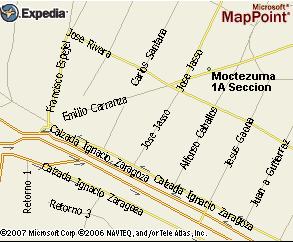
Burro (or maybe Sra. Burro) mention that there are several places in Carlos’ home town of Autlán de Navarro, Jalisco, but in the interest of … trivia… I’ll do him one better, having often bought my dinner at the Pollo Rey at the corner of Ignacio Zaragosa and calle Carlos Santana in Colonia Moctezuma, I’ll give you directions… take Metro Linea Uno (the pink line) to Moctezuma, exit on the Moctezuma side look for the Pollo stand.
One slight problem… it’s named for some other Carlos Santana, but nobody ever heard of him.
Still here…
The only “community” that the Mex Files can turn for to support is its own regulars (though outside assistance is welcome).
The Mex Files doesn’t measure daily hits in the tens of thousands, or even thousands… about 800 to a thousand a day. In the “About” section, I said this started as a casual thing, but over the last year, I’ve found about 500 of you who use this site regularly for one reason or another.
I don’t want to sell you short, but I have to eat and pay my bills. This is a very rural area, and even with a second job, I’m not meeting even my minimal expenses month to month.
The last two months were worse — I was helping a mentally and physically challenged person who would “forget” her purse when I’d take her shopping. Told she had a trustee for her bank account, I didn’t worry too much when she wrote me bad checks to cover my expenses, but — still being legally competent — she’d apparently wiped out her account. Her competency being questionable, I don’t have any illusions of the loss (and the bad check fees I’ve rung up as a result) being reimbursed any more than the few hundred dollars her out-of-state relation was kind enough to pay.
Right now I bring in a little money freelancing for local newspapers and am taking a second (or third) job on top of trying to get a commercial area news site going and keeping the Mex Files going. On the Mex Files, I invest about 50 hours a week, but will have to cut back some.
Thanks José’s contribution last night, and Jonathan, David, Adrian, Thomas, Brett and Tim, I was able to keep the electricity turned on. I still own money on the electric bill, and have to deal with the overdue phone bill ($150), the rent ($280) and the overdrafts (down to about $200). And those are only the unexpected expenses. I live (almost) like a monk, on about $1000 a month.
$12,000 + the $630 in immediate expenses divided by 400 regulars is a tad over $30 each. I feel obligated to my readers, and hope to “draw in” more… but can’t do it when the phone is shut off and the cupboards are bare, or I’m working two jobs to support my REAL one…
You can click the “paypal” button if you have a credit card and are donating with U.S. dollars. Or you can write me (“richmx2-AT-excite-DOT-com” with MEX FILES in the subject line) for a mailing address and check information.
That White House Con(ference)
I mentioned the White House Conference on the Americas once before. Me and… oh, maybe a few lefties like Daniel Denvir (who I”ve never heard of before) from the “Portland Central America Solidarity Committee” (which I never heard of, either). Not that I’m THE go-to guy on all things Latin American, but Denvir makes a good point.
What’s going on in Mexico — in Oaxaca, with AMLO, the now-discredited story about the ERP blowing up gas lines (the press is full of stories instead about Chinese-born Mexican gangster Zhenli Ye Gon (who somehow some think is connected to the explosions. Just the drug money story is weird and “got a little weirder today” as Dudley Althaus writes in the Houston Chronicle. ) has its own Mexican flavor, but it fairly pan-Latin: Mexico’s rightist administration is the odd man out in Latin America.
While the South Americans move left, even the Catholic Bishops are moving are less and less willing to follow the leadership of outsiders. Calderón and Company are resisting the changes in the relationship.
The one thing I thought the Fox Administration did right was to open Mexican markets to the rest of the world. The Calderón Administration too making at least some financial decisions that aren’t going to benefit the U.S. So far, Mexico remains closer to the U.S. than to the rest of Latin America than other countries, but there’s no reason that can’t change. Or won’t.
No, the best bullshit detectives on the Pacific Coast sometimes see acceptance of the fact that Mexico is a leftist country run by rightist (and opportunists) as support for any given faction. In a lot of instances it is — not all though. And, of course, there are those authoritarian types who think acceptance of trends opposed by the White House is anti-American or “anarchist” but they’re idiots, so screw em.
In the long run, Mexico is going to still going to be next door to the U.S. and is going to be a weird place, but Mexico’s existing relationship is going to move — I’m betting towards the “left” — and the present one just isn’t workable.
In the short run … if the underwhelming response to the White House Conference is any indication… it’s not working either:
Bush opened the White House Conference on the Americas on July 9th with a declaration that the United States is “an active neighbor of Latin America.” In the past, coup-plotters in Guatemala and Chile, dictators in Argentina and El Salvador, and the Contras in Nicaragua might have agreed.
In his opening address at the recent meeting, Bush quickly got down to his priorities: pushing free trade and pushing back against Hugo Chavez and the tide of left-leaning governments emerging down South. “I think our citizens will be pleased to know, for example, that we’re working very hard to get trade agreements through our Congress, because the best way to help defeat poverty is to encourage commerce and trade.” This is interesting given that, according to a 2007 NBC News/Wall Street Journal poll, only 28% of people in the U.S. think that trade has benefited their country. It’s hard to say whether Bush’s claims about “free” trade will be greeted with more cynicism in the U.S. or in Latin America.
…
As the July 10th’s Guardian reports, the whole affair had an air of desperation about it, as the Bush Administration struggles to not fail at something in its final 18-months. … The Administration is desperately trying to let these “partners” know that they have not been abandoned to the fearsome Chavista masses.
…
The Conference’s message was that social exclusion and poverty are best combated through free trade and private charity. Any hypothesis as to what causes exclusion and poverty went unmentioned, as did any efforts that lay beyond the safe confines of neoliberalism….
The White House’s little piece of hemispheric performance art, however, didn’t even merit a mention in the New York Times. Despite all-star appearances by key members of the Bush Administration, the only mentions in the U.S. press that I found were a Miami Herald article and an angry Washington Times editorial by Rep. Dan Burton, Indiana Republican and ranking member of the House Foreign Affairs Subcommittee on the Western Hemisphere. He claims that lefty members of congress are misguided for calling the U.S. relationship with Latin America “broken” and that “the president is addressing root problems through substantive discussions on investing in education, meeting health care needs, expanding economic opportunity and building public-private partnerships.”
Big-boobed babe blasts beaners — Nativist porn
It sucks, but I really do have to have to ask for support. Thanks to Jonathan, David, Adrian, Thoma, Brett and Tim, I almost have enough to pay the electric bill (which has to be done by tomorrow), but still need to get the rent caught up and look at the long term needs. Yeah, this is serious.
Somehow I don’t think this will be coming out in Spanish translation.
DOMESTIC ENEMIES: THE RECONQUISTA
By Matthew Bracken
San Diego, Calif.: Steelcutter Publishing, 2006
$19.95 (softback)
…courtesy of former Navy SEAL Matthew Bracken, comes …a portrait of the apocalypse Bracken fears will overtake America thanks to undocumented immigration from the south. The book is a fictionalized version of the Aztlan conspiracy theory — the idea that Mexico is secretly planning a “reconquista” (reconquering) of the seven states of the Southwest — that now animates large swaths of the anti-immigration movement….
Domestic Enemies opens in a secret Oklahoma prison camp (D-camp) full of women detained by the federal government for acts of terrorism. Here, Bracken’s curvaceous 27-year-old heroine, Ranya Bardiwell, tends the fields under the supervision of gun-toting “Internal Security Agency” guards… Through flashbacks, we learn that Bardiwell gave birth to a son five years ago in federal prison. He was taken from her just minutes out of the womb. The action begins as Bardiwell is summoned to the office of a female warden who attempts to seduce her. They take a bubble bath together, during which the warden reveals that Bardiwell’s son is living in Albuquerque, N.M., and has been adopted by FBI agent Alex Garabanda and his IRS agent wife.
Enraged at the thought of her child being raised by federal agents, Bardiwell straddles the naked warden and chokes her to death in the tub. She escapes, intent on recovering her son, but finds herself in a brave new post-amnesty world.
…
And New Mexico, where Bardiwell heads to retrieve her boy, has become a haven for communist revolutionaries. Now it’s “Nuevo Mexico.” The state has passed Spanish-only laws and razed businesses with English signs. Ranches once owned by Anglos are seized and given to former undocumented immigrants. The brutal, M-16-toting Milicia de Nuevo Mexico aims to get rid of all Anglos.
Bardiwell is captured by the militia in Albuquerque. But, entranced by her curves and her marksmanship — demonstrated when s he shoots a hippie — the dashing Comandante Basilo Ramos orders Bardiwell to conduct weapons training for his troops and makes her his mistress, holding her captive in his mansion. In a bizarre scene, Bardiwell drugs Ramos, photographs him sodomizing a communist professor whom he strangles during sex, then escapes out a second-story window, climbing down a rope made from the comandante’s silk ties. Bardiwell then hooks up with her child’s disillusioned adoptive father, Alex Garabanda, who is suicidal after losing custody of the boy to his ex-wife the IRS agent and her lesbian lover.
…
and so on.
Matthew Bracken posts at Free Republic under the name “Travis McGee” (geeze, that’s arrogant!). They’re split between those that just like to see “liberal college professors” getting butt-fucked and the ones who actually believe in the Reconquista .
Hard to say whether they look forward to the event (hey, cool… we get to go a’huntin’ fer them-thar ferriners, I got Bracken’s photo from Uzi Talk — yup, that’s a real website — which praised his first “Ranya Bardiwell” book) or just are like the lesbian snuff-sex…

xxx
God, I hate bus tours!
Note to everyone: I really do have to ask for support. Thanks to Jonathan, David, Adrian, Thoma, Brett and Tim, I almost have enough to pay the electric bill (which has to be done by tomorrow), but still need to get the rent caught up and look at the long term needs. Yeah, this is serious.
Note to Speed and the Doctor. These are not Canadians! (My translation from Notimex, via Milenio)
Pachuca.- 45 passengers on a tourist bus were detained and threated with lynching after several of them robbed and beat a store owner in a community in Valle del Mezquital,
Preliminary reports say that the bus, which had some window broken had stopped in Yolotepec, Santiago de Anaya, so the passengers could make purchases at the tienda.
However, several youths under the influence of alcohol began to loot “la Lupita” grocery store, and attacked the owner, 37-year old Gilberto Moreno Nabor, according to his police report.
What started as an physical and verbal attack on the store owner by the tourists from the Federal District escaled when Moreno called for help. Locals immediately blocked the Mexico-Laredo highway with rocks, and stoned the tour bus.
Later, the neighbors pulled the driver, Sergio Márquez García, out of the bus, beat him and demanded the 45 passengers get off the bus.
Among them were 15 minors who were taken to the community center and held for eight hours.
Because of the risk that the population might take justice into their own hands, the center was surrounded by local Public Security police. The people demanded 50,000 pesos in compensation for the damages committed by the youths.
Following negotions with the State of Hidalgo Secretaria de Gobierno officials, Yolotepec residents agreed to liberate the tourists, after paying 18,000 pesos to Señor Gilberto Moreno


